


Rafael Defense Systems

President Alar Karis has called for an increase in NATO troop numbers in his country amid tensions with Russia.

Report: American forces simulated air attacks at Andersen Air Force Base and practiced deploying air-defense systems to the Pacific.
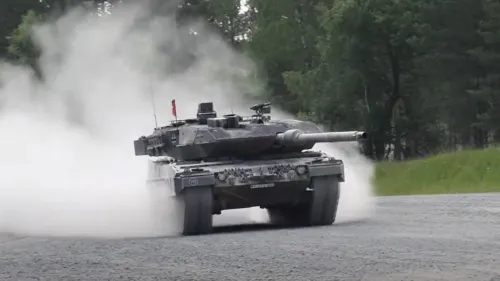
The system, which is to be integrated with Germany’s Leopard 2 tanks, achieved an interception rate exceeding 90 percent, according to the Israeli Defense Ministry.

As part of a first-time experience, it will “showcase some of its most advanced operational and combat-proven aerial defense solutions, supported and enhanced by the use of artificial intelligence.”

The evaluation was part of Finland’s Surveillance 2 project to examine the integration of unmanned aerial vehicles onboard its vessels.

Israel’s three largest defense companies—Rafael, Israel Aerospace Industries and Elbit Systems—will also participate after a two-year break due to the coronavirus pandemic.

The delivery of the Israeli system of four launchers is scheduled to be finished by 2026.

The Rafael and Raytheon team had offered Iron Dome and its Tamir interceptor for the project, while the Dynetics company offered a competing missile launcher and interceptor.

“This was once a nice toy for children, and it has now become a precise weapon,” said Meir Ben Shaya in the course of explaining Rafael’s Drone Dome counter-drone system, which features a powerful laser that can shoot down threats up to two miles away.
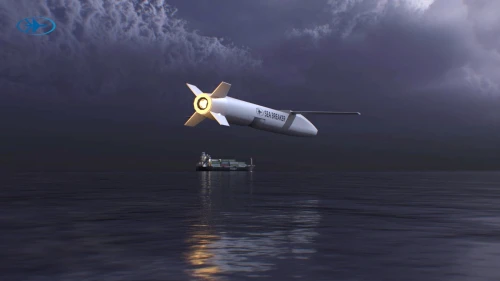
Rafael Advanced Defense Systems unveiled the long-range, autonomous, low-flying missile on Wednesday, which is immune to satellite jamming and uses artificial intelligence to tell adversaries apart from civilians.

UK Ministry of Defense chooses Trophy protection system to boost its defenses
“This is a significant program for the British army and represents a huge shift in the modernization of our land forces,” said David Farmer, team leader for the Challenger 3 delivery team.

Rafael defense company unveiled the Israeli Operational Technologies Cyber Consortium in Dubai, saying “war is not just about missiles today, it is also about harming critical infrastructure—the blood flow of a country,” said Michael Arov, head of its Cyber Business Unit.