Newsletter
Newsletter Support JNS

Report: Abbas refused call from Trump ahead of peace plan’s expected release

“There were attempts by Trump to hold a phone call with Abbas, but the latter refused,” an unnamed high-ranking Palestinian official told the state-run Turkish outlet “Anadolu.”

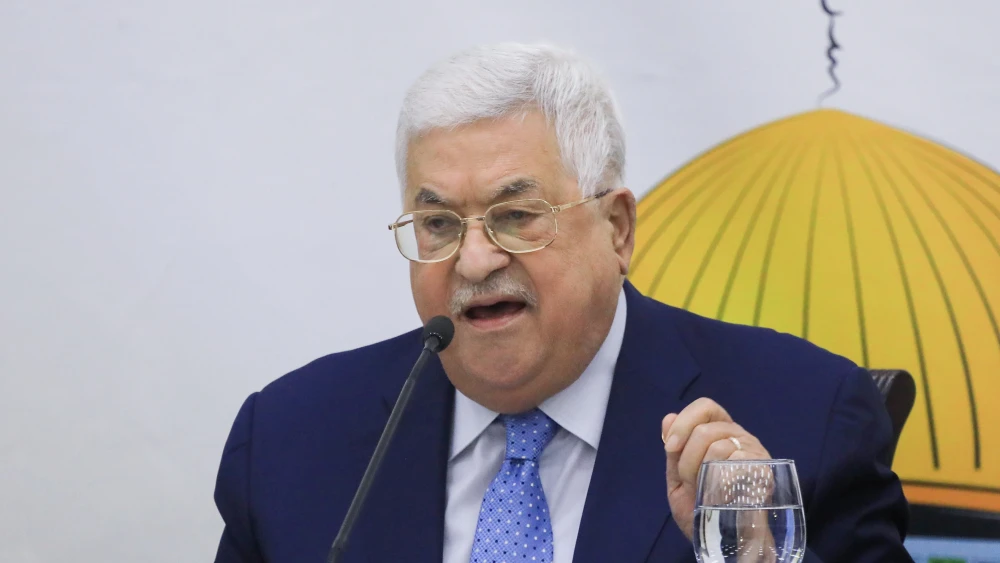
Palestinian Authority leader Mahmoud Abbas makes a statement as he attends the Revolutionary Council Meeting of Fatah Movement at the Palestinian Presidential Office in Ramallah on Dec. 18, 2019. Photo by Flash90.

Palestinian Authority head Mahmoud Abbas reportedly refused to take a phone call from U.S. President Donald Trump ahead of the White House’s expected release of its long-awaited Mideast peace plan for the Israelis and Palestinians.

“There were attempts by Trump to hold a phone call with Abbas, but the latter refused,” an unnamed high-ranking Palestinian official told the state-run Turkish outlet Anadolu.

P.A. Social Affairs Minister Ahmad Majdalani confirmed the Anadolu report to the Gaza-based Dunia al-Watan news site, saying that Abbas recently “refused a phone call from Trump.”

The P.A. stated its rejection of the Trump administration’s peace plan before it has even been made public, as it is reportedly said to be favorable towards the Jewish state. Ramallah cut off contact with Washington after Trump recognized Jerusalem as Israel’s capital in December 2017.

The White House declined to comment, reported The Times of Israel.

The White House did consider inviting Abbas for meetings about the plan, according to Israeli media reports.

“It’s yet another example of the Wikipedia editors’ anti-Israel bias,” Alyza Lewin of the Combat Antisemitism Movement told JNS.
Balad party chair Sami Abu Shehadeh, who wrote a piece lauding Hamas’s Oct. 7 attacks, withdrew his candidacy for the upcoming election.
Rabbi Rachel Timoner, of Congregation Beth Elohim, told JNS that there ought to be a conversation “to break down assumptions.”
“The charging documents help show how social media applications have lowered the bar to facilitate money and support to Hamas,” Seamus Hughes, a University of Nebraska terrorism expert, told JNS.