
As Russian and Chinese satellites conduct dozens of detailed imagery surveys across the Middle East to help Iran target U.S. forces and Israeli energy sites, and U.S. intelligence warns that Beijing is preparing shipments of shoulder-fired air defense systems for the Islamic Republic amid a fragile ceasefire, the depth of this backing for Tehran has come under sharp scrutiny.
Geopolitical analyst Irina Tsukerman told JNS that the 2025 Comprehensive Strategic Partnership Treaty between Russia and Iran “has operated as a coordination framework that allows both countries to intensify cooperation without formal military obligations.”
Russian policy “has focused on forms of support that strengthen Iran’s defensive capacity without requiring direct participation in the conflict,” including intelligence exchanges that “appear to include space-based surveillance data, missile launch detection information, and regional force tracking derived from Russian early warning satellites and signals intelligence networks operating in the Caspian region and Syria,” she explained.
This assistance, she noted, “improves Iranian reaction time and air defense alert cycles.”
Technical cooperation has centered on unmanned systems, Tsukerman said. “Russia’s wartime experience has produced rapid improvements in drone navigation in jammed environments, use of fiber-optic guidance in some strike systems, improved resistance to electronic warfare, and mass production methods using simplified components.”
Iranian engineers, she added, “have shown interest in adapting these methods to their Shahed series [UAV] production lines,” while Russian expertise in “battlefield repair cycles and drone reuse has also been valuable for Iranian planners seeking to improve sustainability during prolonged conflict conditions.”
Air defense discussions have emphasized integration rather than outright deliveries of major new systems.
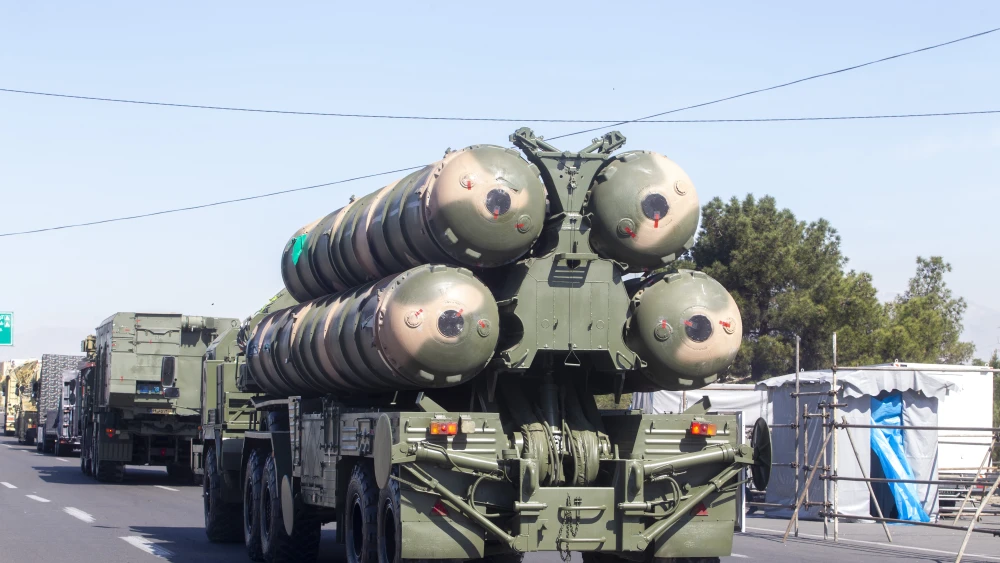
“Russian specialists have significant experience managing layered defensive networks combining long-range radar coverage with mobile short-range interception units,” Tsukerman said, noting Iranian interest in coordinating “domestically produced systems such as Bavar-373 [long-range road-mobile surface-to-air missile platform], Russian-supplied S-300 [surface-to-air missile system] components already in Iranian service, and shorter-range point defense systems protecting nuclear and military infrastructure.”
Diplomatic and military-industrial ties have also deepened. “Russian diplomatic messaging has consistently emphasized sovereignty, de-escalation language, and opposition to externally driven regime pressure,” she said, with coordination in multilateral forums involving “synchronized voting patterns, aligned public messaging, and quiet negotiations to prevent new international sanctions initiatives from gaining wider support.”
The treaty has further enabled “more regular security consultations at the level of national security councils,” focused on “strategic forecasting, regional scenario planning and discussion of Western military doctrine observed in Ukraine and the Middle East,” Tsukerman noted.
Russia’s own constraints from the Ukraine war have shaped the relationship into one of “knowledge, software improvements, technical consultation and limited high-value equipment rather than large-scale weapons deliveries.”
Shaped by wartime experience
Tsukerman said that the Russia-Iran military relationship “now operates as a structured exchange of military capabilities shaped by wartime experience.”
While Iran supplied drones and missiles early in the Ukraine conflict, Russia has reciprocated with “satellite imagery and signals intelligence support” that “gives Iran access to higher resolution operational awareness than it could independently generate,” plus the Global Navigation Satellite System (GLONASS), the Russian alternative to GPS.
Missile technology dialogue has expanded on “terminal guidance improvement, maneuvering reentry vehicles, and penetration aids,” while electronic warfare and naval cooperation offer Iran practical lessons from Russian battlefield experience.
Overall, she said, the relationship “reflects mutual benefit shaped by wartime needs, where interests intersect and where each side can provide something the other cannot easily obtain elsewhere.”
Russia balances these ties carefully against broader interests, Tsukerman said. Moscow maintains “regular deconfliction communication with Israel regarding Syrian airspace,” preserves dialogue with Gulf states through OPEC and investment channels, and keeps space open for U.S. negotiations.
Public condemnation of U.S.-Israeli actions “reinforces Russia’s narrative about multipolarity” and bolsters credibility with Iran “without requiring military escalation,” while Russia’s role as a diplomatic broker “increases Moscow’s relevance in regional crisis management discussions.” China’s economic role in the region adds another layer to this balancing act.
Looking ahead, the long-term implications of the Russia-Iran alignment, and its trilateral extension with China, “depend heavily on Iran’s internal resilience and its ability to maintain regional influence networks,” Tsukerman said.
Iran gives Russia “access to southern geopolitical corridors, influence channels into Middle Eastern political movements, and partnership in sanction-resistant financial arrangements.” The partnership advances broader goals through BRICS, the Shanghai Cooperation Organization, and “experiments in non-dollar trade settlement mechanisms,” she said, with China adding “economic scale” via energy purchases and infrastructure.
“Continued coordination may encourage the growth of parallel diplomatic platforms,” Tsukerman told JNS, building “a networked alignment built around shared interests in strategic autonomy and reduced Western leverage.”
China’s role
Carice Witte, founder and executive director of SIGNAL Group, an Israeli policy organization that specializes in China-Israel and China-Middle East affairs, addressed China’s role.
Beijing’s contributions to Iran’s military capabilities “are not necessarily indirect,” she told JNS.
She pointed to “access to precise information through Baidu [internet services and artificial intelligence technology], China’s satellite systems,” supplies of “electronic components such as radio frequency connectors and various technologies like turbine blades needed for missile production,” and the departure of “a stream of Chinese engineers” from Iran when the wars intensified in 2025-2026.
“Then there are well-documented multiple shipments of sodium perchlorate to Iran,” a dual-use material and “the main oxidizer in producing solid rocket fuel and solid propellant for ballistic missiles.”
Despite Beijing’s claims of private-sector deals, Witte questioned whether any of this could truly be called indirect.
Constraints on more overt Chinese assistance remain significant, Witte said. “It is a mistake to assume that China would want to overtly assist Iran,” she said. “Plausible deniability is the preferred approach in a volatile, messy place like the Middle East, where Beijing is now well aware of its own limitations.”
Tsukerman and Witte portray a pragmatic, interest-driven axis. Russia delivers intelligence, technical know-how and diplomatic cover within the limits of its Ukraine commitments, while China supplies dual-use components and maintains strategic ambiguity.
At the same time, recent satellite surveys, precursor shipments and reported impending air-defense deliveries signal that both powers are deepening their investment in Iran’s resilience, with profound implications for regional stability and the international order.
Hopes for stabilizing ties with the Trump administration, the disruption of China’s traditional “clear-cut playing field” in Middle East conflicts (given its partnerships with both Iran and Arab states), and the risk to oil suppliers and sovereign wealth fund investors all weigh heavily.
“Iran’s attacks on China’s Arab partners limited how much Beijing could support Iran,” Witte told JNS. “Everything China would do to enable Iran to succeed would mean hurting its main oil suppliers.”
Officially, Israel-China relations continue on a “normal diplomatic basis,” with ongoing contacts and economic outreach, she said, characterizing the dynamic as “guarded coexistence with hopes to improve economic ties.”