Newsletter
Newsletter Support JNS

Senate votes to block arms sales to Saudi Arabia, UAE and Jordan

The measures now go to the House, which is expected to follow suit. U.S. President Donald Trump is expected to veto them.

U.S. Congress. Credit: Pixabay.

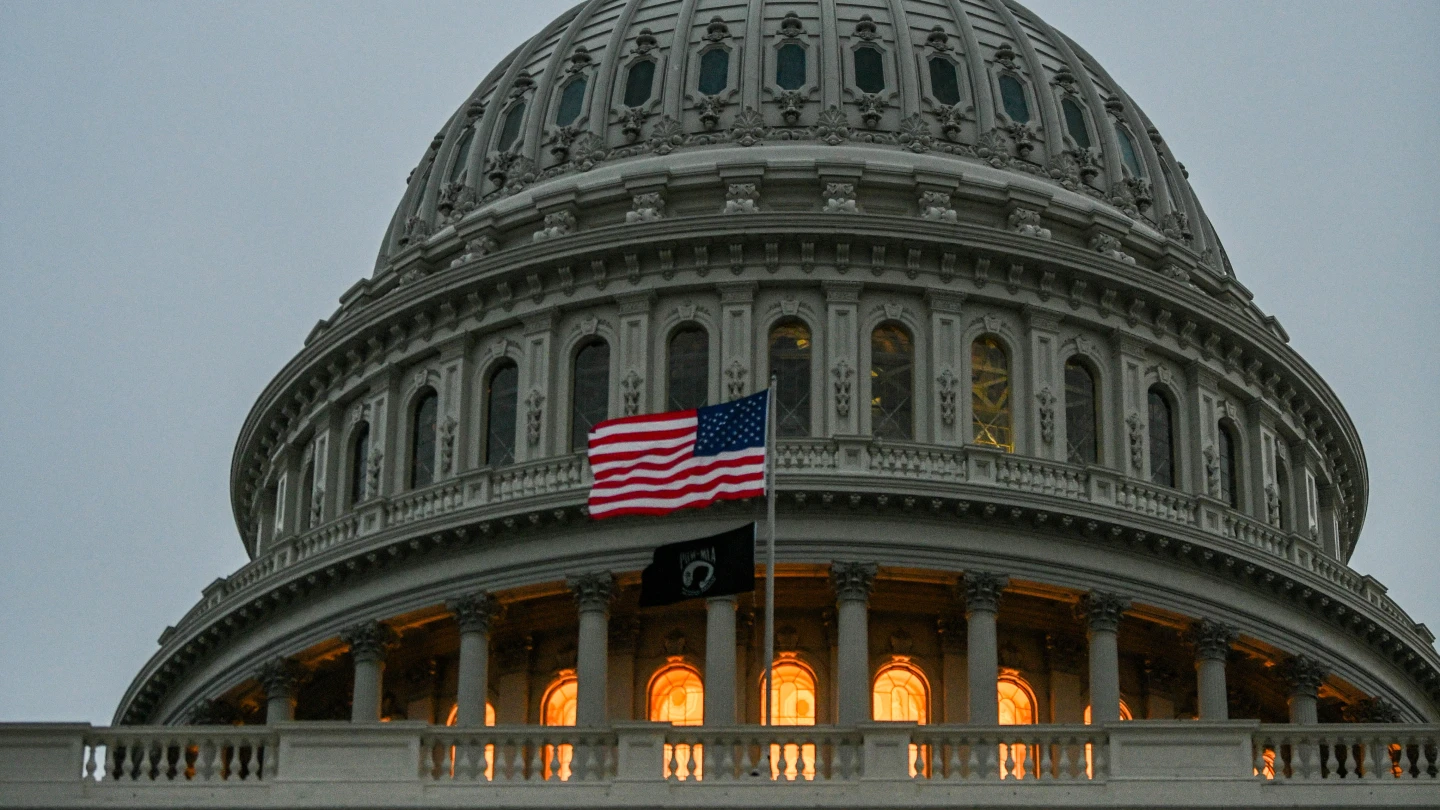
In three votes on Thursday, the U.S. Senate passed 22 resolutions to prevent arms sales to Saudi Arabia, the United Arab Emirates and Jordan without congressional approval.

The tally of the first two votes was each 53-45, while the final resolution passed 51-45.

The measures now go to the U.S. House of Representatives, which is expected to follow suit.

U.S. President Donald Trump is expected to veto the resolutions. The votes fall short of the necessary two-thirds majority to override a veto.

One of the votes was a rebuke of the Trump administration’s posture towards Saudi Arabia especially in the aftermath of the death of writer and Saudi dissident Jamal Khashoggi, allegedly ordered by Saudi Crown Prince Mohammad bin Salman.

The United States sees Saudi Arabia as an ally against the Iranian threat.
“A less thoughtful and more self-sabotaging statement would be hard to imagine,” Rabbi David Wolpe, rabbi emeritus of Sinai Temple in Los Angeles, told JNS of one of the mayor’s comments.
“Compared to what we see going on in Europe, Poland is much more tolerant of Jews,” Israeli Ambassador to Poland Yaakov Finkelstein told JNS.
The military chief said Israeli forces would act swiftly if the ceasefire is violated, and urged the Lebanese Army to disarm the Iranian proxy.
Since the beginning of the year, about 50 psychologists have sought to make aliyah and work in the Jewish state.
Adam Bedoui and Abdelkader Amir Bousloub took a fishing rod to a London Jewish neighborhood to record antisemitic videos.
“A ruling that directly contradicts the clear language of the law cannot grant authority that does not exist in law,” ministers said.