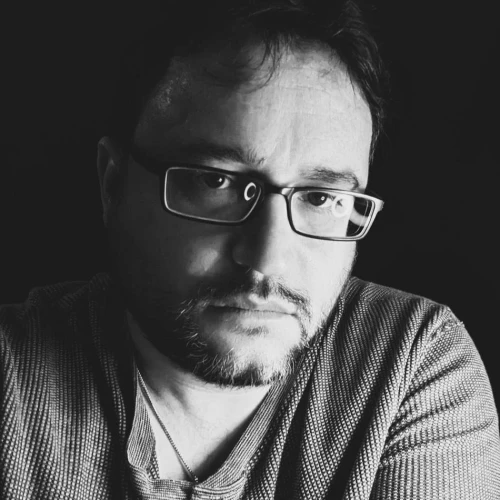
Benjamin (“Beny”) Maissner, senior cantor and music director of four decades at Toronto’s Holy Blossom Temple, the city’s oldest Reform congregation, died on July 19. He was 81 years old.
The cause of death was pancreatic cancer, according to his daughter, Rivka Keinan.
Maissner served the temple community “with distinction, with boundless energy and talent, with vast knowledge of Jewish tradition, and with endless love for Israel and Klal Yisrael,” the Jewish people, the temple stated.
John Moscowitz, the rabbi emeritus of Holy Blossom who served the temple for 27 years, said at the funeral that Maissner’s “life and ways and rhythms coursed through us, changed us, charmed us, enlarged us.”
“We are grateful for his huge heart and his abundant talents,” he said.

Tal Maissner told JNS that his father would visit patients at a Jewish old-age home near the synagogue to keep them company over Shabbat.
“What I got from him was to show empathy, to be able to listen to people, to what they need, to share or to cry, or to just tell a story,” he said. “If you knew him for five minutes or five years or 50 years, it didn’t matter. He left an imprint. Warm and able to connect with people.”
“If you shook his hand at the end of a lecture 30 years ago, and that’s as far as you got, you’d still remember that you met Beny Maissner,” the cantor’s son told JNS.
The Marc Chagall of ‘musical notes’
David Rosen, senior cantor and music director at the temple, said at the funeral that the late Maissner was the Marc Chagall of “musical notes on the page.”
Rosen was 18 and already leading services at his Conservative synagogue, The Pride of Israel, when he took the advice of a musician friend to meet Maissner in 1994 to deepen his understanding of prayer.
During that first meeting, Maissner tasked the teenager to sing and “kindly but candidly suggested” that he begin studying with a qualified teacher, Rosen told JNS. Over the next four years, Rosen studied under Maissner until he opted to enter cantorial school.
As part of his senior thesis recital, Rosen chose to feature the music and lives of three prominent Canadian Jewish composers, including Maissner, who flew to New York for the recital, conducted the student choir in several selections and sang alongside Rosen in a few pieces.
“His presence was deeply affirming and meaningful,” Rosen told JNS. “He had a remarkable ability to bridge the traditional with the contemporary, seamlessly moving from classic cantorial masterpieces to more modern compositions.”
Maissner always did so “with deep reverence and integrity for the meaning of the text,” he said.
Tal Maissner told JNS his father would come home between rehearsals to throw a baseball or to play hockey in the driveway.
“I don’t know how a human being could fit that much into one day, but he was always where he was supposed to be and taught us the importance of showing up,” he said.
‘A mix of two worlds’
Maissner was born in Tel Aviv, son of Isaac and Regina Maissner. His parents fled from Nazi Germany to British Mandatory Palestine in 1936.
As a boy growing up in Tel Aviv, he developed a penchant for cantorial singing, following in the footsteps of at least three generations of cantors in the family, according to Tal Maissner.
The late Maissner, at his core, “was a mix of two worlds,” who “blended and respected both his Bnei Akiva roots with his inspiration of modern progressive Judaism,” his daughter Rivka said at the funeral.
Maissner served in the Nahal Brigade in the Israel Defense Forces, and helped construct and develop the Ma’ale Gilboa kibbutz, according to the National Library of Israel, which reported his death “with great sadness.”
“Several years ago, near the time of his retirement, Beny visited the National Library of Israel and expressed interest in depositing his music collection, which, in fact, comprises the musical archive of his synagogue and community,” the library stated. “This past December, after months of devoted work organizing and scanning the materials by members of the Holy Blossom community, the music department at the NLI received the Beny Maissner and Holy Blossom Temple, Toronto Archive.”
Maissner studied in Tel Aviv with cantor Shlomo Ravitz at the Bilu School, “and later studied violin at the local conservatory,” the library stated. “In interviews, he spoke of how the musical and liturgical training he received with Ravitz, combined with the musical culture of Bnei Akiva, helped him gradually build a new style of prayer and song within the Reform community of Toronto.”
The library added that Maissner was “closely mentored by his relative, the renowned cantor Israel Alter, who encouraged him to pursue vocal training and invited him to the United States.”
Maissner completed a bachelor’s degree in cantorial music at Hebrew Union College-Jewish Institute of Religion’s sacred music school, a Reform institution, in New York. He earned a master’s in music history, voice and performance at Temple University in Philadelphia.
He served as a student cantor at Beth Shalom Synagogue, a Conservative congregation in Elkins Park, Pa., from 1967 to 1968. He subsequently served at the Germantown Jewish Center, a Conservative congregation in Philadelphia, until 1979.
Maissner met his wife, Hope Weisfeld, a Philadelphia native, when he was a young cantor in the city in the late 1960s. They were married for 57 years.
The couple moved to Toronto from Philadelphia, and he worked at Holy Blossom until he retired in 2020. Maissner was vice president of the American Conference of Cantors, which stated that it was “heartbroken” to learn of his death.
“When I was at HUC and Beny was on the faculty, we all looked up to him as one of the leaders of a new generation of American cantors,” one person wrote in response to a social media post by the conference. “While thoroughly contemporary they never forgot the past, and their example led the way for so many of us.”
Another wrote that Maissner was a “legend” and a “supportive mentor, who gave generously of his knowledge and his heart.”
In addition to chanting at synagogue services, Maissner performed on some of the world’s greatest stages, including Carnegie Hall, the Jerusalem Theatre and Toronto’s Roy Thomson Hall, and he collaborated with the Toronto Symphony.
Among his eclectic experiences was sharing a San Francisco Symphony stage with the Grateful Dead in 1996, although he wasn’t familiar with the rock band. The cantor represented Judaism in the performance, which featured multiple U.S. religious and secular traditions.
Ever since the early 1990s, Maissner traveled to Germany frequently to participate in Jewish events and Holocaust remembrance ceremonies, occasionally performing with the Jewish choir, Lachan, which he led, per Israeli media reports. Maissner, whose father and grandparents were Polish and who lived in Germany and Austria, reportedly performed Jewish music with a 400-member choir before some 3,500 non-Jewish Germans.
Germany awarded him the Cross of the Order of Merit, its highest civilian honor, in 2014.
A 2020 Holy Blossom tribute book states that Maissner coached hundreds of b’nei mitzvah to become “bimah-ready” and coached dozens of lay Torah readers. In his interview for the job at the synagogue, Maissner “articulated a desire to teach the values of Judaism through music,” the book states.
“In doing so, he has helped us to understand, experience and internalize the musical traditions of our people, through time and place; to connect in prayer and celebration with fellow Jews, at home and abroad; and to explore the depths of our personal and collective Jewish identity,” it says.
In addition to his wife, Maissner is survived by their children: Rivka Keinan, Tal Maissner and Shira Marx; and six grandchildren.