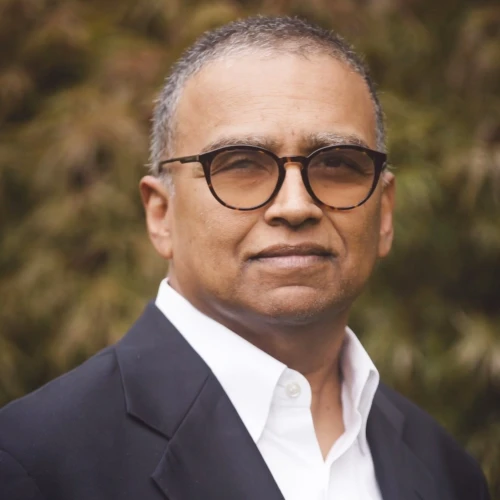
The National Jewish Advocacy Center filed a federal civil rights lawsuit on Tuesday, accusing The Pokémon Company International of barring a Jewish Israeli-American player from competing in organized Pokémon tournaments.
The complaint, filed in the U.S. District Court for the Central District of California, alleges that the Bellevue, Wash.-based company interfered with professional player Dov Aloof’s ability to compete in sanctioned events and later indefinitely suspended him from official Pokémon programs.
“This case is about a basic principle: if you open competitive events to the public, you do not get to exclude people because of who they are or where they come from,” Mark Goldfeder, director and CEO of the National Jewish Advocacy Center, told JNS.
According to the lawsuit, Aloof—an Israeli-American dual citizen described in the complaint as having high-functioning autism—has long advocated for greater access for Israeli players in official Pokémon tournaments.
“Pokemon has been an arena where he can be himself,” the suit states.
Competitive Pokémon events operate under the company’s organized-play system, known as the “Play! Pokémon” program, which awards ranking points that can qualify players for major competitions. Israeli tournaments are not included in the official ranking system, the lawsuit states, requiring Israeli competitors to travel abroad to earn points. Aloof first began contacting the company in 2018 to request rank-impacting tournaments in Israel.
In 2025, he also wrote to Pokémon Support that players had “been sharing some very genocidal and racist posts on X,” including a high-ranking player who “called for the ethnic cleansing of Jews” and another who wore a keffiyeh, a Palestinian scarf associated with anti-Israel activists, during tournaments.
The dispute escalated during the Pokémon World Championships, an annual global esports event that draws thousands of competitors, held in Anaheim, Calif., in August 2025.
According to the complaint, Aloof, who had purchased a spectator pass, approached a customer support desk to speak with company officials about tournament access for Israeli players. He was told to “wait for someone capable of answering his inquiry.”
Security personnel later arrived and required him to agree not to make “political outbursts or group protests,” according to the filing. Aloof agreed.
On the third day of the event, after returning to the help desk to renew his request to speak with management, security accused him of violating that agreement and confiscated his badge, the lawsuit alleges.
Aloof told security there had been a misunderstanding and showed a disability identification card indicating he is autistic, according to the complaint. He denies engaging in any protest.
The filing states he was later notified that he had been indefinitely suspended from participating in official Pokémon programs for contacting company employees directly about the issue.
Matthew Mainen, litigation counsel for the advocacy group, told JNS that the case could have broader implications for governance in esports competitions.
“This is not just about one player,” Mainen said. “It is about whether companies operating public-facing competitions in the United States will be held to the same civil-rights standards that apply everywhere else.”
Asked how NJAC finds cases like Aloof’s to represent, Goldfeder quipped, “We use the Pokédex to track locations,” adding that he hopes more individuals will come forward who need legal help.
“When it comes to antisemites, our philosophy is simple: Gotta catch ’em all,” Goldfeder stated in a post announcing the lawsuit’s filing.
The lawsuit seeks damages, attorneys’ fees and court orders requiring equal access to organized Pokémon competitions, including lifting Aloof’s suspension from official events.