Newsletter
Newsletter Support JNS

Group of insurance agents denied entry into Jordan due to bagged religious items

As a result, the tourists who were carrying tefillin and tallitot canceled their planned three-day trip to Jordan.

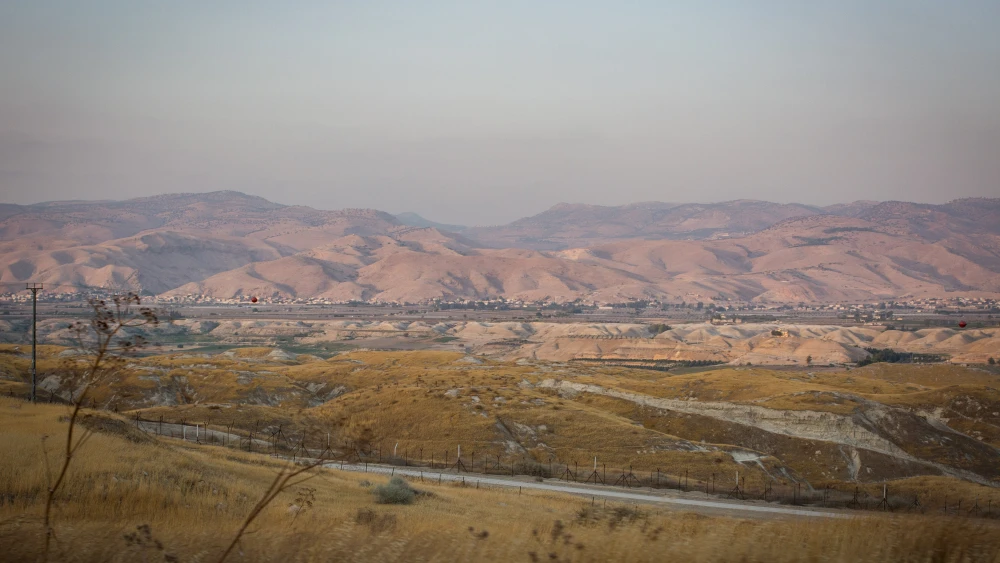
A view of the border between Israel and Jordan on Highway 90 in the Jordan Valley, on July 6, 2017. Credit: Hadas Parush/Flash90.

A group of 40 Israeli insurance agents traveling to Jordan was stopped from entering the country because some of them had packed tefillin and tallitot with them, reported Arutz Sheva news.

Jordanian inspectors near the border with the Israeli resort city of Eilat checked their bags and found the Jewish ritual items in their luggage. The inspectors told them they could not enter the country with it, claiming that it was for their own safety.

As a result, the tourists who were carrying the items canceled their planned three-day trip to Jordan.

This isn’t the first time that Jordanian border agents refused to allow Jews carrying religious articles into the country.
“It’s a rare misstep from the Trump administration that is usually better about including Orthodox Jews at their events,” an invitee told JNS.
“He carried that experience not with bitterness but with purpose,” William Daroff, CEO of the Conference of Presidents of Major American Jewish Organizations, told JNS.
Attorney General Gali Baharav-Miara claims there were “substantial flaws” in the decision to appoint Maj. Gen. Roman Gofman to lead the intelligence agency.
“At commencement this year, we want to support and uplift Palestinian students, faculty and the broader community,” per the order form. “Students nationwide have been suspended, expelled, arrested and now deported for their support of Palestinians’ human rights.”
Transforming battlefield leadership into entrepreneurial innovation, the 18X Elite Impact program has helped soldiers who fought for Israel raise more than $15 million in funding.
Ali Abdollahi, head of the Khatam al-Anbiya Central Headquarters, warned the U.S. and Israel against making “errors.”