Newsletter
Newsletter Support JNS

Kosovo delivers on promise to open embassy in Jerusalem

“The pledge given in the Oval Office today is finally fulfilled,” tweets Kosovo’s Foreign Ministry.

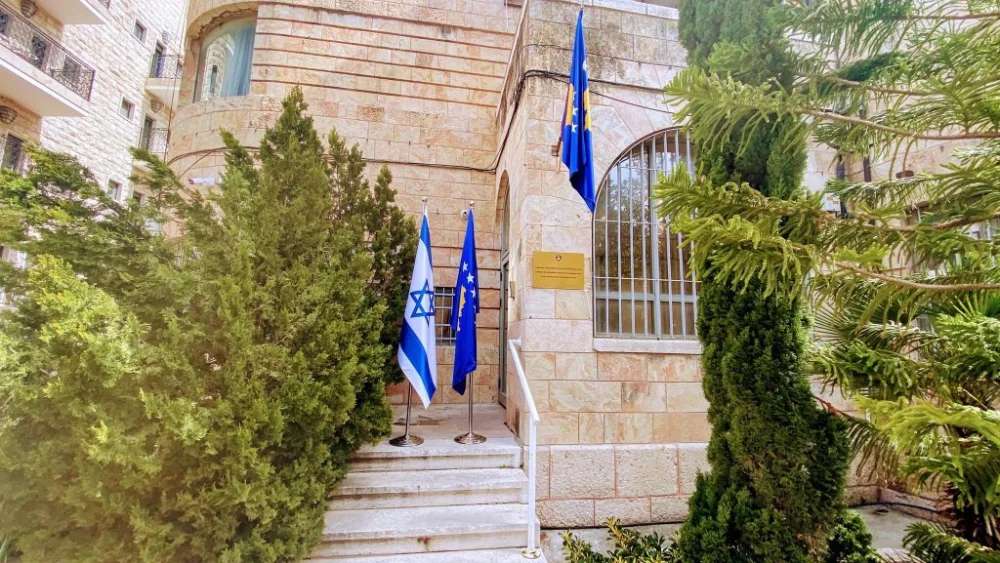
The Kosovo embassy in Jerusalem. Source: Twitter/Kosovo Foreign Ministry.

Kosovo opened its embassy to Israel in Jerusalem on Sunday, joining the United States and Guatemala as the only countries with embassies in a city whose status is at the heart of the Israeli-Palestinian conflict.

Muslim-majority Kosovo promised to locate its embassy in Jerusalem when it established diplomatic ties with Israel last year under U.S. sponsorship.

Kosovo’s Foreign Ministry said on Twitter that with the embassy’s opening, “the pledge given in the Oval Office today is finally fulfilled.”

Israel sees its new ties with Kosovo as part of its broader normalization with Arab and Muslim countries under agreements sponsored by former U.S. President Donald Trump.

Wasel Abu Youssef, a member of the executive committee of the Palestine Liberation Organization, said the opening of Kosovo’s embassy in Jerusalem contradicted U.N. resolutions and aimed to “weaken the Palestinian cause.”

No date was immediately announced for a formal opening ceremony.

On Thursday, the Czech Republic opened a diplomatic office in Jerusalem—a branch of its embassy in Tel Aviv—in a move that drew condemnation from the Palestinians and Arab League.

This article first appeared in Israel Hayom.

The judges said the sanctions, which the United States imposed in response to the Hague-based court’s targeting of Israel, are unlawful.
The Fedayeen Football League plans to hold the game in the heart of the city’s World Cup activities, wearing keffiyehs and waving Palestinian, Iranian and Lebanese flags, to call for FIFA to expel Israel.
Katie Lawson, a university spokeswoman, told JNS that it was the “first time in more than six years that this authority was exercised.”
The anti-Israel “Squad” member is backing Imraan Siddiqi’s bid to unseat a Democratic incumbent, as progressive challengers target fellow Democrats in Washington state legislative races.
Only 34% of respondents approved of the way the U.S. president was handling Iran, with 62% disapproving.
The study achieved 82.8% accuracy using AI analysis of eye blood vessels, offering a potential alternative to blood tests.
Benny Gantz, JNS editor-in-chief Jonathan S. Tobin, Gilad Erdan, Mosab Hassan Yousef, Nissim Black and leading voices in security, diplomacy, media, law and Jewish communal affairs headline the summit’s third day in Jerusalem.
