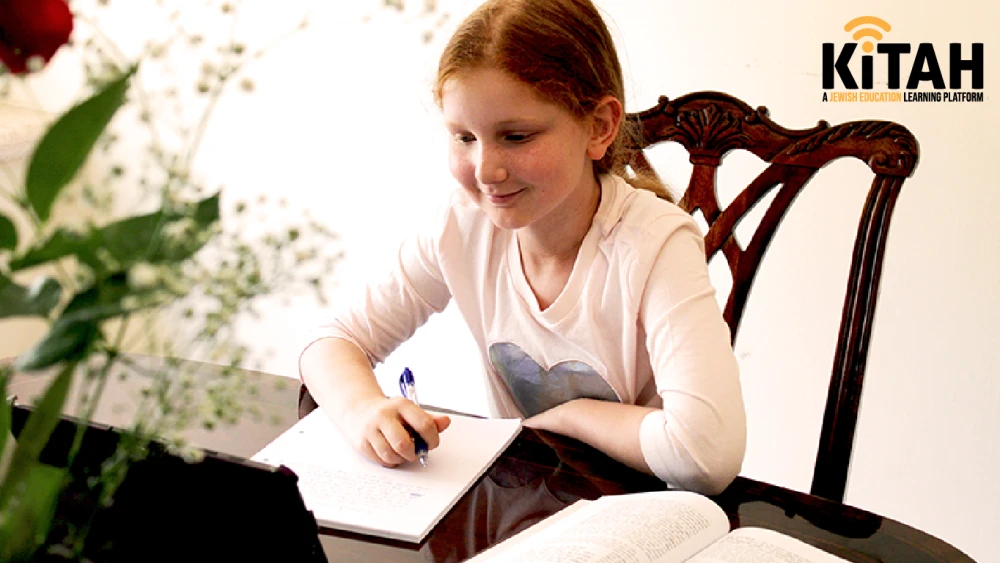

Last year, as schools around the world remained closed due to the COVID pandemic, Steven and Amy Harris of Long Island searched for a Jewish education solution that would provide their son with meaningful Jewish learning throughout the year. They learned about Kitah from their rabbi, Ira Ebbin, spiritual leader at Congregation Ohav Shalom in Merrick, NY. The Harris family enrolled Sean in Kitah, so that he could learn grow in Jewish learning alongside his busy public school schedule.
Today, numerous families do not send their children to a formal Jewish day school.
Over the past few years, many families have moved away from metropolitan areas, often to communities which don’t offer full-time Jewish education. Some families have children who simply don’t succeed in the local Jewish day school. Other families prefer to homeschool. Finally, many families find the financial burden of Jewish day school too much to bear, and instead send their children to public school. All of these families supplement their kids’ Jewish learning at home.
Yet, all too often these families lack the experience, materials and time to give their children a rich Jewish education.
To help address this critical need, Rabbi Reuven Spolter created Kitah, the online Jewish classroom for families.
Modeled after the world-famous Khan Academy, Kitah lessons combine student-paced instruction via YouTube video with online questions which reinforce what the children have learned.
Families enrolled in Kitah receive on-demand lessons each week in Torah, Navi, Mishnah and Gemara, and the students complete their lessons at their own pace, on their own schedule. At the end of the week, the students meet with Rabbi Spolter for a group Zoom lesson to review and reinforce what they learned in their lessons and play online educational games.
Kitah follows a unique pricing structure.
“Kitah needs to be affordable,” Spolter says. “For this reason, families with more than one child can enroll their children with needing to worry about any additional cost.” Last year, several families took advantage of the offer, and one family in the Midwest enrolled three of their children together.
Rabbi Ebbin of New York was extremely pleased with the program.
“Kitah has been an incredible resource for parents in my community,” he said. “The superb educators and the phenomenal teaching style have helped kids in my community improve their skills, and even get excited about learning.”
The Harris family strongly agreed. “We loved the program,” said Amy Harris. “It exceeded our expectations and provided Sean a basis for high school for a yeshiva education.”
The upcoming Kitah school year begins on Monday, August 30th. Parents interested in learning more about Kitah or enrolling their children can visit www.kitah.org, or contact Rabbi Reuven Spolter at spolter@kitah.org.