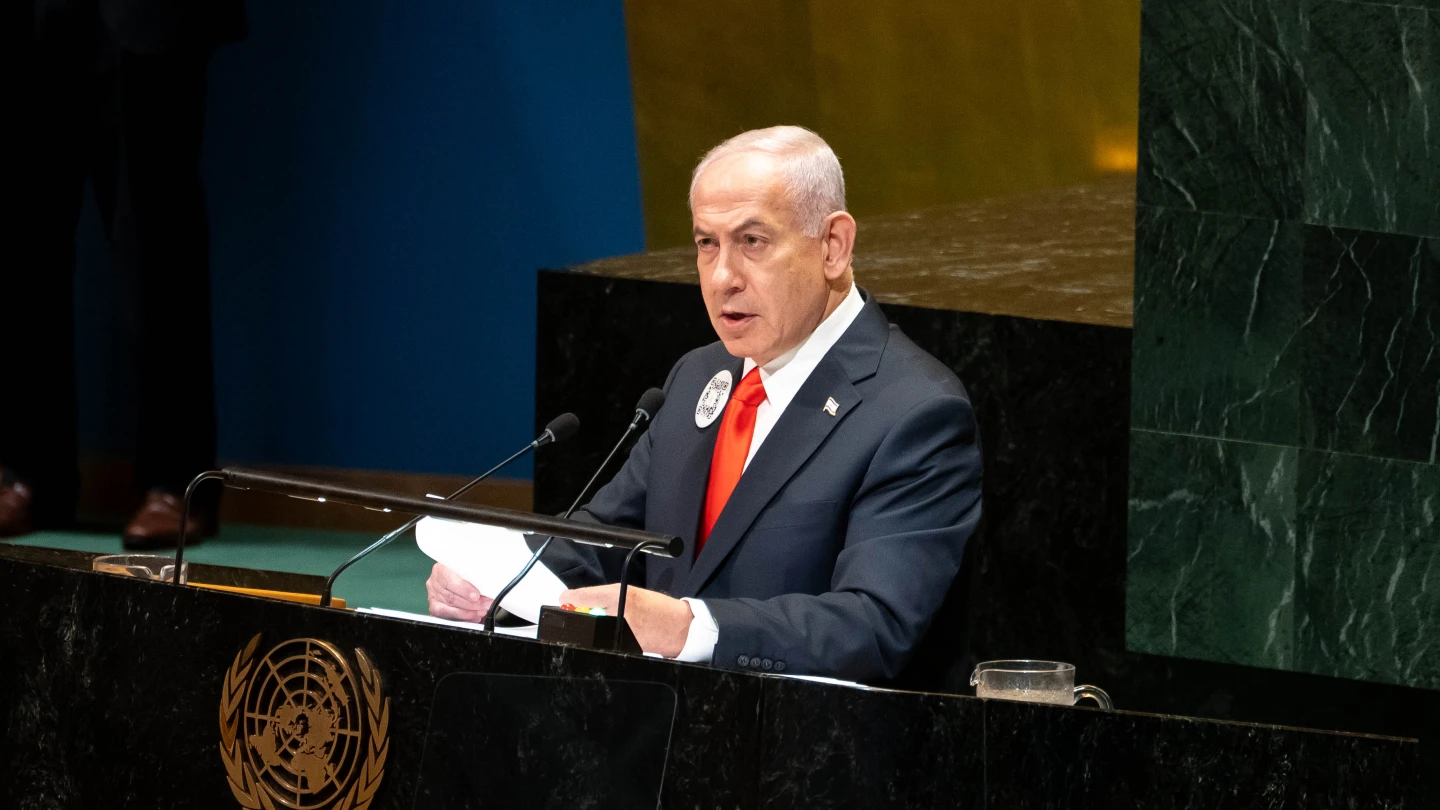
Iranian missile, rocket and drone attacks briefly shut down Kuwait’s main airport on Sunday and operations at the United Arab Emirates’ Fujairah facility, one of the world’s largest oil storage and transportation hubs.
Several drones attacked Kuwait International Airport on Saturday evening, authorities said, damaging the radar and forcing a temporary airspace closure. Bahrain imposed a partial shutdown with one flight corridor remaining open toward Saudi Arabia, Reuters reported.
Additionally, a missile struck a helipad in the U.S. embassy compound in Baghdad, the Associated Press reported on Saturday, citing Iraqi security officials. A column of smoke was seen rising on Saturday morning over the compound.
The Iranian attacks followed strikes on Friday by the U.S. on Kharg Island in the Persian Gulf. The island is a hub that handles roughly 90% of Iran’s crude exports, though the U.S. said it did not target “anything having to do with the energy lines, because having to rebuild that would take years,” President Donald Trump said on Saturday.
The attack on Kharg Island followed reports that Iran was ignoring Trump’s warning not to close for maritime traffic the Strait of Hormuz, a shipping route used by Persian Gulf oil and gas producers to export their products.
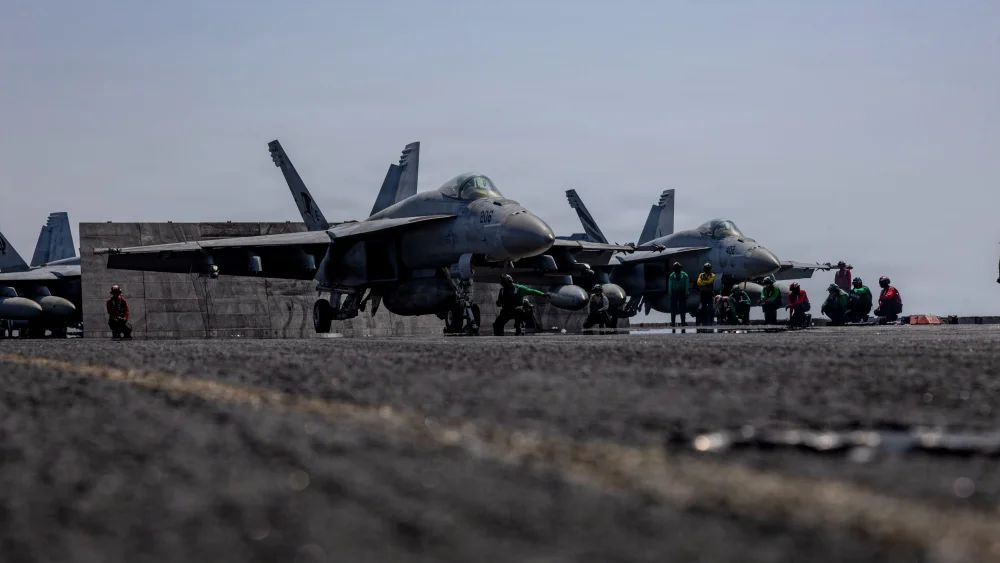
Before Friday, neither the U.S. nor Israel had hit Kharg Island since the Feb. 28 launch of their joint military operation, codenamed “Epic Fury” and “Roaring Lion,” respectively, to neutralize Iran’s ability to threaten its neighbors and shipping routes.
Iran has launched hundreds of projectiles at 10 or 11 Middle Eastern countries in addition to Israel. The Iranian regime’s targeting of neighboring Arab countries, as well as Turkey, Azerbaijan and possibly Cyprus, is seen as an attempt to generate international pressure on Israel and the U.S. to cease or limit the operation in Iran.
Iran and Hezbollah in Lebanon have fired hundreds of projectiles at the Jewish state since the operation’s launch, killing 14 civilians and wounding nearly 2,800, according to the Israeli Health Ministry. Another five people have died indirectly as a result of the war, from car accidents during alarms or heart failures due to alarm sirens, according to Tel Aviv University’s Institute for National Security Studies (INSS).
The death toll among U.S. forces was 13 as of Sunday. At least 28 people have died in Iran’s attacks on Middle Eastern countries outside Israel, according to the INSS.
U.S. and Israeli strikes—estimated at 5,500 and 3,800 in number, respectively—have killed some 1,300 people in Iran, according to the INSS, including 45 senior regime officials who were targeted in precision strikes.
Hezbollah’s decision
Hezbollah’s decision on March 2 to join the fighting by launching projectiles into Israel in violation of a ceasefire agreement reached in November 2024 has triggered a series of strikes and a limited ground incursion in Lebanon by Israel. Some 750,000 Lebanese people have been evacuated from affected areas, according to the INSS, with at least 634 fatalities from Israeli strikes and 1,586 wounded.
Saudi Arabia reported intercepting several projectiles over the weekend, including four drones in the Riyadh area on Sunday. Saudi air defense systems shot down six ballistic missiles over Al-Kharj Province southeast of Riyadh on Saturday evening, the Defense Ministry said.
Prince Sultan Air Base in Al-Kharj, which is also used by the U.S. military, has also come under fire. It has been the target of Iranian projectiles since the war with Iran began.
The United Arab Emirates shot down a drone in Fujairah on Saturday, authorities said. Debris from the drone caused a fire, injuring a Jordanian citizen, the UAE Defense Ministry said. This prompted a shutdown of some operations at the port of Fujairah, though they have been resumed on Sunday, according to Reuters.
Al Jazeera quoted the Islamic Revolutionary Guards as threatening on Saturday to strike additional UAE cities. The IRGC “considers it its legitimate right to defend its national sovereignty and territory by hitting and targeting the origin of the American enemy missiles in shipping ports, docks, and hideouts of American soldiers sheltered in some cities in the UAE,” the IRGC said in a statement on Iranian state media.
On Saturday, the bosses of the Formula 1 car race confirmed the cancellation of the Bahrain and Saudi Arabia races, reducing the 2026 season to 22 races, Sky Sports reported.
The Bahrain race was scheduled to be the season’s fourth round on April 10-12 before the Jeddah race in Saudi Arabia on April 17-19.