Newsletter
Newsletter Support JNS

After four days, rescuers find remains of Ukrainian mother killed in Bat Yam

The family came to Israel from Odessa on a medical tourism visa in 2022 and was “an integral part of the Bat Yam community,” the municipality stated.

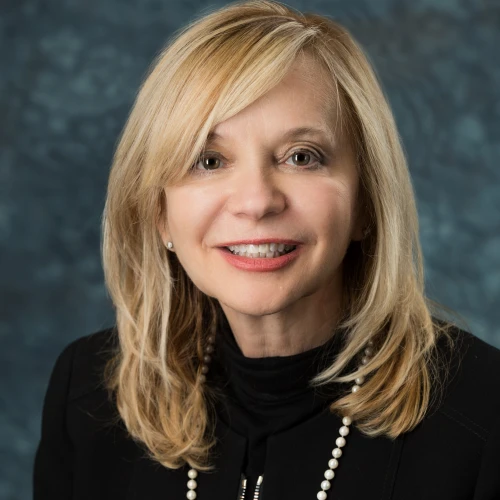
Maria Peshkurova
Maria Peshkurova, 31, a Ukrainian national who was killed when an Iranian missile hit a residential building in Bat Yam, on June 15, 2025. Credit: Courtesy of the Peshkurova family.

Israeli rescue forces recovered on Thursday afternoon the remains of Maria Peshkurova, 31, a Ukrainian national who was killed when an Iranian missile hit a residential building in Bat Yam on June 15.

“A body was found at the site of the missile strike in the city and has been transferred to the Institute of Forensic Medicine,” the Bat Yam Municipality confirmed in a statement.

“It is believed to be Maria Peshkurova, 31 years old, who was killed as a result of the deadly impact. She is the ninth fatality in the incident, which has become the largest site of destruction ever caused by a missile strike in the State of Israel,” the central Israeli city stated.

The family came to Israel from Odessa on a medical tourism visa in 2022 “and became an integral part of the Bat Yam community,” it continued. “The Bat Yam Municipality shares in the family’s deep sorrow.”

Peshkurova’s daughter, Anastasia (Nastia) Borik, an 8-year-old first grader, was being treated for leukemia at Sheba Medical Center’s oncology unit.

The girl died along with her grandmother, Olena (Yelena) Peshkurova, 54, and her cousins, Konstantin Totvich, 10, and Ilya Peshkurov, 15.

Four Israelis were also killed in the pre-dawn missile attack. It was the single most lethal Iranian strike on Israel since the start of the fighting on June 13. In total, 24 civilians have been killed and hundreds have sustained injuries in more than 400 Iranian missile attacks across Israel.

The newly released State Archives trace the Israeli response from the Air France hijacking to the successful hostage rescue in Uganda.
Panelists at the JNS Summit argued that Israel must expand its domestic military capabilities while continuing strategic cooperation with the United States.
“Anti-Zionism can be a framework for justifying anti-Jewish hostility,” Rafaela Dancygier, of Princeton University, told the N.J. Advisory Committee to the U.S. Commission on Civil Rights.
A board member at the Orthodox synagogue told the FBI that members began attending services less frequently after Kevin Charles Pyles allegedly targeted the synagogue in separate July and August 2025 incidents.
The Senate rejected a resolution calling for the removal of U.S. forces from the war against Iran after U.S. President Donald Trump hammered Senate Republicans for approving a similar measure the day before.
“When someone uses the N-word on campus, no one thinks about free speech. No one talks about, ‘Let’s understand what they’re thinking. Let’s have a discussion,’” Rep. Randy Fine said. “But somehow when it came to Jews, everyone wanted to rediscover the idea of free speech.”
Benny Gantz, JNS editor-in-chief Jonathan S. Tobin, Gilad Erdan, Mosab Hassan Yousef, Nissim Black and leading voices in security, diplomacy, media, law and Jewish communal affairs headline the summit’s third day in Jerusalem.