A senior U.S. official said that Washington expects the “conversation to continue” about Iran when U.S. President Donald Trump and Chinese President Xi Jinping meet in Beijing this week, after multiple discussions between the two about Chinese support for Tehran.
Those conversations have focused on revenue China provides to Iran, “as well as dual-use goods, components and parts, not to mention the potential of weapons exports,” the official said.
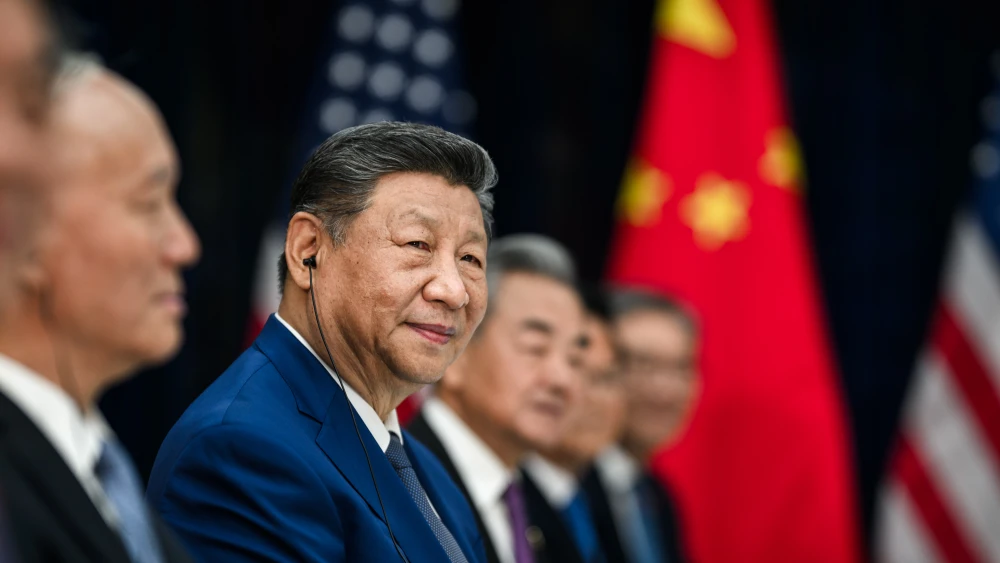
Trump is scheduled to arrive in Beijing on Wednesday evening local time. He is slated to attend a welcome ceremony and bilateral meeting with Xi on Thursday morning, according to White House spokeswoman Anna Kelly.
The two leaders are also scheduled to tour the Temple of Heaven in the Chinese capital on Thursday afternoon. Xi plans to host Trump at a state banquet Thursday evening, followed by a bilateral tea and working lunch on Friday morning.
The visit comes as Trump seeks to improve trade and economic ties with China, even as tensions remain high over Beijing’s relationship with Tehran.
Last week, the Trump administration sanctioned three Chinese firms that it accused of providing satellite imagery that aided Iran’s surveillance of U.S. forces in the Middle East.
“I think you’ve seen some actions, meaning sanctions, coming out from the U.S. side just in the last few days that I’m sure will be part of that conversation” with Xi, the official said.
The American administration has also continued to sanction independent Chinese “teapot” refineries, which it accuses of purchasing more than 80% of Iran’s crude oil, as part of Washington’s broader effort to curb Tehran’s energy revenues.
China, Iran’s largest oil customer and a longtime diplomatic partner, has frequently shielded Tehran at international bodies, including the United Nations Security Council.
At the same time, some analysts believe that Beijing could pressure Tehran to help end the conflict with the United States and Israel and restore shipping through the Strait of Hormuz, a global trade route that Iran has effectively closed for six weeks, driving up global oil and fertilizer prices.
The U.S. official said that Trump is expected “to apply pressure” on Xi about Iran during the talks but declined to provide more detail.
Trump’s Beijing visit had originally been scheduled for late March but was postponed amid the escalating conflict with Iran.
The U.S. official was asked why Trump is proceeding with the trip while the conflict continues.
“Why would he not continue, with all the other issues he has as U.S. president?” the official said. “I don’t think he has the luxury to focus on just one issue for weeks and weeks.”
The U.S. official added that Trump plans to host Xi in Washington later this year.