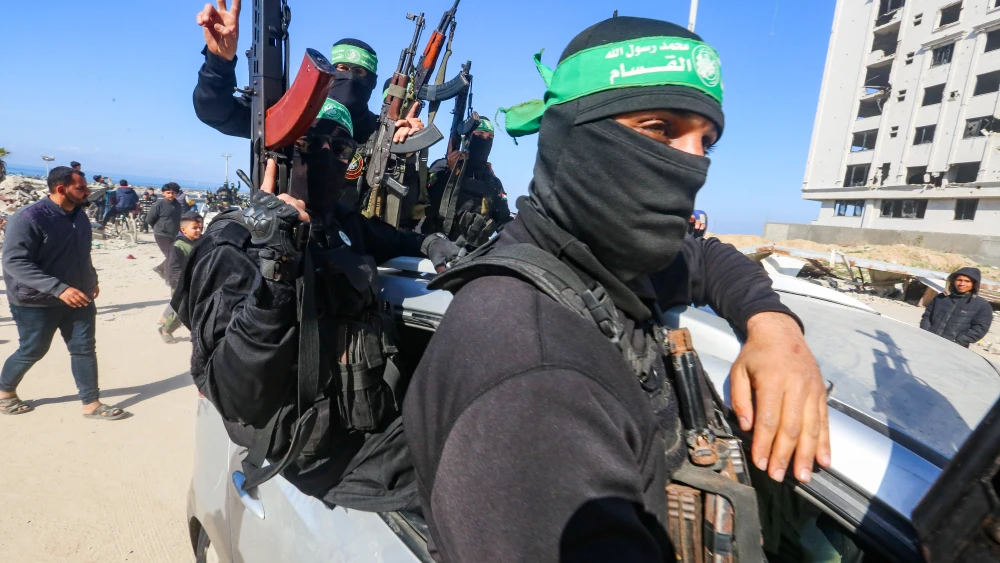

Even before phase 1 of the ceasefire plan has ended, Hamas is trying to influence the outcome of phase 2. It has drawn up a list of its candidates to serve on the technocratic entity that is supposed to rule in Gaza according to the 20-point plan to which Hamas and Israel agreed.
Hamas is secretly signing off on the makeup of the technocratic government, choosing half of its composition, individuals “who support Hamas and the organization’s principles,” Israel’s public broadcaster, Kan News, reported on Oct. 21. Fatah, the ruling party of the Palestinian Authority, chose the other half, according to the report.
Israeli politicians from across the political spectrum reacted sharply to the news. Israel’s Prime Minister’s Office told JNS during a press briefing on Tuesday that Israel wouldn’t tolerate a Hamas-led Gaza Strip.
“Let’s get something very clear. Let’s go back to the 20-point plan ... part of the 20-point plan says Hamas will have no future inside of the Gaza Strip. Gaza will be demilitarized. Hamas will be disarmed,” said PMO spokeswoman Shosh Bedrosian.
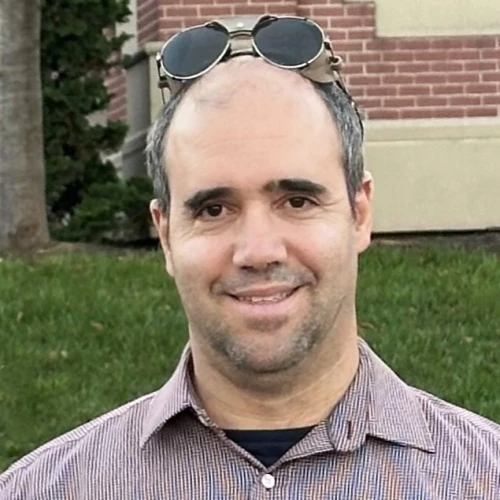
The name at the top of Hamas’s list of candidates is Amjad al-Shawa.
Al-Shawa is deputy commissioner-general of the “Independent Commission for Human Rights” (ICHR), a group set up in 1993 by Palestinian Liberation Organization chief Yasser Arafat in Ramallah. It is headquartered on Mother Teresa Street.
ICHR regularly collaborates with terror groups, such as Hamas, the Popular Front for the Liberation of Palestine (PFLP) and Palestinian Islamic Jihad (PIJ), according to Jerusalem-based research institute NGO Monitor.
“Not only does ICHR have a history of ties with Hamas, the PFLP and PIJ terror groups, but the fact that their official is a Hamas favorite means Hamas by all accounts will continue to play a central role in postwar Gaza,” NGO Vice President Olga Deutsch told JNS.
Hamas understands that the fight has moved from the military to the political sphere, and sees Gaza’s reconstruction—estimated at $70 billion—as the main source of power over the Gaza Strip.
Hamas wants to strategically place its loyalists in key administrative and coordination roles tied to reconstruction and aid, Deutsch explained. “They understand that the aid, the reconstruction money, is exactly how they will keep themselves in power, even if they are disarmed,” she said.
Hamas is an old hand at weaponizing aid, having made a practice of it before the attacks on Oct. 7, 2023. “The question now is what Israel and the international community, led by the United States, intend to do differently to ensure that the next influx of aid doesn’t again fall under Hamas’s control,” said Deutsch.
Deutsch suggested that the U.S. administration draw a clear red line that neither Hamas nor its fellow travelers can be part of a post-war Gaza.
While the 20-point plan states unequivocally that “Hamas and other factions agree to not have any role in the governance of Gaza, directly, indirectly, or in any form,” saying so is clearly not enough, as Hamas is already flouting that demand, she added.
The most important practical step is introducing “tighter vetting and control mechanisms,” said Deutsch. Israel must establish strict approval procedures for organizations operating in Gaza. Europe has to maintain oversight to ensure funds it provides go to their intended purpose.
She also stressed the importance of penalties and consequences against the Palestinian side if it is found appointing Hamas members to positions of authority. Without such sanctions—absent for decades—there won’t be any deterrence against Hamas infiltration.
As Europe is the largest donor bloc in the world, NGO Monitor has made the need for better vetting processes a focus of its work there. Deutsch said there have been “awakenings” since Oct. 7, but that Europeans have been historically weak on the issue. Sweden, one of the biggest funders of Palestinian NGOs, still doesn’t examine the social media accounts of individuals belonging to controversial groups, a failure that is “simply ridiculous,” she said.
European countries’ lack of interest in properly checking what Palestinians are actually doing is underscored by their eagerness to believe the Palestinian Authority when it says it has revoked its “pay-for-slay” program, which rewards terrorists for killing Jews, even though it is relatively easy to verify that those payments continue without pause.
There is a combination of reasons for this European willingness to forgive Palestinian malfeasance, she said.
For some, it’s an ideological issue, with the Palestinian “resistance” viewed as a political cause. Governments, of course, also wish to avoid embarrassment. To admit that NGOs they had provided money to were engaged in nefarious activities would be an admission of negligence on their part. Hovering above all is an anti-Zionist atmosphere prevalent in Europe, she said.
Deutsch cautioned that ensuring Hamas figures remain outside Gaza’s governing bodies is only the start. The challenge extends far beyond Hamas, as all Palestinian groups seek the elimination of Israel.
“The leadership might not be called Hamas. It will be called something else. But it will still embody the same Jew-hatred focused on denying Israel’s right to exist,” she said.