Newsletter
Newsletter Support JNS

‘Deeply concerned’ Romania blocking Jew-hatred law, World Jewish Congress says

The Romanian president’s decision risks “eroding decades of progress Romania has made in confronting its past and honoring the memory of its victims,” the group said.

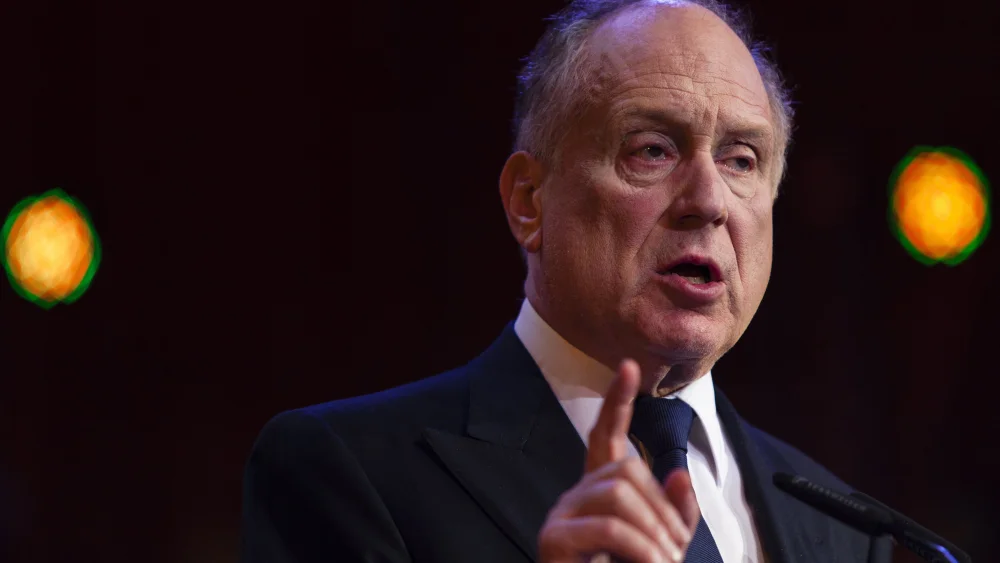
Ronald S. Lauder, president of the World Jewish Congress, at the Jerusalem Chairman's Conference on Sept. 22, 2013. Photo by Flash90.
Ronald S. Lauder, president of the World Jewish Congress, at the Jerusalem Chairman’s Conference on Sept. 22, 2013. Photo by Flash90.

Romanian President Nicușor Daniel Dan’s decision last month to delay legislation targeting Jew-hatred, Holocaust denial and far-right extremism is “deeply” concerning, Ronald Lauder, president of the World Jewish Congress, stated last week.

The southeastern European country’s president has slowed passage of legislation that “would significantly strengthen Romania’s ability to confront antisemitism and the distortion of Holocaust history,” Lauder said.

He added that Dan’s move “has been widely perceived, both domestically and internationally, as legitimizing efforts to rehabilitate war criminals and emboldening those who seek to deny or distort the Holocaust.”

“This carries the risk of eroding decades of progress Romania has made in confronting its past and honoring the memory of its victims,” he added.
“Compared to what we see going on in Europe, Poland is much more tolerant of Jews,” Israeli Ambassador to Poland Yaakov Finkelstein told JNS.
The military chief said Israeli forces would act swiftly if the ceasefire is violated, and urged the Lebanese Army to disarm the Iranian proxy.
Since the beginning of the year, about 50 psychologists have sought to make aliyah and work in the Jewish state.
Adam Bedoui and Abdelkader Amir Bousloub took a fishing rod to a London Jewish neighborhood to record antisemitic videos.
“A ruling that directly contradicts the clear language of the law cannot grant authority that does not exist in law,” ministers said.
Peter Paltchik raising money to help ZAKA volunteers, who treat victims of terrorist attacks, wars, natural disasters and mass-casualty accidents in Israel and abroad.