


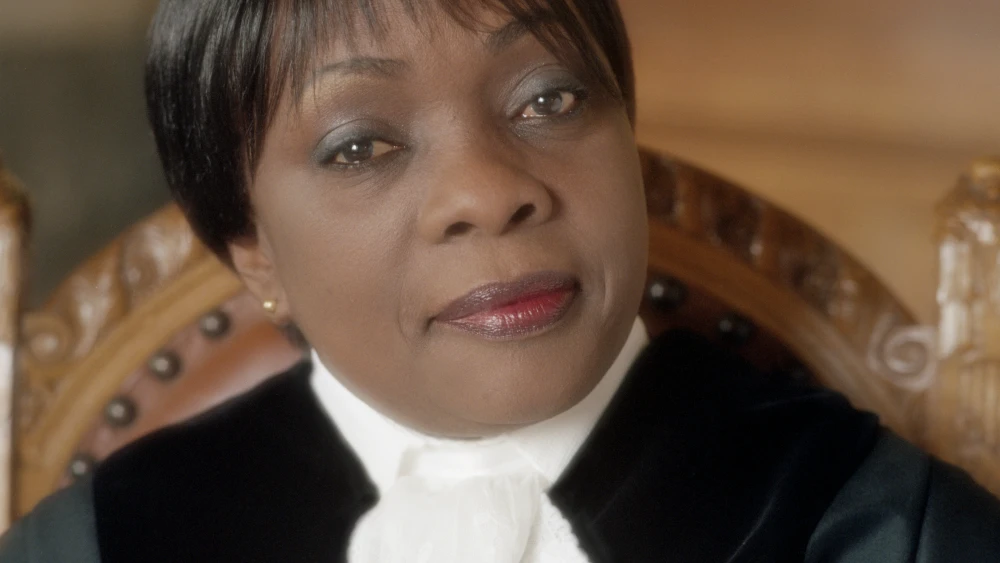
Judge Julia Sebutinde is set to assume the presidency of the International Court of Justice (ICJ), marking another milestone in her groundbreaking career as well as a significant shift for the court.
The Ugandan jurist, who recently made headlines for her robust defense of Israel against South Africa’s genocide allegations, will take the helm following current President Nawaf Salam’s departure to form Lebanon’s next government.
Born Julia Semusso in February 1954 in Uganda’s Central Province to a civil servant father and homemaker mother, Sebutinde’s journey to The Hague reflects a remarkable career. Her ascent began with her 1996 appointment to Uganda’s Supreme Court, where she distinguished herself by leading three pivotal anti-corruption investigations in her homeland.
The judge’s international prominence grew with her 2005 appointment to the Special Court for Sierra Leone war crimes tribunal, where she played a crucial role in the landmark trial of Liberian President Charles Taylor. Her appointment to the ICJ in February 2012 broke new ground as she became the first woman from Africa to serve on the court.
Sebutinde’s recent ruling on the Israel-Hamas war has particularly resonated in international legal circles. She dismissed South Africa’s requests for temporary injunctions to halt the Gaza war, asserting that the conflict between Israel and the Palestinian people is fundamentally political rather than legal in both its nature and historical context, and therefore falls outside the court’s purview.
Her stance, however, has created diplomatic ripples. Uganda’s U.N. Ambassador Adonia Ayebare publicly distanced his government from her position, emphasizing that her ICJ decision does not reflect Uganda’s official stance.
The transition in leadership comes at a crucial juncture, with Israel scheduled to present its defense brief against South Africa’s case in July. According to the court’s statutory framework, the president – elected every three years through a panel member vote – oversees the institution’s administrative affairs and chairs its panels, wielding a decisive vote in cases of judicial deadlock.
The Lebanese parliament’s recent acceptance of newly elected President Joseph Aoun’s request to task Salam with government formation has necessitated this change in ICJ leadership. As Salam steps down, the United Nations faces the additional task of selecting a new judge to represent the Asia region on the court.
Sebutinde and Salam were both elected to their ICJ positions in February 2024, making this rapid transition particularly noteworthy in the court’s history. Her elevation to the presidency not only marks a personal achievement but also comes at a critical time for international justice and Middle East diplomacy.



