The Argentine prosecution has requested a national and international arrest warrant for Iran’s Supreme Leader Ali Khamenei over his involvement in the 1994 bombing of the AMIA Jewish community center in Buenos Aries.
Khamenei “led the decision to carry out a bomb attack and issued an executive order or fatwa to carry it out,” the Clarín daily on Wednesday quoted the lead prosecutor in the three-decade old case, Sebastián Basso, as saying.
The request made to a federal court judge is a significant shift from previous investigators in the case who viewed Khamenei as having diplomatic immunity.
Basso took over the case from Alberto Nisman, who was murdered in his Buenos Aries home in 2015, a day before he was to present his findings in the case, which included incriminating evidence against top Argentine government officials at the time, led by then-President Cristina Fernández de Kirchner who he had accused of covering up the role of Iranians in the attack.
Khamenei, 85, has served as supreme leader of the Islamic Republic since 1989, when he succeeded Ayatollah Ruhollah Khomeini, the leader of the 1979 Islamic Revolution.
The prosecutor noted that all of Iran’s military and foreign policies are carried out at his behest.
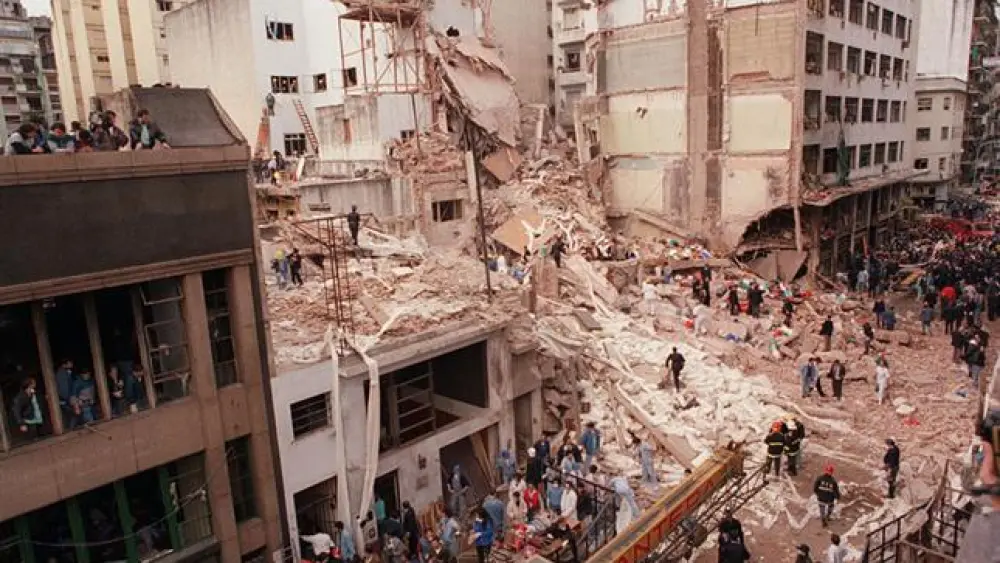
Eighty-five people were killed and more than 300 were wounded in the July 18, 1994 bombing at the AMIA (Asociación Mutual Israelita Argentina) Jewish community center, the deadliest terrorist attack in the country’s history.
Last year, an Argentine court said that Iran was responsible for the attack.
Argentina has long maintained that senior Iranian officials operating through its Lebanese terrorist proxy Hezbollah played a key role in the attack. But three decades of government probes delayed and marred by corruption coupled with Iran’s refusal to hand over any of the suspects sought for trial have not yielded any conviction for the bombing.