Newsletter
Newsletter Support JNS
Dov Lipman

Dov Lipman

Dov Lipman was elected to the 19th Knesset in January 2013, making him the first American born MK in 30 years. He holds a masters degree from Johns Hopkins University and is the author of seven books about Israel and Judaism.

As the quest for an Israeli government continues, mixed messaging within Blue and White centers on the possibility of a minority government with the support of the Joint Arab List.
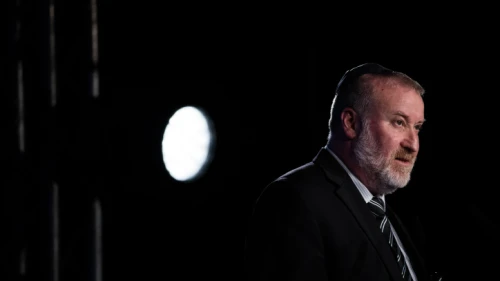
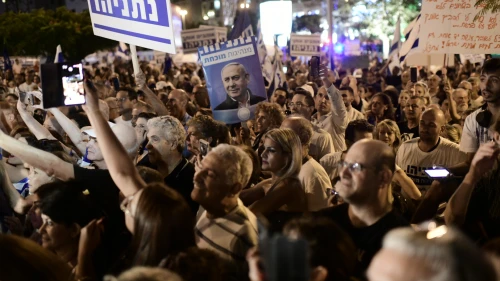
The attorney general’s decisions on whether to indict Israeli Prime Minister Benjamin Netanyahu may determine whether or not the Jewish state is headed to a third election • Bennett: “It’s time for Blue and White to climb down from the anti-Netanyahu tree.”
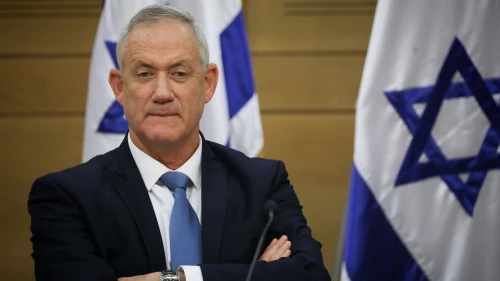
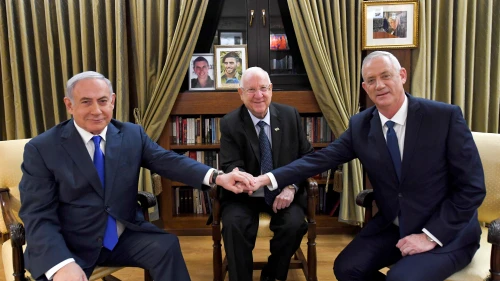
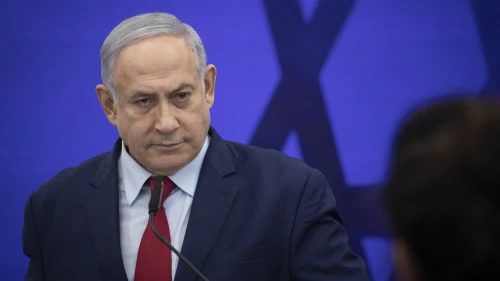
Benjamin Netanyahu is in his second week of a 28-day period during which he’s been tasked to form a government. If he fails, Blue and White leader Benny Gantz stands ready to get his shot.
The absence of Deputy State Attorney Liat Ben-Ari during the last two days of the pre-indictment hearing in favor of a family vacation certainly fits the prime minister’s narrative of a system out to get him and not giving him a fair chance.
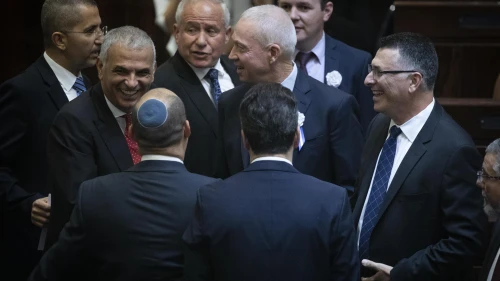
The cloud of no leader being able to form a majority coalition could be felt, and talk was centered on the need to form a unity government led by the two largest parties: Likud, and Blue and White.
The first two days of four days of hearings in the justice-ministry offices in Jerusalem will focus on Case 4000, viewed as the most serious, in which the attorney general announced his intention to indict the prime minister for bribery.
The major party heads are between a rock and a hard place, with no one budging for now.
“The argument right now revolves around the question as to who should serve as prime minister first and who second. I hope President [Reuven] Rivlin succeeds in bridging both sides, and that a decision will be made on the matter,” said Yisrael Beiteinu Party leader Avigdor Lieberman.
Benjamin Netanyahu seems to be pushing all the buttons necessary to pressure Benny Gantz into joining his government; their two parties alone would form a majority of 64 seats.
“The nation of Israel is smarter than its leaders, and the nation voted for unity,” says Israel Democracy Institute vice president Yedidia Stern.
Despite the fact that many Israelis view retaining the Jordan Valley as a consensus issue, the prime minister was criticized from the right and left over the timing of the move, right ahead of the Sept. 17 elections.
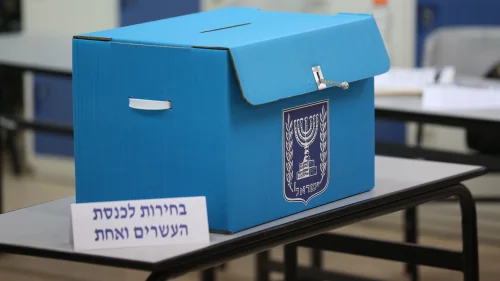
The legislation, called the Security Camera Law, was opposed by the Central Elections Committee, the Knesset’s legal adviser and Attorney General Avichai Mandelblit, who said it would undermine “the exercise of the fundamental right to vote” because voters would be scared off by the sudden appearance of filming in any form.