
After the 1996 Atlanta Olympic Games, a consequential idea took shape: Jewish security in America could no longer be episodic, reactive or fragmented. It had to be coordinated, professional and permanent.
That shift emerged not from theory, but from a city that had just carried out one of the most complex security operations in American history—and from conversations between two men who understood that protection works only when treated as infrastructure, not improvisation.
Abraham (Abe) Foxman, then national director of the Anti-Defamation League, brought the perspective of a lifelong fighter against antisemitism, shaped by survival in Nazi-occupied Europe and decades spent tracking its modern evolution. Bernard (Bernie) Marcus, the co-founder and CEO of Home Depot, brought a builder’s instinct: systems, scale, durability and execution.
In Atlanta after the Olympics, Foxman and Marcus reached a shared conclusion: Jewish life in America required a coordinated security architecture built on institutional alignment, professional expertise and sustained philanthropic investment.
What began in Atlanta would influence Jewish communities nationwide. Their vision was never meant to remain local. It aimed to create a model of communal protection that could scale nationally while preserving coordination, discipline and shared purpose.
Both men are now gone. What remains is their achievement—and the expectations they left unfinished.
Atlanta as a turning point
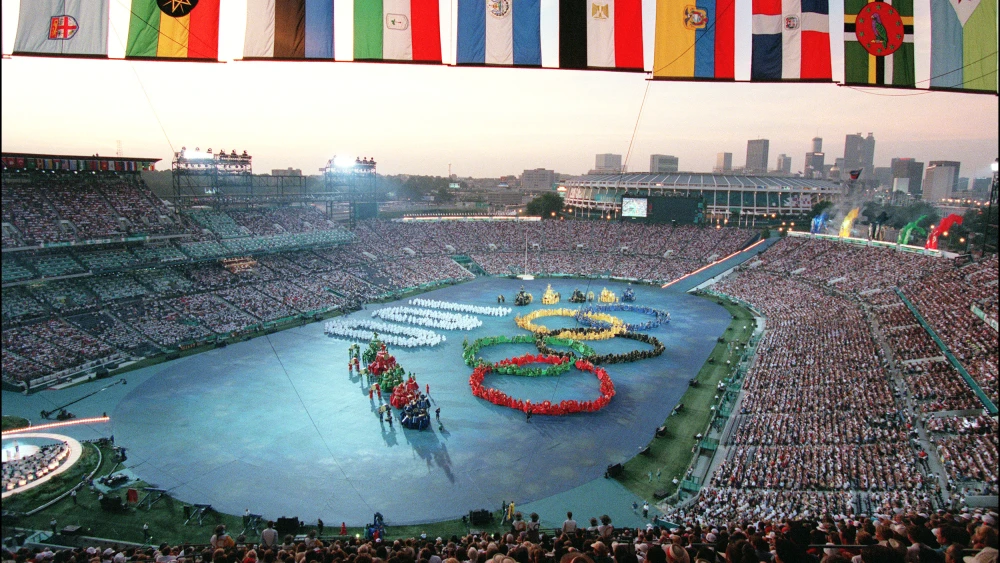
The 1996 Olympics transformed Atlanta into one of the most sophisticated security operations in American history, requiring unprecedented coordination among federal, state and local agencies. The Centennial Olympic Park bombing underscored a hard truth: Even major, well-resourced efforts cannot eliminate the threat from lone actors and ideologically driven violence.
Atlanta absorbed a second lesson as well: Security built for a single event is not enough. Protection must be continuous, not episodic; structural, not temporary.
In that environment, Foxman and Marcus began shaping a modern vision of Jewish communal security—one that started in Atlanta but was always intended to extend far beyond it.
A shared vision emerges
Foxman understood that antisemitism is adaptive—constantly changing form, language and platform. Visibility alone is not protection; systems are.
Marcus understood that institutions endure only when built with the same seriousness as the threats they face. Philanthropy, for him, was structural, not symbolic.
Together, they arrived at a core premise: Jewish security in America requires coordination across leadership, philanthropy and execution—not parallel efforts, but a connected system.
That insight, first sharpened in Atlanta, later spread across Jewish communal life as federations, synagogues and national organizations built more integrated security frameworks.
From vision to infrastructure
Over the next two decades, that vision became institutional. Security became professionalized. Federations created dedicated security roles, while other organizations, philanthropic groups and individual leaders strengthened the broader Jewish communal security ecosystem with additional expertise, advocacy and resources.
Synagogues and schools invested in training and physical hardening. After the creation of the U.S. Department of Homeland Security, federal and state funding expanded security infrastructure and accelerated these efforts across institutions and jurisdictions.
What began as a strategic insight in Atlanta grew into a national infrastructure. What had been reactive became structured. What had been fragmented became networked. What had been local became national.
Atlanta became both the proving ground and the starting point for a larger movement: treating Jewish security not as a crisis response, but as a permanent communal responsibility.
Strength, complexity and fragmentation
But scale creates complexity. And complexity creates friction.
As Jewish security systems expanded across organizations and funding streams, capability increased—but so did institutional layering. Coordination became harder to sustain consistently across jurisdictions and responsibilities.
Effectiveness depends not only on resources, but on alignment: shared priorities, disciplined communication and clear execution. Where alignment is strong, systems function at a high level. Where it weakens, gaps emerge.
Even systems built around shared purpose can drift into bureaucratic overlap, duplicated effort and institutional ego. Over time, those forces slow decision-making and fragment what was intended to function as a unified architecture of protection.
When alignment breaks down, the consequences are real: gaps, delays, duplication and weakened protection.
None of this diminishes the extraordinary progress that has been made. But it reinforces a truth Foxman and Marcus understood clearly: Security is not only about capability. It is about alignment.
An obligation to finish the work
Foxman spent his career ensuring that antisemitism was identified, named and confronted with clarity and urgency.
Marcus built systems designed for scale and reliability—and later applied that same mindset to strengthening Jewish communal infrastructure.
They did not build a single institution together. But they shared a foundational insight: Jewish security depends on disciplined coordination between leadership, philanthropy and execution.
What they helped initiate in Atlanta ultimately became part of a broader national framework for protecting Jewish communal life in America.
Today, the Jewish community inherits a security system more advanced, professionalized and widespread than at any point in American history. That is their legacy. But it also inherits responsibility.
Systems this complex do not sustain themselves through scale alone. They require alignment, discipline and resistance to the natural drift toward silos, turf and fragmentation.
The infrastructure exists. The funding exists. The expertise exists.
What must now be protected is coherence. That was the vision Foxman and Marcus helped set in motion in Atlanta before it spread nationally across Jewish communal life. And it is the obligation they leave behind for the community that is now responsible for carrying it forward.