Newsletter
Newsletter Support JNS
Israel Kasnett

Israel Kasnett

Israel Kasnett, editor at the Jerusalem Center for Security and Foreign Affairs, offers expert analysis on Israeli politics, society and regional developments at JNS.org. With a deep understanding of the region, he delivers insightful commentary that challenges media bias and provides a clear perspective on Israel.

The world is witnessing the creation in Afghanistan of a scenario similar to Syria, Yemen, Iraq and Lebanon, where Iranian Shi’ite militias are promoting Tehran’s dangerous foreign policy, which focuses on regional and then international domination.
Trade between Israel and the United Arab Emirates alone has reached nearly $600 million; it’s expected to reach $1 billion by the end of the year.
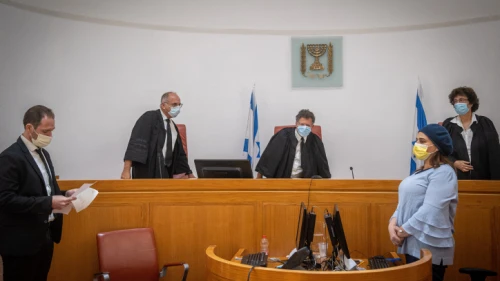
According to legal experts, the court has allowed outside pressure to influence its decision. What should be a strictly legal decision seems to have become emotional—a consideration that is supposed to remain outside the purview of the court.
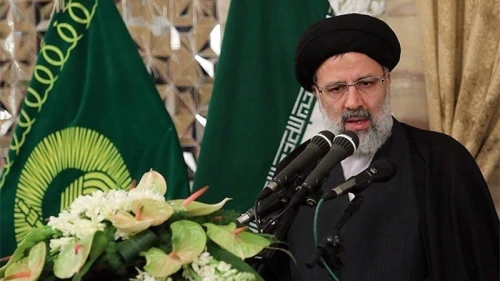
The low-intensity war between Israel and Iran has come out of the shadows as the Islamic Republic signals its intention to plant its stake as a regional superpower by installing an ultra-conservative president, and by continuing to attack Israeli and foreign targets at sea.
Saudi media reported that Jerusalem and Moscow have in recent years “maintained a hotline that allowed the Israeli military to alert Russian forces of incoming strikes,” but now, “communication through the Israel-Russia deconfliction mechanism has effectively ceased.”
Israel’s Intelligence Minister Elazar Stern noted that within its first month, the new government has implemented the law “without public pressure and without a petition to the High Court.”
The organization, which arranges the annual Tisha B’Av walk around Jerusalem’s Old City, this year advocated to expand Jerusalem’s municipal borders as Israel faces threats to divide the city.
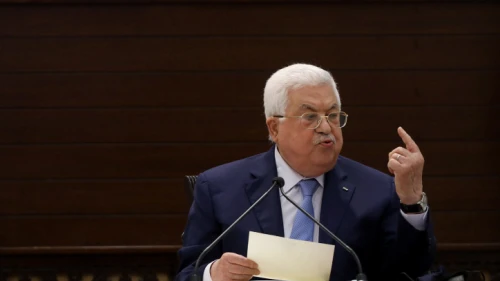
Israel’s new government aims to mend relations with Jordan’s leadership through gestures like economic and water deals, but the Palestinian issue and Iran remain major obstacles.
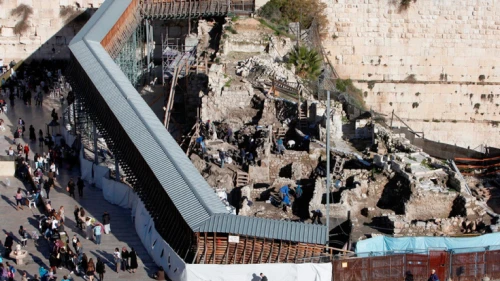
Experts say the wooden walkway at the Western Wall that leads to the Temple Mount is under threat of imminent collapse, but the government appears to be stalling out of fear of provoking Jordan or the Palestinians—a threat some say is nothing short of “political terror.”
Jerusalem Center for Public Affairs President Dore Gold says that besides the Iranian nuclear threat, the more probable danger comes from its proxies in the region.
“What’s coming out of official university channels—through faculty emails, official departmental statements and departmentally sponsored events like this one—is wholly inappropriate and incredibly dangerous for our students,” said Tammi Rossman-Benjamin, director of the AMCHA Initiative.
“Out of pragmatic considerations, Israel has learned to accept China’s contradictory policy over time,” said Tuvia Gering, an analyst at the Jerusalem Institute for Strategy and Security. “In other, more private forums, China and Israel can enjoy each other’s company.”