Jewish organizations in Belgium on Monday demanded restitution from a city-run museum in Ghent that has acknowledged that it was in possession of a looted painting, yet declined to offer compensation for it.
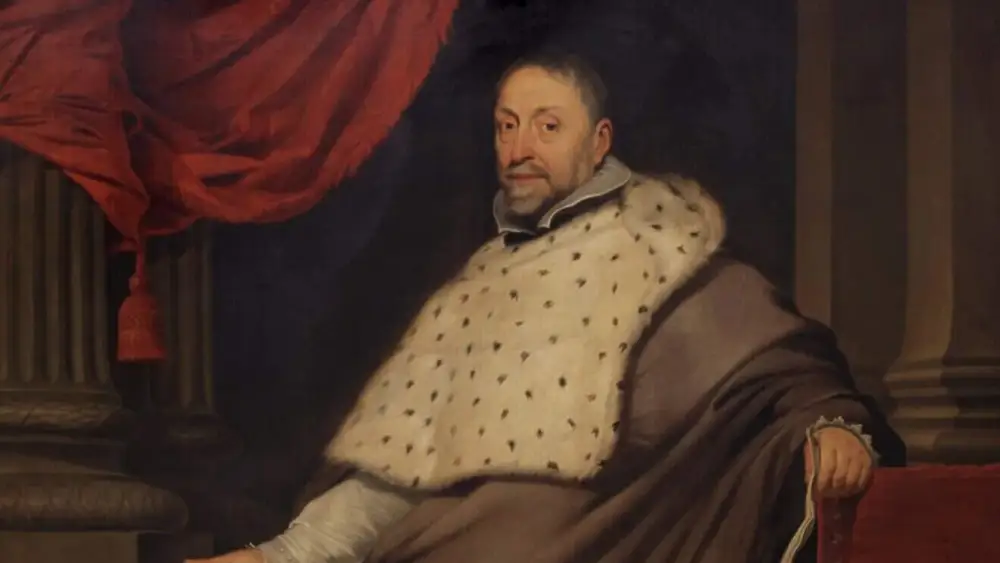
The call by the Jewish Information and Documentation Center (JID) and the European Jewish Association (EJA) followed reports last week that the Museum of Fine Arts Ghent (MSK Gent) had refused to offer restitution for “Portrait of Bishop Triest” by Gaspar de Crayer.
The museum claims that the family of the late arts dealer Samuel Hartveld was compensated sometime after World War II. However, the family disputes this, and has demanded the museum present documentation of the alleged compensation. Hartveld’s family has threatened legal action against the museum.
So far, the museum has not produced such documents. The museum had not replied by time of publication to a query from JNS on the amount that was allegedly offered. According to the VRT broadcaster, the information about the alleged compensation came from a committee set up by the museum to establish provenance.
Heinrich Kunst, a Nazi Party member, gained possession of Hartveld’s Antwerp gallery during the Holocaust. The Jewish arts dealer’s library—one of the largest in Belgium—was seized in 29 crates.
Hartveld and his wife fled to the United States. His art gallery was bought by an art restorer named René Van de Broek. The provenance committee determined that, “It is highly doubtful whether Hartveld actually received the total purchase price (of 200,000 francs, ed.),” the De Standaard daily reported last week.
The claim that Hartveld had received compensation owed to the committee’s belief that he and Van de Broek probably had paintings “in joint management,” and that this leads to “the factual presumption” that Hartveld “must have believed that he had been sufficiently compensated,” De Standaard quoted from the committee’s records.
Although it recommended against compensating Hartveld’s heirs, the committee did recommend “moral redress” in the form of mentioning “the unacceptable act of spoliation” in publications and exhibitions, De Standaard reported.
The two Jewish groups, EJA and JID, wrote in their appeal for restitution that “International standards (the Washington Principles and the Terezin Declaration) are clear: when spoliation is established, restitution must follow, regardless of any alleged later payments.”
It is “morally unacceptable for a Belgian museum to inflict a new injustice on a Jewish family already persecuted by the Nazis,” said Ralph Pais, Vice President of JID Belgium.
In 2018, a Dutch court issued a highly controversial ruling allowing an Amsterdam municipal museum to keep a Nazi-looted painting for free, saying this would serve the “public interest” better than returning the artwork to its rightful owners.
The decision was panned by Holocaust restitution activists as an outrageous miscarriage of justice, with the potential to undo decades of progress.
Following an international outcry, the city government of Amsterdam in 2022 disregarded the court ruling. It made the Stedelijk Museum return the Wassily Kandinsky work in question to the heirs of the art dealer from whom the Nazis stole it, bringing the claim to a close.