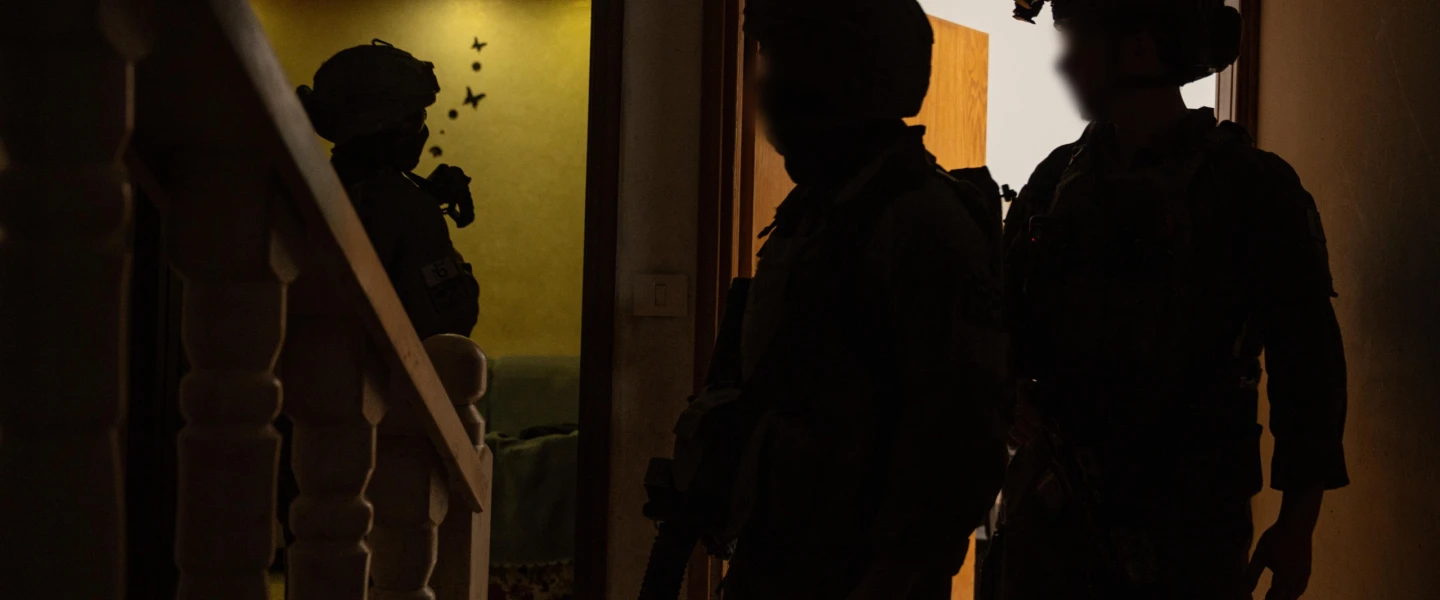

Israel has threatened to sue The New York Times over Nicholas Kristof’s May 11 “dog rape” opinion piece. Apparently, the newspaper’s long-standing crusade against the Jewish state has crossed a line.
Israel’s threatened lawsuit would encounter significant procedural hurdles, whether filed in the United States or in Israel. That includes the question of whether a country, rather than an individual or corporate entity, can appear as a defamation plaintiff. Perhaps that problem could be solved by the lawsuit being brought in the name of the head of Israel’s Prison Service or the head of specific prisons, but it remains to be seen how the “standing” problem could be overcome, if at all.
The other legal threshold for Israel, particularly under U.S. law, is the “actual malice” requirement when a public figure (here, Israel) sues a publication. Mere negligence or even bias is not sufficient to make out such a defamation claim; the plaintiff must prove that the publisher either knew the allegations were false or acted with reckless disregard for whether they were true.
It is for that reason, if Israel does file suit, even in Israel, we can expect the complaint to catalogue the Times’ long history of disproportionately critical reporting on Israel. This history reflects an institutional mentality that, as recounted by Mitchell Bard in JNS, has embraced inflammatory allegations and imagery over the editorial scrutiny and objectivity otherwise required. Israel could be expected to deconstruct and refute Kristof’s story in that context.
One of the clearest examples of the news outlet’s editorial mentality when it comes to Israel is an article it published on May 16, 2018, during Hamas’s so-called “Great March of Return” riots along the Gaza border.
At the height of the violence, the Times published a story (as did other news sources) headlined, “A Child of Gaza Dies. A Symbol Is Born. The Arguing Begins.” The article centered on the death of 8-month-old Layla Ghandour, whose family had brought the baby to the riots. The story included a photo of the dead infant being embraced by her grandmother.
The Times framed the story as examining how wartime images become propaganda and “competing narratives.” But the report itself and the wrenching photo accompanying it were precisely that kind of emotional manipulation.
The photo was the article’s centerpiece. It displayed the child’s limp body, bathed in a white, heavenly light, coddled in the arms of her grandmother, whose illuminated, grief-stricken face gazes down at the dead infant.
The article’s lede left no doubt as to what we were seeing. Layla, who had “sparkling green eyes,”
“ … inhaled a draft of acrid gas that set off a rasping cough and watering eyes. Hours later, she was dead.”
The photo’s caption similarly stated categorically, the baby “fell ill after inhaling tear gas.”
Then, displaying a remarkable lapse of editorial attention, the article quickly contradicted itself.
Echoing the headline, it characterized the very claims it had just asserted—expressly tying Layla’s death to inhaling Israeli tear gas—as unsubstantiated. The Times reported that a Gaza doctor attributed the child’s death to a heart ailment, not tear gas. The family admitted the baby suffered from a congenital heart defect. A Gaza doctor conducting an autopsy said it appeared the baby was exposed to tear gas, “[b]ut we don’t know for sure.” No death certificate had yet been issued.
In other words, within an internally inconsistent framework, the paper of record paired one of the most damning accusations and images imaginable with admitted uncertainty about what actually happened.
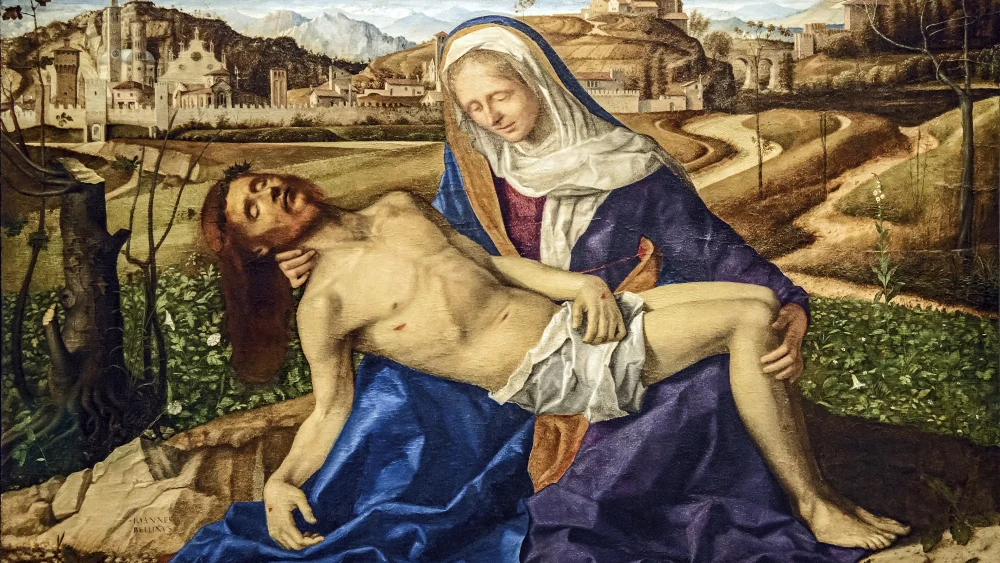
Compounding the inflammatory effect, the photograph was not merely an emotional portrayal. It appeared consciously constructed to evoke some of the deepest visual archetypes in Western/Christian art: the “Madonna and Child” motif, and even more strikingly, the pietà: the image of the grieving Virgin Mary holding the crucified body of Jesus on her lap.
Together, a new archetype was born: the “Palestinian pietà.”
The Times’ acknowledgement of the dispute over the circumstances of the baby’s death didn’t justify or immunize the publication of an article and photo—likely seen by millions of people—that specifically tied the baby’s death to inhaling Israeli tear gas.
To the contrary, the acknowledgement of uncertainty was a window into what appears to be the Times’ editorial mentality of suspending objectivity and balance when it came to reporting on Israel. And, ultimately, irrespective of the internally competing written narratives, the photo dominated the presentation and portrayed Israel in the harshest possible light.
Soon after the initial news accounts, substantial reporting strengthened the strong suspicion that Layla’s death stemmed from preexisting medical conditions, not breathing Israeli tear gas. Hamas removed her from the list of those killed at the border riots. None other than Hamas senior leader Yahya Sinwar, mastermind of the Palestinian Arab terrorist attacks in southern Israel on Oct. 7, 2023, was reported as having actually paid the family to tell the media the baby had died from tear-gas inhalation.
The Times article, however, which remains on its website, contains no edit, note, no update, no correction.
This story, among others, highlights how Kristof’s dog-rape piece is not an aberration. It’s part of a deeply ingrained editorial culture at the Times (and elsewhere) that grants anti-Israel narratives extraordinary rhetorical latitude and prominence—overwhelming, if not erasing, journalistic judgment and objectivity, and even common sense.
Whatever the outcome of Israel’s threat to sue the paper, its 2018 report of the death of baby Layla Ghandour places Kristof’s article in the context it deserves.