Newsletter
Newsletter Support JNS

IDF strikes Hezbollah in Lebanon, some 550 such targets since beginning of the week

The attacks followed Israeli Prime Minister Benjamin Netanyahu’s announcement on Tuesday that the IDF is deepening its operations in Lebanon.

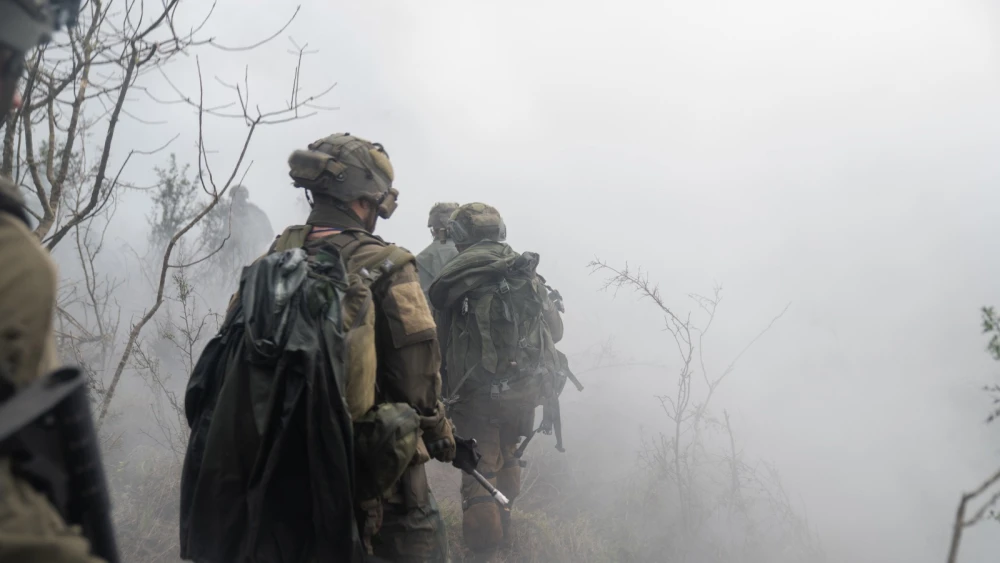
Israel Defense Forces soldiers during ground operations against Iranian-backed Hezbollah terrorists in Southern Lebanon, May 2026. Credit: IDF Spokesperson's Unit.
Israel Defense Forces soldiers during ground operations against Iranian-backed Hezbollah terrorists in Southern Lebanon, May 2026. Credit: IDF Spokesperson’s Unit.

The Israel Defense Forces struck multiple Hezbollah targets in the Beqaa Valley in Lebanon on Wednesday, as it continued to strike command centers in Tyre, the Israeli military said.

The Jewish state struck “military structures, command centers and launch sites used by the Hezbollah terrorist organization in the Beqaa Valley and in several areas across southern Lebanon,” the IDF stated.

“Strikes on command centers in the area of Tyre are continuing at this time,” the IDF added. “Since the beginning of the week, the IDF has struck approximately 550 Hezbollah targets in Lebanon.”

Steps were taken “to mitigate harm to civilians” in advance of the strikes, including issuing warnings and using “precise munitions and aerial surveillance,” the IDF said.

Israeli Prime Minister Benjamin Netanyahu said on Tuesday that the IDF is deepening its operations in Lebanon.

“I have a passport that I was just born with,” Laura Pinho said during a CodePink webinar. “How can I live in this world if I don’t make every effort to equalize the playing field in whatever way that I can?
Secular activist Naor Narkis’s suggestion that Religious Zionist soldiers’ casualty rates might not be so high were they to do “full military service” was “unnecessary,” said Golan.
“Hamas’s actions are time and again ignored by human rights organizations,” the Defense Ministry unit said.
Israeli forces eliminated Talal Jaber Mohammad Abd al-Aal, who infiltrated Israel and helped hold hostages.
“She complained about that kind of retaliation and ostracization, and that persisted throughout the rest of her internship there,” Rebecca Harris, of the Brandeis Center, told JNS.
The underground complex in Rafah was neutralized after a three-month operation using 30,000 cubic meters of concrete.