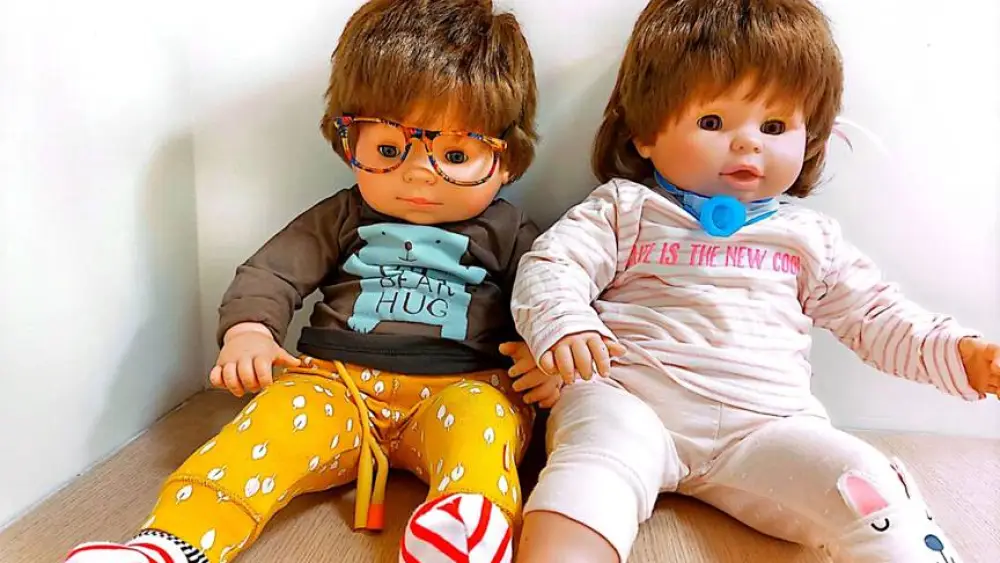
Known worldwide for its specialized disability care and inclusion programming, ADI has a new item in its toolbox: dolls with feeding and breathing tubes that resemble those used by children with special needs. Headed by ADI Jerusalem special educator Tami Gutman, the “Toy Like Me” initiative transforms store-bought soft dolls into playtime twins that promote personal advancement through proper representation.
In recent years, a movement to develop dolls for children who have never seen accurate representations of themselves on store shelves has created dolls with wheelchairs, limb differences, birthmarks, scars, albinism and medical equipment of all kinds.
When Gutman realized that the toys in ADI Jerusalem classrooms did not fully represent residents who played with them, she set out to remedy the situation.
“Children want dolls they can relate to, dolls that look like them. For children with severe disabilities and complex medical conditions, dolls that mirror their life situations are not available in neighborhood toy stores,” she said. “At ADI, we strive to give our children the best of everything, and if it doesn’t exist, we create it.”
Employing her experience as director of ADI’s Sensory Library Program—for which she accessorizes books with sensory components to make stories more engaging for children with cognitive disabilities—Gutman upgraded the dolls by adding gastronomy feeding tubes, tracheotomy breathing tubes and other medical equipment.
“The dolls with disabilities were happily received by children who knew from experience that they must handle the dolls gently and be careful not to disconnect the tubing,” she said. “I’ve seen with my own eyes how dolls like these help children make sense of their world and experiences, and can make all the difference in their growth and development.”
ADI provides its residents and special-education students with individualized growth plans and specialized services they need to grow and thrive; rehabilitation patients with the treatments and therapies they need to heal and return to their lives; and the community at large with tangible opportunities for encountering disability, raising awareness and promoting acceptance.