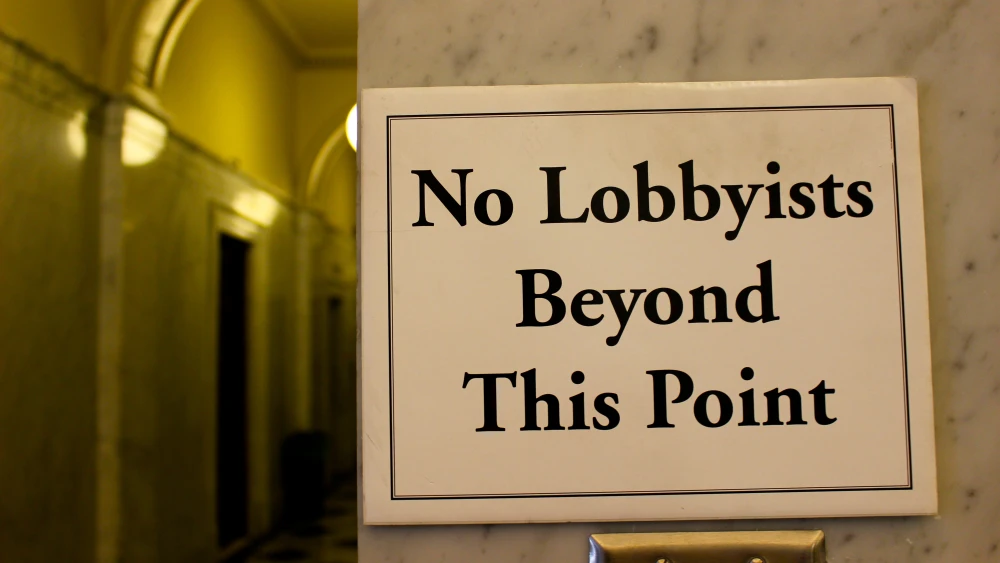
Two Jewish organizations registered to lobby this year for the first time, but overall lobbying expenses for major Jewish groups declined during the first six months of 2026 compared to the same period last year, according to a JNS review of disclosures filed with the U.S. Senate.
The American Israel Public Affairs Committee outspent all other Jewish groups, but it reduced its lobbying spending by about 6%—from $1.8 million during the first six months of 2025 to $1.7 million from January until the end of June of this year.
The Anti-Defamation League also spent less on lobbying in the past six months, $720,000, compared to $890,000 during the same period in 2025, a drop of about 19%.
The ADL declined to comment. JNS sought comment from AIPAC.
The Jewish Federations of North America also cut its spending by about 19%, from $386,622 in the first six months of 2025 to $312,109 in the same span this year.
Other groups held their spending steady. The Republican Jewish Coalition spent $200,000 and the Zionist Organization of America spent $100,000 in the first six months of this year, having spent the same amount in that span last year.
The Orthodox Union severed its ties with lobbyist Brian Ballard at the beginning of the year, after reporting lobbying expenses last year for the first time since 2018. The ADL also hired Ballard last year but ended its relationship with him in October.
Ballard has parlayed his ties to Trump into what the research group OpenSecrets said was now the biggest lobbying firm in Washington by revenue.
New faces
The American Jewish Medical Association, which formed after Oct. 7, hired its first-ever lobbyists and reported spending $20,000 from April to June. The association said that it will focus on antisemitism in healthcare.
“Every community deserves a seat at the table when healthcare policy is being shaped, and that includes Jewish medical professionals and patients—especially at a time when antisemitism continues to surface in medicine,” Eveline Shekhman, CEO of the association, told JNS.
The group’s “goal is a healthcare system that is inclusive and free from discrimination and antisemitism,” she said. “Bringing on additional advocacy support can help us achieve this.”
Shekhman told JNS about hospital staff wearing keffiyehs to express solidarity with Palestinians after Oct. 7 and employee unions endorsing the movement to boycott Israel, all of which she said could lead to hostile environments at healthcare facilities and affect patient care.
She raised the same concerns at a House Health, Employment, Labor and Pensions Subcommittee hearing in May.
“We need to have a strong voice,” she told JNS. “We need be loud, and we need to lean into our government officials and say, ‘We need help.’”
Democratic Majority for Israel also began lobbying the federal government on U.S.-Israel relations and Middle East policy this year. It hired two former congressional staff members to do so and has spent $100,000 so far this year.
JNS sought comment from DMFI.
Ross Baker, distinguished professor emeritus of political science at Rutgers, the State University of New Jersey, told JNS other Jewish groups may have felt the need to add their voices, as the biggest lobbying spender in the Jewish and pro-Israel community, AIPAC, is under attack as never before.
“It’s become kind of toxic in Democratic circles, and my hunch is that these new groups springing up are there to kind of pick up the slack that’s been caused by the loss of support for AIPAC, or even the demonization of APAC as a kind of an automatic apologist for whatever Israel does,” Baker said.
“Other groups have been encouraged to take some of the heat off of AIPAC and to kind of spread the support of Israel to related groups that are less easily attacked by the champions of the Palestinians,” the professor told JNS.