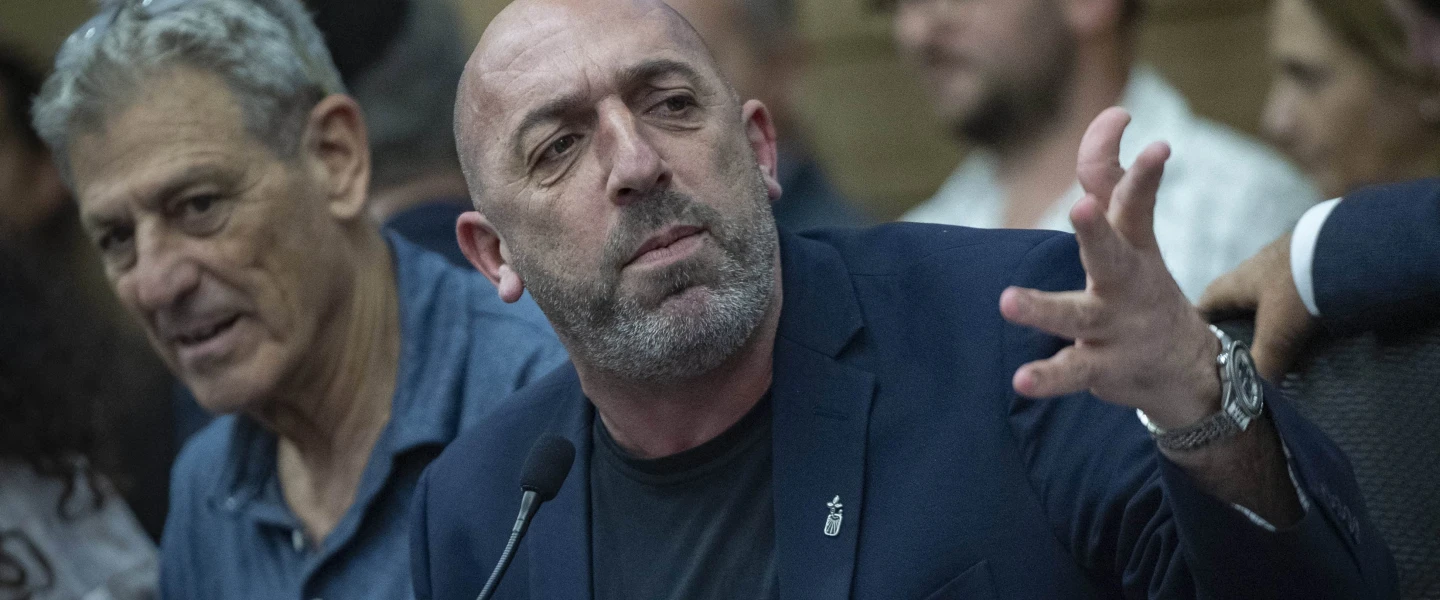
If it were up to Israel, a new war with Tehran would already have begun, Likud legislator Sasson Guetta told JNS last week.
“We want to enter a new round of conflict with Iran because we want to bring about the fall of the regime. We need to cut the head of the snake and finish this,” Guetta said during a sit-down interview at his Knesset office in Jerusalem.
“It will be hard—wars are no fun—but we need to do this so that our children will not experience what we experience, so that they will have greater quiet,” he continued.
Guetta was among an estimated 40,000 to 60,000 northern residents evacuated to central Israel following the Oct. 7, 2023, massacre and the ensuing war with Hamas and Hezbollah, a period during which he said he became acutely aware of the gaps between regions of Israel.
One of his missions as a Knesset member, he said, is to reduce those disparities. Salaries are higher in central Israel, education standards are better and quality of life and transportation infrastructure are more advanced, said Guetta, who chairs the Knesset Subcommittee for Public Transportation. This, he noted, is why many Israelis seek to live in the central region.
Since Oct. 7, however, Guetta said the government has allocated additional funding and advanced new plans to develop the periphery.
“I hope we will succeed in making this change. Creating metropolitan areas in the periphery is a great idea, with quality employment and better universities. It can bring skilled people to the main cities but also to the surrounding towns and villages,” he said.
“This government will soon be opening a university in the north, [in Kiryat Shmona]. We need more high-quality job opportunities, and to create opportunities for citizens to earn more so that they’ll want to raise their children there,” he added.
With Israel in an election year—one must be held by Oct. 27—Guetta said the Likud Party’s platform will likely focus on building on the government’s achievements.
“On the security aspect, whether it is in Gaza, Lebanon or Iran, in the last two years this government and Prime Minister Netanyahu achieved what I don’t think any other prime minister could have achieved. It’s a matter of furthering these successes,” he said.
Turning to the judicial reform proposals unveiled in 2023 by Israeli Justice Minister Yariv Levin—which includes changing the composition of the Judicial Selection Committee to give Knesset members a majority, enacting an “override clause” allowing lawmakers to reverse Supreme Court decisions, abolishing the court’s use of the “reasonableness” standard to strike down government actions and allowing ministers to appoint and dismiss their own legal advisers—Guetta said this issue would also be central.
Initially, he said, the public opposed the reform. But over time, he continued, Israelis saw excessive intervention by the Supreme Court, the attorney general blocking government actions, and the Israel Defense Forces military advocate general endangering soldiers.
“We knew there was a rotten system, and now the public knows too,” he said.
Guetta, an agriculturist who lives in Moshav Goren, about three miles from the Lebanese border, is closely involved in local production issues. He promotes the consumption of locally produced goods while seeking to lower farmers’ costs—steps he says could help ease Israel’s cost of living.
Among the legislation he initiated is a law requiring country-of-origin labeling on fruits and vegetables. Israelis are highly patriotic and want to buy local, Guetta said, but are not always able to distinguish between domestic and imported produce.
“We think that marking where products come from can really help the local market, encourage local production and ensure food security,” he said, adding that local products are often cheaper.
Guetta also addressed Israeli Finance Minister Bezalel Smotrich’s proposed dairy reform, which would eliminate protective tariffs of up to 40% on imports.
The reform is designed to reduce national milk production from 1.5 billion liters to 1 billion liters annually while lowering by 15% what farmers receive for raw milk. The centralized planning system overseen by the Israel Dairy Board would be dismantled, ending quota allocations and price controls in place since the state’s founding.
Smotrich says that three companies—Tnuva, Tara and Strauss—control 85% of the market and charge prices more than 50% higher than those abroad. Opening the market to imports and reducing domestic production, he says, would provide meaningful relief to consumers.
Guetta contends that opening the market to imports would not lower the cost of living, as imported products remain more expensive. Instead, he argues, it would drive small dairy farms in the periphery out of business while leaving monopolies intact.
Rather than liberalizing imports, Guetta advocates lowering farmers’ production costs to boost output and strengthen local competition. To that end, he introduced the Water Law (Amendment No. 31) 2025 bill, aimed at regulating agricultural water rates.
“Even if they sell for a lower cost, they will not lose money because their cost of production is lower. Then we can sell tomatoes for two shekels [$0.64] per kilo while protecting the local industry, when imported tomatoes can cost up to 19 shekels [$6.10] per kilo,” he said.