


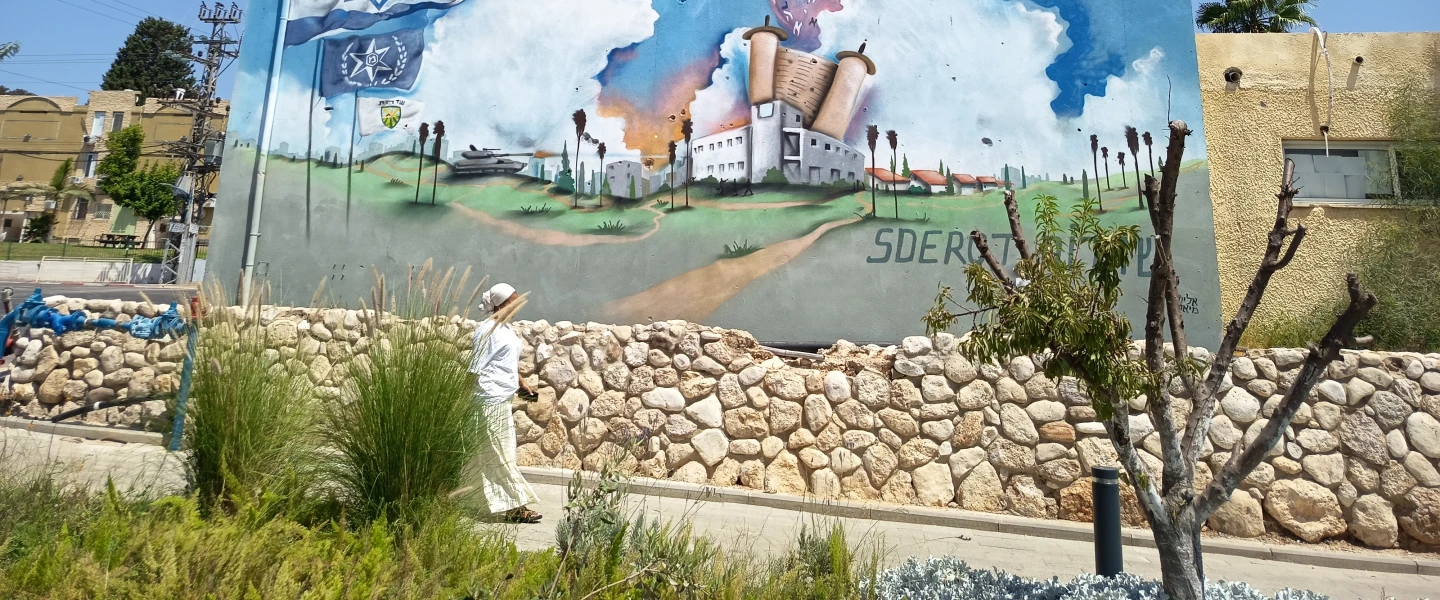
SDEROT, Israel—It’s hard to believe that the population of this city, less than a mile from the border with Gaza and with less than 20 seconds to reach a bomb shelter if a rocket is fired from the Strip, has actually increased since Oct. 7, 2023.
According to city statistics, Sderot had 35,477 residents in 2023. Today, it has 42,000—an increase of nearly 20%.
One of those new residents is Hila Malka, who was born in the United States and grew up in Beit Shemesh as the daughter of American parents.
“We wanted to strengthen the city, and we fell in love with it,” she told JNS. “It’s a very warm community with really good people.”
She works for the Reut Foundation, an NGO that supports the city’s residents with a variety of programs, including providing Shabbat food for families with a parent serving in the reserves and running a summer camp for at-risk children.
Reut this week also sponsored an English-language tour of Sderot, attracting several religious families, including one with six children that made aliyah from Toronto just a year ago.
Many Israelis, especially “Anglos,” as English speakers are called here, have never visited Sderot. Residents are proud of their city and want to make sure the story of what happened here is not forgotten.
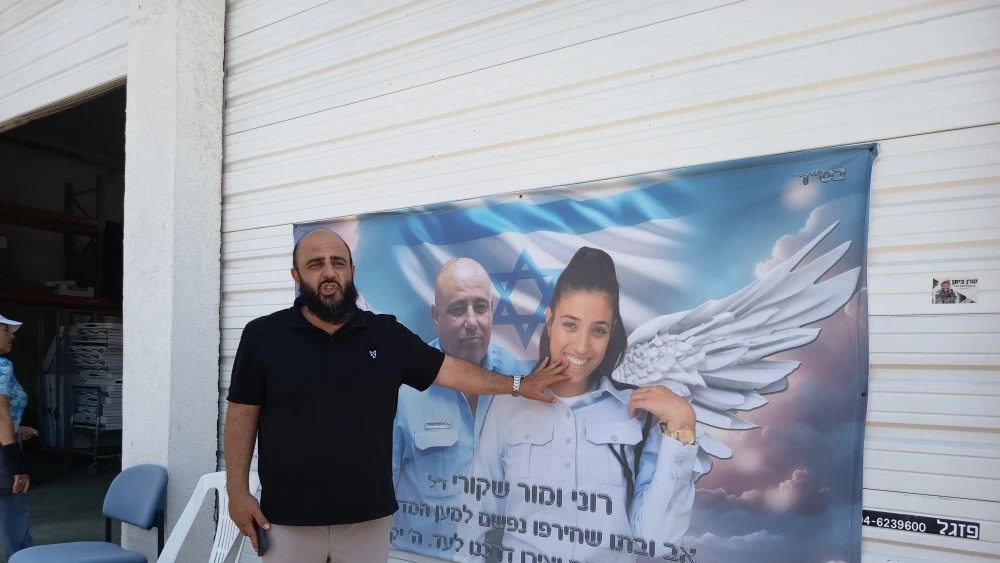
Nir Kalfa, 49, a lawyer and father of six who was born in Sderot, told the group about his experiences on Oct. 7, when he was in his home’s safe room with his wife and five of their six children.
Several of the dozens of armed terrorists who took over Sderot passed in front of his house. One of his daughters, a teenager, was spending Shabbat with friends, and Kalfa got into his car to try to bring her home before being stopped by police. He said residents did not realize the extent of the attack until several hours had passed.
Overall, 72 Israelis were killed in Sderot on Oct. 7, including a group of Holocaust survivors who were vacationing in the city. One of the fiercest battles took place at the Sderot police station, where terrorists seized the building, killed 11 police officers and fought Israeli forces for hours until the station was demolished.
Today, the site of the police station serves as a memorial and was the first stop on the Sderot tour. Towering concrete and steel pillars, accompanied by music, stand next to a memorial path containing stones and metal from the original police station, an emotional reminder of the battle that took place there.
The next stop was a coffee cart overlooking Gaza established in memory of Capt. Shilo “Chico” Cohen. His father, Aryeh Cohen, described how his 24-year-old son, who served in the Israeli Air Force’s elite Shaldag unit, was home on a short leave on Oct. 7.
As soon as he heard about the attack, he grabbed his pistol and headed to Kibbutz Be’eri, one of the communities hardest hit in the Hamas massacre.
He joined a group of other special forces soldiers and fought at Be’eri, where he was killed late that afternoon.
His father dug up a tangerine tree near the site, as well as a piece of the wall of the home in Be’eri where Chico was killed. They are now placed at a lookout point overlooking what used to be Beit Hanoun in Gaza. All profits from the coffee cart go to the Reut Foundation.
A city built on resilience
Sderot was founded in 1951 as a transit camp for Jewish immigrants, including those from Iran and Kurdistan. About one-third of its residents are Orthodox, including many of the new arrivals, while many residents who are not Orthodox nevertheless consider themselves traditional.
“No businesses are open on Shabbat,” Kalfa told JNS. “But the swimming pool is open for anyone who wants to go.”
He said Sderot offers residents several advantages, including housing that is far cheaper than in central Israel, a warm community and significant tax benefits. With train service to Sderot, Tel Aviv is just 58 minutes away.
Kalfa said that while Oct. 7 was traumatic for the entire city, residents had already been living under the threat of rocket attacks from Gaza for more than 20 years. Residents have less than 20 seconds to reach a bomb shelter, and many of the city’s public buildings, including entire schools, are reinforced.
In the wake of Oct. 7, there was a desperate need for therapists, and Kalfa said many children, including his own, show signs of post-traumatic stress. The city has marshaled resources to help, including a large Resilience Center that offers a range of services.
On a recent Tuesday afternoon, about 40 children enthusiastically banged drumsticks on overturned yellow pails as Amiram, an energetic teacher, shouted commands and led them in songs.
The at-risk children are spending their summer vacation at a camp at the Resilience Center. They receive two meals a day and go home only to sleep. During the school year, the center provides homework assistance and other services.
Residents want the world to know that despite the trials of the past three years, they remain optimistic.
“Sderot is a beacon of resilience, strength and hope,” Kalfa told the group. “Despite all of the challenges we’ve faced, we didn’t give up and we’re still here.”



