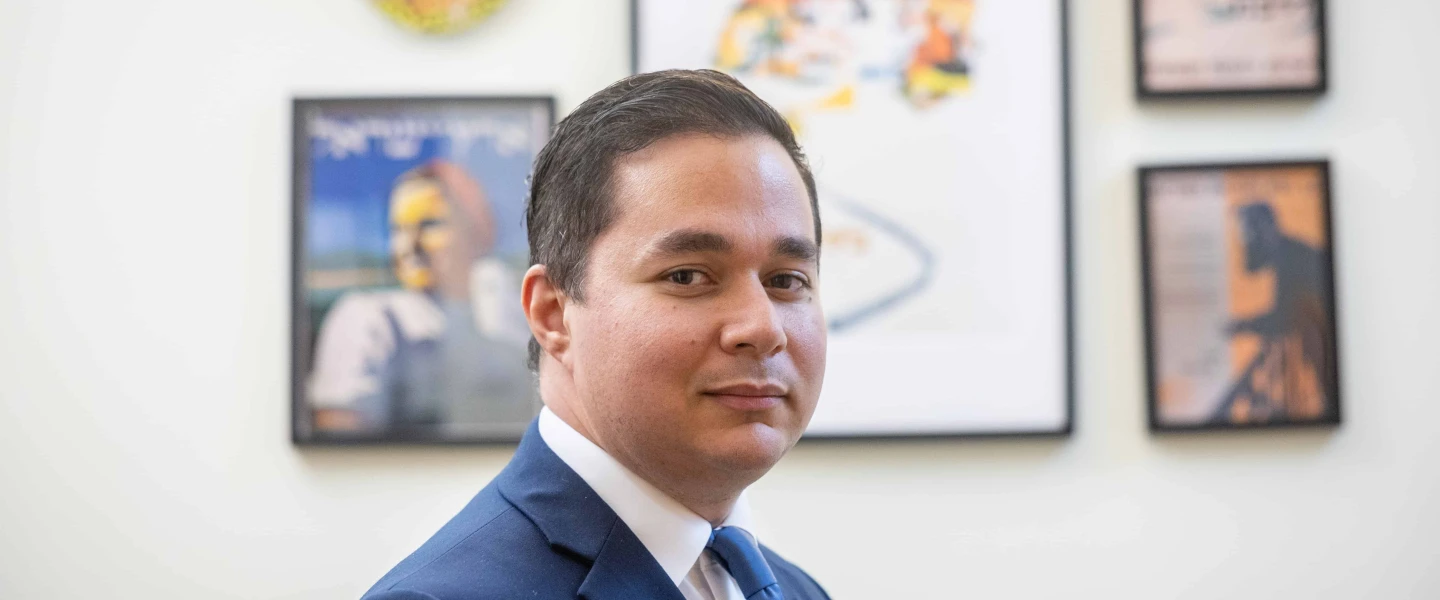
U.S. President Donald Trump’s plan for Gaza “has a lot of potential,” Likud lawmaker Dan Illouz told JNS at the Knesset.
“When we look at what has happened in Israel over the past two years and the numerous accomplishments, much of it is thanks to close cooperation with the Americans,” said Illouz.
“Whether it’s dealing with Iran, Hezbollah, or Gaza—the fact that we were able to bring home all our abducted soldiers while maintaining a strong defensive perimeter inside Gaza and continuing to address ongoing challenges as long as Hamas remains—is a result of that partnership,” he added.
According to Illouz, conservatives tend to be guided by realism rather than euphoria or utopian thinking.
“I think the key to Trump’s plan being successful is recognizing the dangers and minimizing the likelihood of those dangers materializing,” he said.
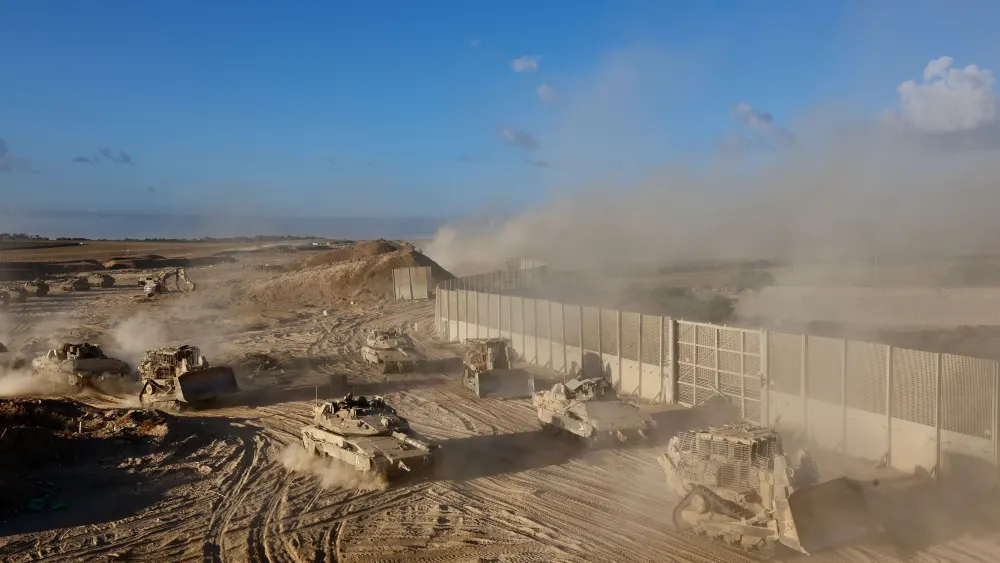
For instance, Illouz pointed out, Hamas continues to control about 50% of Gaza. While there is widespread international support for disarming the group, he said, “it’s still not happening—and that’s cause for concern.”
He also expressed concern at Turkey’s involvement. “Turkey is not a friend of Israel, and in my opinion, not a friend of the West,” he said.
“Its president aligns ideologically with the Muslim Brotherhood and supports Hamas. While he is currently close to Trump and has pledged to help disarm Hamas, this is something we must monitor carefully to ensure that the threat does not materialize,” he added.
“There are many things for which we must be grateful to Trump—foremost, the release of our hostages,” Illouz added.
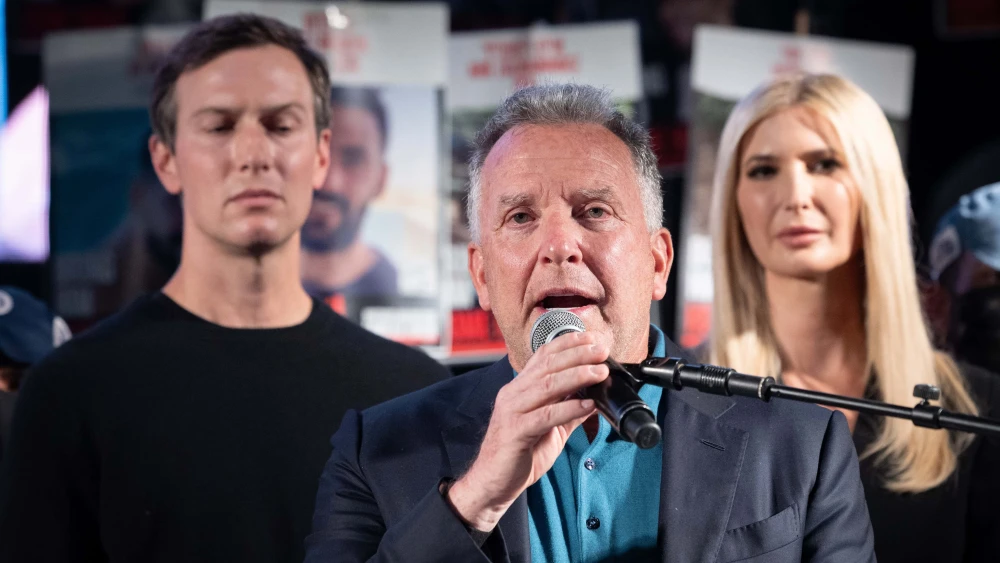
He emphasized there is no doubt that Trump is a great friend of Israel, and that U.S. Special Envoy Steve Witkoff and White House adviser Jared Kushner—who helped broker the president’s Gaza deal—“are people who genuinely have Israel’s interests at heart.” However, he continued, “at the end of the day, as great a friend as Trump is to Israel, we understand that his first responsibility is to America’s interests — just as ours must always be to Israel’s.”
While discussing the Abraham Accords between Israel and some of the Arab Gulf states and Morocco, Illouz referred to it as “a success story.”
“They showed that peace is possible on a ‘peace for peace’ basis and demonstrated the enormous potential for cooperation between nations that were once enemies and are now friends,” he said.
“It’s true of the Emirates, with incredible business and strategic cooperation. It’s true of Bahrain, and it’s true of Morocco—the amount of tourism and cultural exchange is truly remarkable. As a Moroccan Jew myself, I am especially proud of this,” he added.
“I believe more and more countries will want to join, especially after Israel has demonstrated such strength over the past two years,” Illouz continued. “When countries pursue peace treaties, they seek strength.”
Illouz said Indonesia and Saudi Arabia are currently being discussed as potential next partners. “There’s enormous potential there,” he said. “If Indonesia, the largest Muslim country in the world, and Saudi Arabia, home to Islam’s holiest sites, join the Abraham Accords, I believe many others will follow.”
Expanding the accords, Illouz said, serves Israel’s interests as well as those of Arab partners and the wider world. “It could create a remarkable new paradigm,” he said. “Instead of Israel being an isolated nation surrounded by neighbors with either cold or nonexistent relations, it could become the hub of a trade route stretching from India through the Gulf to Europe and the United States—an alternative to the existing routes that are less friendly to the West.”
“It could be profoundly beneficial for the West, for Arab countries, and for Israel,” he stressed. “As someone who believes deeply in the values of Western civilization, I think this could be something truly good for the world as a whole.”

A key internal Israeli issue, Illouz said, is the enlistment of ultra-Orthodox youth into the army. “There needs to be a historic shift on this issue,” he said.
“It creates tension within the coalition, but my position is clear—we need more soldiers. As right-wingers who understand Israel’s security challenges, we cannot ignore them. Our brothers from the ultra-Orthodox community must share in the responsibility for our defense.”
Regarding sovereignty in Judea and Samaria, Illouz said he helped initiate a historic Knesset decision affirming the need to apply Israeli sovereignty there.
“Unfortunately, the government hasn’t acted yet, and Trump has been less supportive than we’d hoped,” he said. “I believe we can still persuade him, or if not, make independent decisions—while maintaining respect for our friendship with the Americans.”
Turning to Diaspora Jewry, Illouz said the most urgent issue is the rise of antisemitism.
“As someone who grew up in Canada, I used to say that I didn’t leave Canada—I ran to Israel out of Zionism,” he said. “But now, many families are thinking of leaving Canada not out of Zionism, but out of fear.”
He noted that the school he had attended has been shot at twice, “our synagogue was firebombed, and a father in my community was beaten in front of his children—that video broke my heart.”
When Israel was perceived as weak on Oct. 7, 2023, Illouz added, “antisemitism exploded. The Diaspora needs a strong Israel, and Israel needs a strong Diaspora. It’s a two-way relationship.”
“For decades, Diaspora Jews have supported Israel financially and morally,” he said. “We must now return that support and stand with them in whatever way is needed.”
Elections in Israel are expected within a year, and early signs of campaigning are already visible.
“I hope people can still put the national interest before political interest,” he said. “We are at a historic moment. There’s a ceasefire in Gaza, but enormous challenges remain. Iran is still a threat—perhaps even more unpredictable now that it’s been humiliated.”
Illouz said Syria and Lebanon remain serious concerns, as do Turkey and Qatar. While some view Qatar as neutral, he warned of its influence and financial support for radical Islam across the West.
Addressing anti-government protests across the country, Illouz said Israel is a democracy and citizens have the right to protest.
“But there must be limits to what constitutes a legitimate form of protest,” he said. “Blocking highways should never be allowed.”
“In terms of content, everyone should be allowed to protest,” he added. “But I don’t think these demonstrations represent the majority. The only real way to know is through elections. When they happen next year, the people will decide.”
Illouz noted some of his legislative accomplishments since joining the Knesset, including a law banning the United Nations Relief and Works Agency for Palestine Refugees in the Near East (UNRWA) from operating in Israel. “We are still making sure it is applied 100%. It’s currently implemented at 90%,” he said.
Illouz also passed a law prohibiting the establishment of consulates in eastern Jerusalem serving the Palestinian Authority.
“It’s not only an insult to Israeli sovereignty over Jerusalem, but also a strategic problem,” he said. “Ambassadors are meant to strengthen ties between the country that sent them and the country to which they are posted. But consulates in Jerusalem, serving the Palestinians, view their role through a pro-Palestinian lens.”
“My law forbids any new consulates from opening, but some still exist,” he added. “As part of Israel’s response to countries like Spain and France that have recognized a Palestinian state and maintain such consulates, I’m pushing for them to be closed.”