The Israel Defense Forces struck three Hezbollah terrorists in attacks throughout Southern Lebanon on Sunday.
The targeted operatives were involved in attempts to rebuild the Iran-backed terrorist group’s infrastructure, and their actions constituted a violation of the ceasefire between Israel and Lebanon, the IDF stated.
Lebanon’s Al-Akhbar newspaper, which is affiliated with Hezbollah, reported that one of the aerial attacks involved a drone strike that targeted a vehicle near the southern Shi’ite village of Jwaya, in the Tyre District.
A ceasefire went into effect on Nov. 27, 2024, following an intense two-month IDF military campaign that led to the weakening of the Iranian proxy’s leadership. The deal was cemented by the Israeli and Lebanese governments and five mediating countries, including the United States.
Lebanese Prime Minister Nawaf Salam told Qatar’s Al Araby Television Network on Dec. 6 that Beirut is seeking to disarm all armed groups in the country’s south, including Hezbollah, by the end of the year.
The Trump administration has reportedly set Dec. 31 as the deadline for the Lebanese government to disarm the terrorist group.
However, Lebanese Foreign Minister Youssef Rajj told Qatar’s Al Jazeera on Friday that while “the state is holding talks with Hezbollah to persuade it to hand over its weapons,” the terrorist army has refused to do so.
Rajj said that Hezbollah’s arms “proved ineffective in supporting Gaza and in defending Lebanon, and led to Israeli occupation” in the south.
Beirut’s top diplomat said that Lebanon has received warnings from “Arab and international parties” that Jerusalem was preparing for a large-scale operation against Hezbollah’s presence near the border.
“We are intensifying our diplomatic contacts to protect Lebanon and Lebanese facilities from any Israeli strike,” Rajj said in the interview.
Lebanon is seeking to return to the 1949 U.N.-brokered armistice agreement that ended Israel’s War of Independence, he said.
The foreign minister described Iran’s role in Lebanon and the region as “very negative,” calling Tehran’s expansionism “a source of instability.”
Hezbollah Secretary-General Naim Qassem reiterated on Saturday that the group would not disarm. He said the U.S. should know Hezbollah would defend itself “even if the whole world unites against Lebanon.
“The demand for exclusive arms [in the hands of Lebanon’s government forces] in its current form is an American-Israeli agenda. Under their logic, it would destroy Lebanon’s strength,” claimed the top terrorist.
The IDF will “likely” need to intensify military operations in Southern Lebanon, Israeli Finance Minister Bezalel Smotrich told JNS on Dec. 8.
“We are enforcing in Lebanon, without compromise, against any Hezbollah armament and any violation of the ceasefire,” Smotrich stated, speaking at a Knesset meeting of his Religious Zionism Party.
“It is likely that we will soon need to return and operate there to preserve the gains achieved against Hezbollah,” he continued.
“We will not allow Hezbollah to remain,” the minister vowed. “Residents of the north deserve to live in complete security in their communities,” with the IDF holding strategic positions beyond the border, he added.
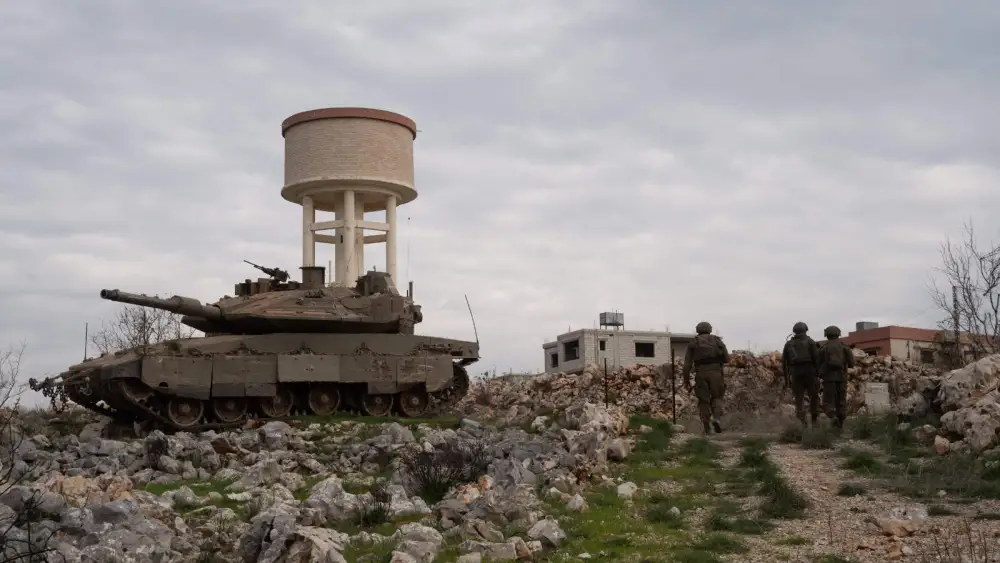
Since the truce went into effect, the IDF has continued to operate from five military outposts inside the Southern Lebanese buffer zone as part of its new doctrine of “forward defense” against cross-border threats.