Newsletter
Newsletter Support JNS

IDF troops attacked outside Joseph’s Tomb in Shechem

Soldiers who were at the site to protect approximately 1,000 Jews who had coordinated with the army to pray at the site during the nighttime were met with firebombs and even live fire by Arabs from the city.

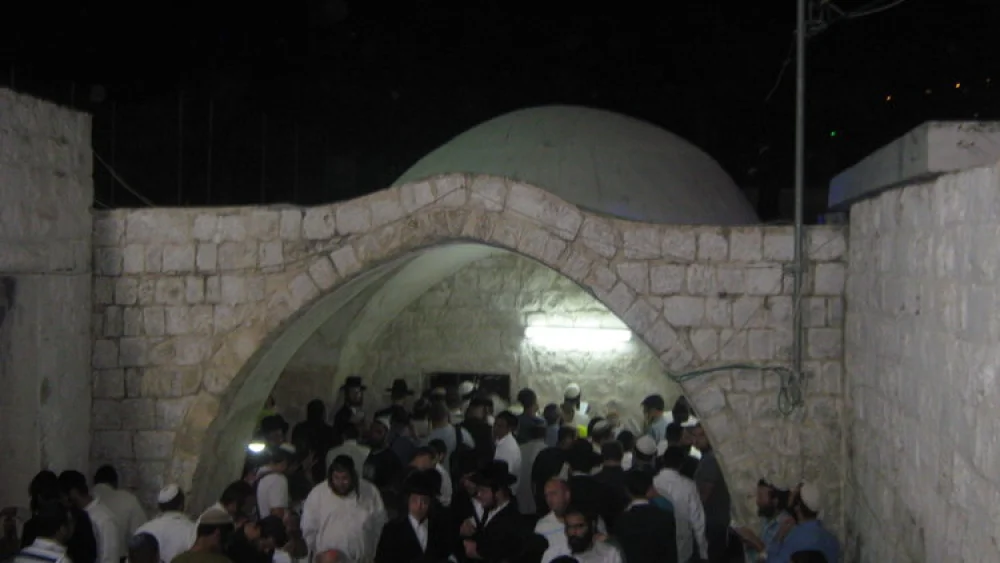
Joseph’s Tomb. Credit: Wikimedia Commons.

Israel Defense Forces’ soldiers battled Palestinian rioters in the Samaria city of Shechem overnight on Tuesday, when local Arabs attacked in response to the arrival of worshippers who came to pray at the ancient tomb of the biblical Joseph.

Soldiers who were at the site to protect approximately 1,000 Jews who had coordinated with the army to pray at the site during the nighttime were met with firebombs and even live fire by Arabs from the city, which they call Nablus.

Two makeshift bombs were found inside the tomb, but were defused by sappers.

The IDF reported that the Jewish group was able to pray at Joseph’s Tomb without incident.

The Tomb of Joseph, son of the biblical Jacob, is located in Shechem, which became part of Area A in the Oslo Accords. Now under complete Palestinian Authority control, Israel’s military engages in security missions in the city as necessary.

Jewish Israeli citizens are typically prohibited from entering Area A; however, limited, coordinated visits to Joseph’s Tomb have become increasingly popular on a once-a-month basis.

IDF
“At a time when some would isolate Israeli academia, UCLA has chosen collaboration,” Eveline Shekhman of the American Jewish Medical Association told JNS.
“The juxtaposition of us being at the United Nations, and all those people walking out while literally their employees helped to perpetuate Oct. 7 was put in a certain frame,” Rabbi Steven Burg of Aish told JNS.
“I want you to listen to my words carefully: One day, and it may not be far away, the Iranian people will be free. Their murderous regime will be toppled by its lies, by its corruption, by its cruelty,” the Israeli prime minister said.
Jason Brodsky, of United Against Nuclear Iran, told JNS that the address carried messages to “the international community, antisemites abroad, state threats against Israel and most especially the Iranian people.”