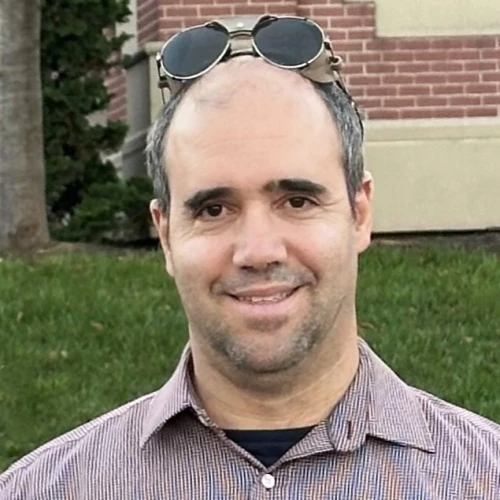
NEW YORK—Harvard University law professor Alan Dershowitz and Jerusalem Post columnist and senior contributing editor Caroline Glick, following their sharp disagreement on a two-state solution to the Israeli-Palestinian conflict during a panel discussion at Sunday’s second annual Jerusalem Post Conference in New York City, continued their debate in interviews with JNS.org.
Dershowitz had presented the audience with a plan under which peace negotiations would restart if Israel halted construction in areas where there is “reasonable disagreement” with the Palestinians, saying Palestinian Authority President Mahmoud Abbas personally gave him a signed paper that stated Abbas would agree to that condition for negotiations if Israel agreed to it.
Glick, who during the panel discussion said she needed to “catch my breath for a second” after Dershowitz’s idea, told JNS.org in an interview after the panel that Israel should “apply Israeli law to Judea and Samaria, just like we did in the Golan Heights.” Judea and Samaria would, under this proposal, “just be permanently incorporated into Israel,” she explained.
“The Arabs of Judea and Samara would become permanent residents of Israel just as they did in Jerusalem and the Golan Heights. And like them, they would have the right to apply for Israeli citizenship,” Glick said. She added that she was “willing to take a chance on the demographic outcome rather than on a two-state solution.”
Dershowitz, asked by JNS.org about Glick’s plan, responded, “Well, before long, Israel would cease to be a Jewish state. The demographics would ultimately turn Israel first, into a multinational state, and ultimately, possibly, into an Islamic state. That would not be an acceptable solution. It would be the end of Israel as we know it. I don’t think that’s a viable solution.”
During the panel discussion, Dershowitz’s plan to restart peace talks was also criticized by Israeli Strategic Affairs Minister Yuval Steinitz and former Israeli national security adviser Uzi Arad, with Arad saying that reciprocity in negotiations with the Palestinians, not “unilateral concessions” by Israel, is what is needed.
On stage, Dershowitz recounted what he called his “serious exchange” with Abbas about restarting peace talks. The audience laughed at Dershowitz when he described the following part of his conversation with Abbas: “[I asked Abbas] if this deal were made, would you agree to not bring cases [against Israel] before the International Criminal Court?’ His answer was: ‘That’s a serious question, and I’m going to give it serious consideration.’”
Dershowitz told JNS.org that the audience’s response to his comments was “not representative of the American Jewish community.”
“The American Jewish community is much more supportive of a two-state solution,” Dershowitz said. “And, the Israeli Jewish community is much more supportive of a two-state solution. This [reaction] was very skewed.”
Also earning a negative audience reaction, much like he did at last year’s Jerusalem Post Conference, was former Israeli Prime Minister Ehud Olmert, who defended his government’s aborted attempts to secure a peace agreement with the Palestinians. Olmert drew loud boos when he said Israel “must split the land in order to have Israel continue as a democratic and Jewish state.”
Olmert also criticized Israeli Prime Minister Benjamin Netanyahu’s approach to the Iranian nuclear threat, telling the crowd, “Israelis disagree with those who say the Iranians have arrived at the ‘red line’ drawn by Prime Minister Netanyahu during his speech at the United Nations… When I was Prime Minister I never overlooked this threat. Iranians do not have nuclear capacity because of their failures.”
Commenting on the peace process, Olmert said a two-state solution “is the only way to go forward.”
“We can’t eat the cake and have it,” he said.
Dershowitz told JNS.org, “I don’t think that people should boo the former Prime Minister of Israel or the President of the United States on suggestions that they may disagree with. I think you can have reasoned discussion without booing. I don’t think that’s a legitimate part of a discussion.”
“Booing ideas shows disrespect,” he added. “Booing is not a way of expressing ideas.”
When Israeli Ambassador to the United States Michael Oren also spoke about a two-state solution at the conference, stating the Netanyahu government’s support for that outcome, he was not booed.
Oren, who accompanied U.S. Secretary of Defense Chuck Hagel during his recent three-day tour of Israel, said Hagel has made an “unequivocal commitment to maintaining Israel’s QME (qualitative military edge)” by providing support for additional Iron Dome missile defense system batteries as well as “new capabilities for the IDF Air Force.” Israel is the first foreign country to receive the V-22 Osprey aircraft and the F-35 fighter jet from the U.S.