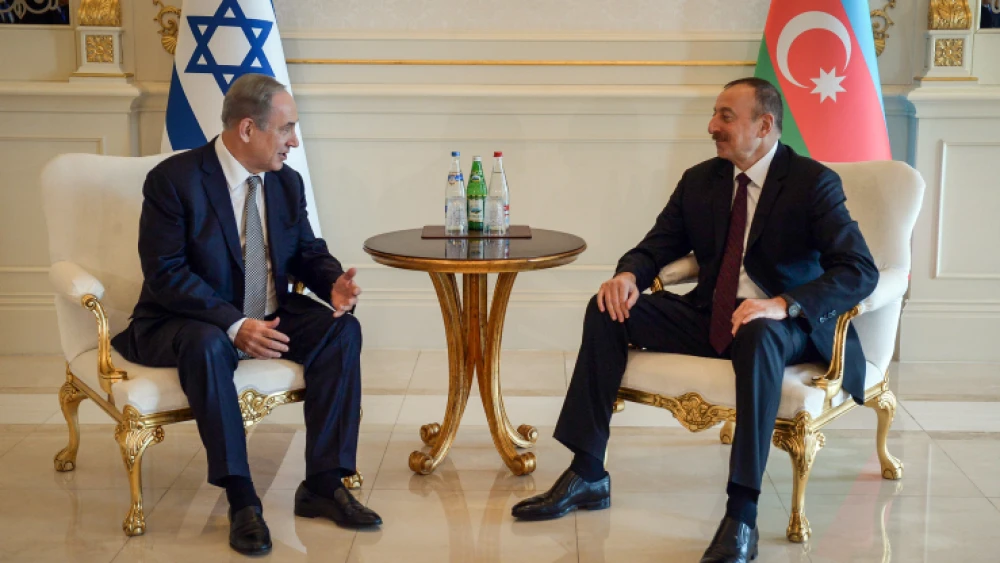
Prime Minister Benjamin Netanyahu is expected to travel on an official visit to Azerbaijan in the first half of May.
Netanyahu is scheduled to meet in Baku with President Ilham Aliyev, with whom he shares a longstanding relationship marked by close cooperation. Azerbaijan, a Shi’ite Muslim country, maintains a notably friendly stance toward Israel.
The visit follows technical talks held in Baku two weeks ago between senior Israeli and Turkish delegations, aimed at preventing military friction between the two countries in Syrian territory.
Aliyev recently met separately with Turkish President Recep Tayyip Erdoğan and Syria’s new ruler, Ahmad al-Sharaa (aka Abu Mohammad al-Julani), making Netanyahu’s visit appear as a natural continuation of these diplomatic efforts.
Aliyev, who typically keeps his country’s international dealings and ties with Israel under wraps, recently made a rare public statement: “Both countries are close friends of Azerbaijan. We are allies with Turkey, and Israel is a friendly nation to Azerbaijan. Over many years, this mutual friendship has proven itself during difficult times for both countries. Therefore, the current tension between them is very concerning and a matter of great worry for us. As is well known, Azerbaijan played a modest role in facilitating the first successful reconciliation between Turkey and Israel in 2023.”
In addition to the Turkish-Syrian issue, Netanyahu and Aliyev are expected to discuss the full spectrum of bilateral and regional relations.
Israel and Azerbaijan maintain strategic ties, including the supply of oil and its derivatives to Israel—a flow that continued uninterrupted through Turkey even during wartime.
Azerbaijan shares a border with Iran, and relations between the two neighbors remain highly strained. The Islamic Republic has made repeated attempts to carry out terrorist attacks on Azerbaijani soil, including plots targeting Israeli diplomats.
According to foreign reports, Israel sells Azerbaijan advanced weapons systems. Recently, Energy Minister Eli Cohen visited Azerbaijan and signed cooperation agreements. Netanyahu’s last visit to the country took place in 2016.
Originally published by Israel Hayom.