Newsletter
Newsletter Support JNS

Bennett to be sworn in as Israel’s new defense minister

Opting to skip the usual formalities, Naftali Bennett says he wants to get to work right away, “addressing the serious challenges that lay ahead.”

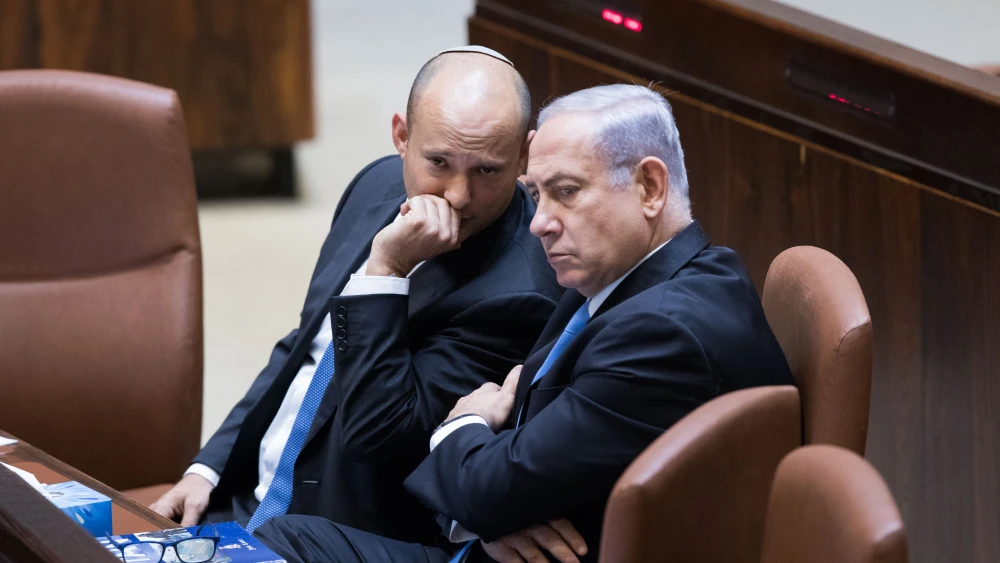
Israeli Prime Minister Benjamin Netanyahu speaks with then-Education Minister Naftali Bennett during a plenum session at the Knesset on Nov. 13, 2017. Photo by Yonatan Sindel/Flash90.

New Right Party leader Naftali Bennett will be sworn in as Israel’s 20th Defense Minister on Tuesday at 11 a.m., at which point the resignation of the current defense minister—Israeli Prime Minister Benjamin Netanyahu—will go into effect.

Netanyahu took over the post on Nov. 14, 2018, after Avigdor Lieberman resigned in protest over a ceasefire with Hamas.

Though incoming defense ministers are usually welcomed with a ceremony that includes an honor guard and reception, Bennett has opted to get to work right away, “addressing the serious challenges that lay ahead of us.”

Bennett has reportedly already begun meeting with senior security officials and is slated to meet with members of the Israel Defense Forces General Staff in the coming days.

On Sunday, IDF Chief of Staff Aviv Kochavi congratulated Bennett on his appointment.

“If it walks like a duck and quacks like a duck, that’s what it is,” attorney Joe Sabag told JNS. “What I think we’re looking at here is BDS in function but not form.”
“A lot of people voted practically, and to say we want whoever can pose a significant enough bloc or be able to replace Netanyahu,” Rabbi Josh Weinberg of the Union for Reform Judaism told JNS.
Updated results show Likud remaining the largest party and Netanyahu’s bloc in front, though still short of a clear governing majority.
“We, in American Jewry, don’t always look through the lens that our Israeli brothers and sisters are looking at the candidates or the issues through,” William Daroff told JNS. “They’re not voting on the issues that we tend to be most focused on.”