
American Jews are facing an unprecedented crisis in their history. The post-Oct. 7 surge in antisemitism has fundamentally altered the existence of the community in ways that few foresaw in their entirety and that even now many have yet to fully come to terms with. Yet some of the leaders of Reform Judaism—the largest Jewish religious denomination in the country, with which approximately one-third of the community affiliates or identifies—are still pretending that they can continue business as usual.
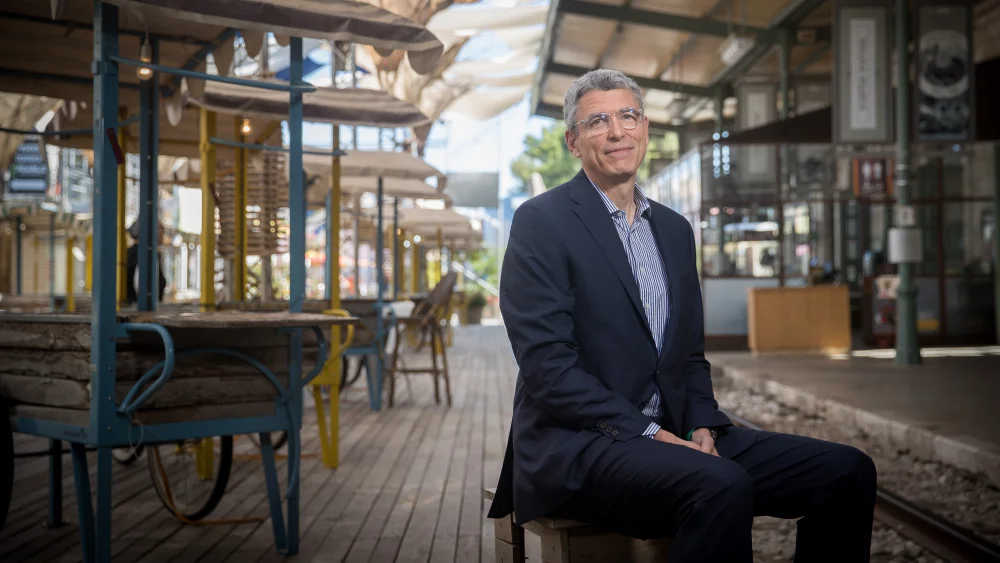
But fortunately, at least one person of influence within the Reform movement disagrees. And as troubling as the drift away from support for Zionism as a fundamental aspect of Jewish identity may be, the warnings of Rabbi Ammiel Hirsch about the consequences of this destructive trend illustrate that the fight over this among liberal Jews and Reform Judaism isn’t over.
A clarion call to defend Jewish peoplehood
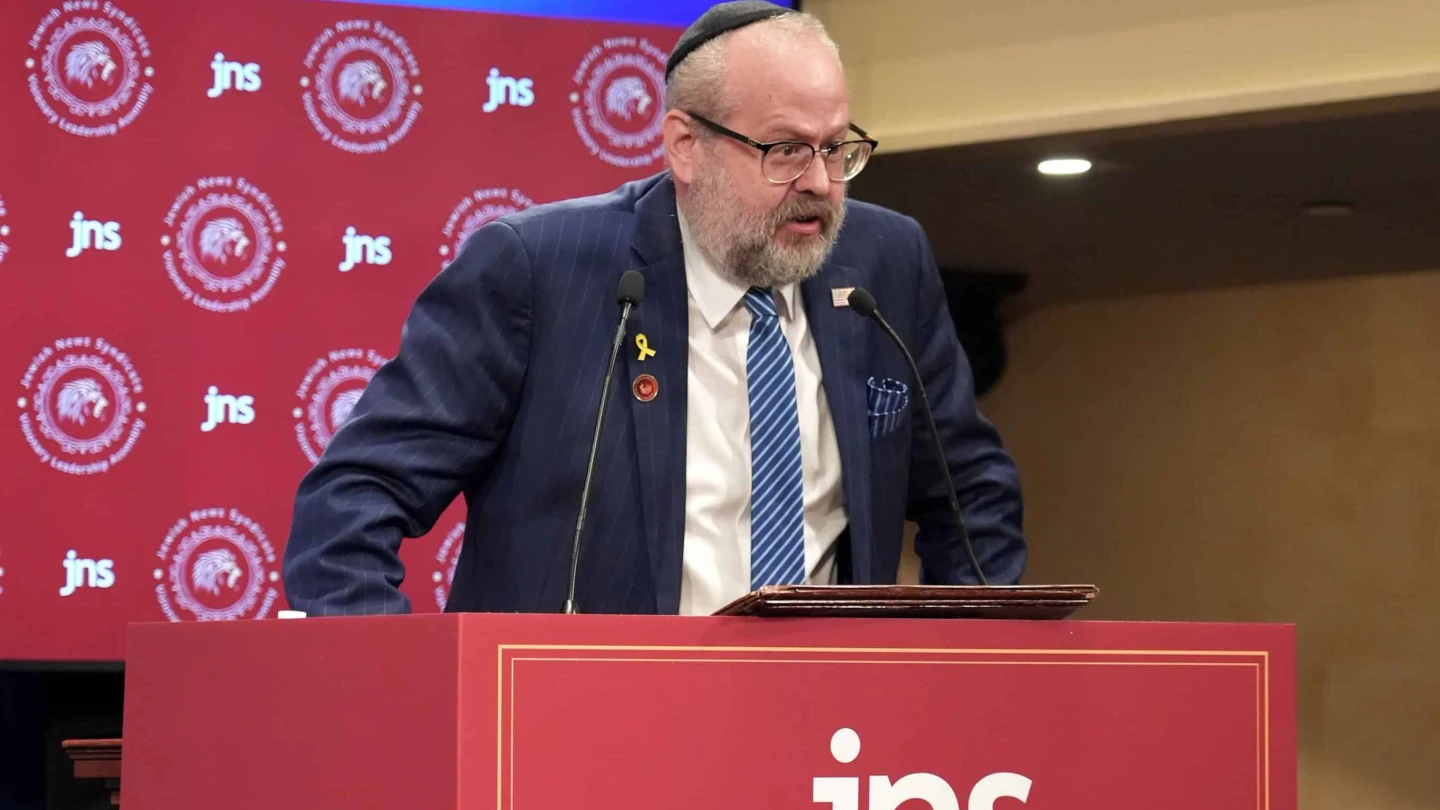
Hirsch’s synagogue, the Stephen Wise Free Synagogue in New York City, a historic institution within Reform Judaism, sponsored a conference this week on “Re-Charging Reform Judaism.” The speech he delivered should be required listening for everyone who cares about the future of American Jewry, whether or not they are part of the Reform movement. In his address, he issued a clarion call for Reform Jews, as well as American Jewry as a whole, to re-embrace the centrality of Jewish peoplehood and Zionism in their identity and beliefs.
In particular, he called out Reform seminaries for admitting and ordaining avowed opponents of Zionism as rabbis and cantors. That development is not only a potentially fatal blow to the future of his movement, but one that undermines the connection between American Jews and the half of the global Jewish population who currently live in Israel.
As inspiring and timely as his address was, I’m far from sure that his message is resonating as much as it should not only among other Reform rabbis and leaders, but also among their members and the liberal political environment in which they all operate. The problem is not just that some among those who identify with the liberal denominations—Conservative Judaism has the same problem with anti-Zionism among students at its seminaries—are abandoning support for Israel in the face of the tsunami of delegitimization and blood libels being hurled at it by their fellow liberals and progressives.
It’s that they, and even some of their leaders, don’t understand that it is the liberal values they claim to revere and tend to guide their political choices that are under assault from anti-Zionists, who have taken over the educational and journalistic institutions they still look to for guidance.
The fate of Reform
The first thing that needs to be understood is the importance of the debate within the Reform movement and among liberal Jews, and how that relates to prospects for American Jewish life in the 21st century.
There are some within the Orthodox movement, where rates of assimilation and intermarriage are far lower, who adopt an attitude of indifference about what goes on within the liberal denominations. Such people are not merely triumphalist about what they believe is the inevitable dominance of the Orthodox because of shifting demographic trends that favor them. They also tend to write off the importance of the mass of non-Orthodox Jews as essentially irrelevant, not only from a religious point of view but as insignificant in the fight against the antisemitic efforts to isolate and destroy Israel.
And it is equally unfortunate that many in Israel, where the liberal denominations are viewed by most as alien to their experience as Jews and who tend to take little account of American Jewish views as a general practice, mimic this disdain.
They are wrong to do so and not only because the Talmudic principle of Kol Yisrael arevim zeh bazeh—“All Jews are responsible one for another”—dictates that they should care deeply about the potential disintegration of portions of the Jewish community that don’t share all of their beliefs or politics.
A vibrant American Jewish community that is connected to and deeply supportive of Israel is crucial to the battle to defend the Jewish state at a time when it remains under siege. If Israel can only rely on the Orthodox or those who are politically conservative—the segments that are most likely to be supportive—that is a disaster.
According to the most recent accurate surveys, at present, only a bit more than one-tenth of American Jews identify as Orthodox. And only about a third vote for anyone but Democrats. Those numbers are likely to grow in the coming years as the Orthodox share of the population expands, and as increasing numbers of former liberals abandon the left and the Democrats because of their complicity in mainstreaming antisemitism and the demonization of Israel.
But even if we accept the most optimistic assumptions about those changes, the majority of American Jews will likely remain Democratic voters for the foreseeable future. An even larger number will either be affiliated with the liberal denominations or join the fastest-growing sector of American Jewry—the group demographers call “Jews of no religion,” who are unaffiliated and have given up any sense of belonging to the Jewish people.
Suffice it to say that if most of them are lost to the Jewish collective, that’s bad for Israel and the future of a shrinking American Jewish community. It’s also a catastrophe for all Jews when realizing that the number of them today is still far smaller than the number of those alive on the eve of the Holocaust nine decades ago.
Universalism v. particularism
As Hirsch warns, American Jewish movements that eschew support for Zionism and the concept of Jewish peoplehood that is critical for the maintenance of a Jewish community are bound to fail and ultimately collapse.
At the heart of the debate among liberal Jews is the perennial question of what takes precedence within Judaism: universalism or particularism. All Jewish movements acknowledge that both play important roles in the Jewish worldview. Notions of Jewish justice are not restricted to application among Jews; they are about how everyone should be treated. However, Judaism and Jewish identity are nothing without a Jewish people, and the particularist elements of Judaism, including the connection to the land of Israel, are necessary to preserve that people.
Among many progressive Jews, the balance has tipped toward universalism in a way that is oblivious of or even deliberately destructive of Jewish peoplehood and the importance of the Jewish state.
The elevation of the liberal conception of social justice to preeminence among many in Reform or even as the sum total of their ideas of Judaism is deeply problematic. The concept of tikkun olam (“repairing the world”) has become a catch-all phrase that takes it out of context and has become merely a Jewish fig leaf on left-wing political views, regardless of their consequences for the Jews, let alone for society. In the name of this idea of universalism, some Jews don’t just unfairly condemn Israel but embrace a twisted version of Judaism that opposes its existence.
As Hirsch eloquently put it, “We cannot succumb to those who preach a false philosophy of Jewish universalism that camouflages disdain for Jewish particularism under the guise of a sometimes sweeping, self-righteous, sanctimonious and suffocating misunderstanding of tikkun olam.”
Missing the point
Hirsch remains politically liberal and embraces the social-justice agenda rooted in universalist values. But he believes that “a Jewish universalism that is unmoored from Jewish particularism isn’t Jewish.” It’s just a left-wing view of the world. And as we have seen since Oct. 7 and even before that, such a worldview is prepared to tolerate all nationalism and ethno-states (including the sick Palestinian Arab fantasy of an Islamist and Judenrein state that would replace Israel) except the one Jewish state on the planet.
Other Reform rabbis, including the titular leaders of the movement, also say they want to strike a balance between universalism and particularism. Two of them, Rabbi Jonah Pesner, the director of the Religious Action Center of Reform Judaism, and Rabbi Josh Weinberg, the president of ARZA, the association of Reform Zionists, wrote what seemed like a response to the conference hosted by Hirsch before its opening. But in their insistence that they should not be asked to choose between their liberal politics and their Jewish loyalties, they are missing the point about the current dilemma faced by their adherents.
No one is asking liberal Jews to give up their positions on abortion or any other progressive shibboleth they adhere to, whether or not they are integral to the defense of Jewish interests or undermine them, as arguably their stands on immigration do.
What we do have a right to expect of those who represent leading Jewish institutions is not to acquiesce in efforts to redefine Jewish life in a way that marginalizes or eliminates core beliefs like those about Israel and Jewish peoplehood, as anti-Zionists are doing. They should be willing to forthrightly condemn those who might be their partisan allies on non-Jewish issues, but who have succumbed to the toxic progressive ideologies that are the foundation of contemporary antisemitism, such as critical race theory, intersectionality and settler-colonialism.
And that is something that all too many liberal Jewish leaders and rabbis have failed to do.
The Mamdani test
A perfect illustration of this in the last year correlates to the election of Zohran Mamdani, an open anti-Zionist whose entire career has revolved around his belief in the elimination of Israel, as mayor of New York City. Hirsch was among the most articulate of those warning Jews that they must wake up to the danger of normalizing someone whose worldview is opposed to the security of half the world’s Jews and how this will impact their lives as well. But all too many Jewish liberals were not willing to stand up and oppose Mamdani.
Indeed, the equivocal stand of Rabbi Rick Jacobs, the head of the Union of Reform Judaism, at the time was typical of the moral cowardice of many on the Jewish left. His neutrality about Mamdani was not merely an appalling abdication of his responsibility to the Jewish people. It reflected a belief on the part of all too many Jewish liberals that their ties to the political left were just as important as those to their fellow Jews, especially the people of Israel.
Faced with the fact that many liberals have been seduced by the pro-Hamas propaganda being mainstreamed by the media outlets to which they look for information, such as The New York Times, Jacobs wouldn’t take sides. He and others like him said that the opinions of those who supported anti-Zionism or were neutral about it were just as valid as those who stood up for the Jewish people.
Instead, he should have asserted, as Hirsch now does, that “anti-Zionism is a monstrous ideology that contravenes every liberal principle we hold dear.”
Zero tolerance for antisemitism, which is, in principle and practice, indistinguishable from anti-Zionism, wouldn’t have forced Jacobs or anyone else to change their views about domestic issues or to become cheerleaders for President Donald Trump, the democratically elected government of Israel, Prime Minister Benjamin Netanyahu or the Israeli right. But it should have obligated Jacobs to do better than to say that the pro- and anti-Mamdani stands were morally equivalent.
At stake here is more than a split in the Reform movement.
The war on the West
As Hirsch noted, the reaction from traditional allies on the left, as well as academia and the liberal press to the mass slaughter of Jews on Oct. 7, “revealed the rot inside our most cherished Western institutions.” Indeed, as many conservatives have been saying for years, it’s not just the Jews who are under attack. It is, as Hirsch affirmed, “the entire philosophy of western liberalism that is under assault” from the red-green alliance that seeks Israel’s destruction.
If your response to the monstrous blood libels about “genocide” or “apartheid” being committed by Israel—let alone the indefensible claims by The New York Times about Israelis training dogs to rape Palestinian prisoners—is to seek to find common ground with both sides, then your moral compass, as well as your Jewish sensibilities, are no longer functioning.
In the late 19th century, Reform Judaism adopted the Pittsburgh platform that essentially sought to expunge much of Jewish particularism from Jewish life. By 1938, as the impending catastrophe in Europe loomed on the horizon, they moved away from that stand. Indeed, in that era, the two most important leaders of American Zionism were reform rabbis: Stephen Wise and Abba Hillel Silver. Ultimately, Reform enthusiastically embraced Zionism.
Yet its seminaries, like those of the Conservative movement, have now adopted the same kind of neutrality about anti-Zionism that Jacobs had about a mayor who eggs on mobs that target Jewish citizens and synagogues.
I believe that Hirsch is right when he notes the cost of this to Reform will be as grievous as it is to the Jewish people as a whole. Referencing Reform’s history on Zionism, he was right to issue this warning to his movement:
“If the North American Reform movement in word or deed by action or silence becomes in fact or even by perception, an anti-Zionist or anti-particularist movement that cares only or mostly about universal concerns unanchored in or unmoored from the centrality of Jewish peoplehood, most American Jews will abandon us as they would have in the 20th century had history not forced us to come to our senses.”
The good news is that it is still possible for Jews to reach across denominational or partisan lines to work together. As Hirsch points out, the rabbis who were prepared to stand up against Mamdani found they had more in common with those who shared that stand from other movements than they did with those with similar backgrounds who were neutral or supportive of an open anti-Zionist.
That’s the example that other liberal Jews must take to heart if they are to adequately respond to the current crisis. The Palestinian Arab murderers, rapists and kidnappers of Oct. 7 didn’t care about the political opinions of their Israeli victims. Liberals who think this has nothing to do with them are blind to the threats facing every Jew today, including them.
Those who think staying in sync with their allies on the left is more important than fighting antisemitism are harming their own futures as much as they are encouraging those who seek the genocide of the Jews of Israel. Hirsch’s fierce commitment to Jewish peoplehood should make him a hero to all Jews, regardless of whether they agree with him on how to practice Judaism or politics in America. If more liberals don’t heed his warnings, the cost of their abandonment of principle and their people will be felt by everyone in the Jewish world.
Jonathan S. Tobin is editor-in-chief of JNS (Jewish News Syndicate). Follow him: @jonathans_tobin.