Israel’s domestic intelligence agency, the Shin Bet, announced on Sunday that it had broken up a major Hamas terrorist cell that was forming in the West Bank Palestinian city of Nablus.
The Shin Bet described the cell as unusual in its scope and activities. It was plotting major terrorist atrocities, including suicide bombings, planting bombs and gun attacks targeting Israeli cities and smaller communities.
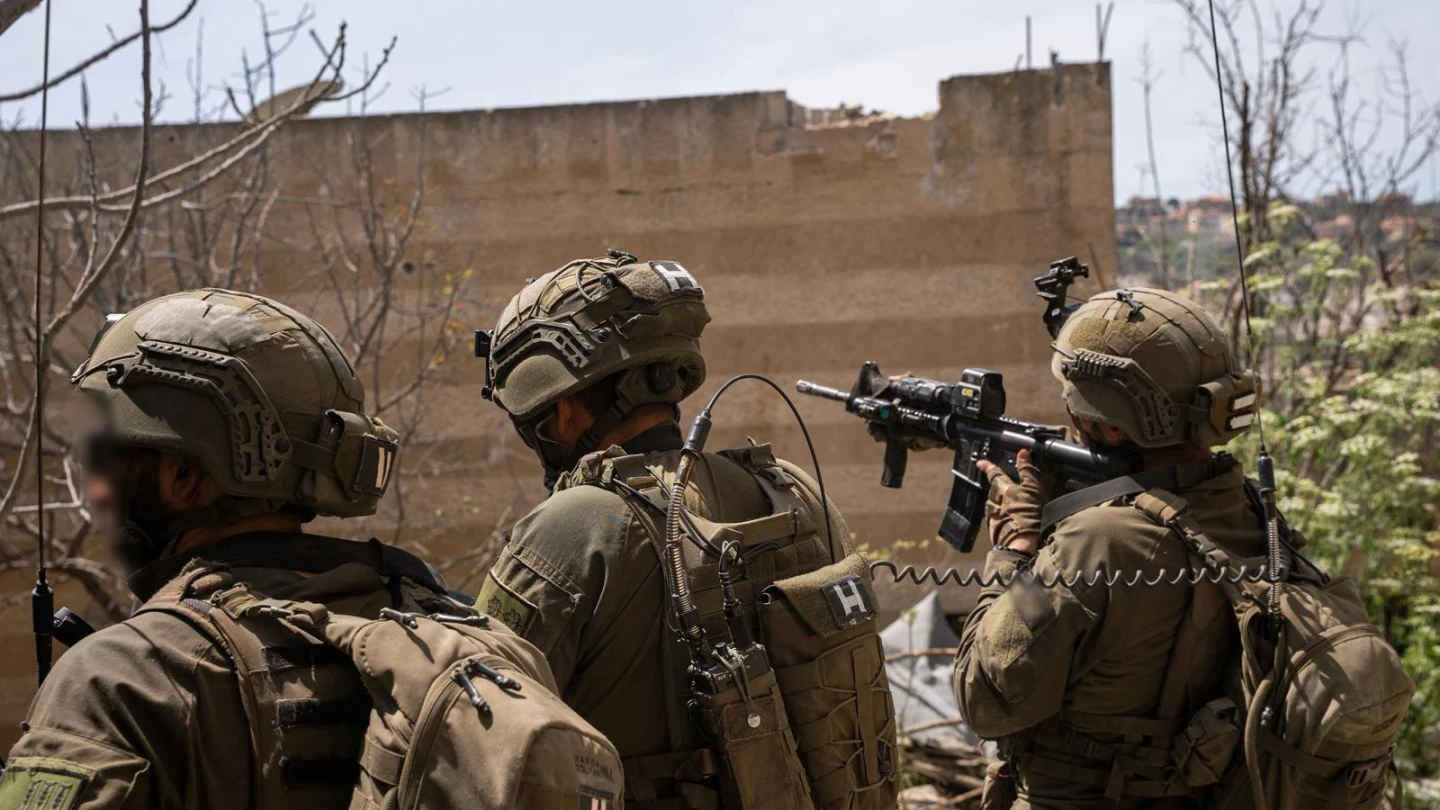
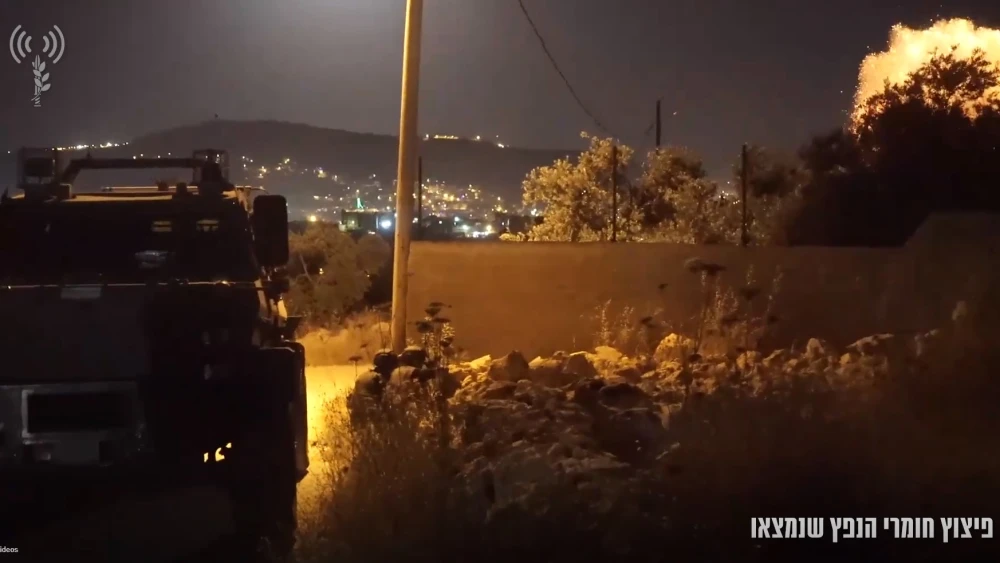
The cell comprised of more than 20 suspected operatives, most of them Hamas members. During counter-terrorist raids to break it up, large bombs were seized and detonated in controlled explosions by Israeli security forces.
“These devices, had they gone off in a bus, would have destroyed it completely. The same is true of a cafe, of course,” said Lt.-Col. (res.) Guy Russo, commander of the 8109 reserve battalion, which took part in a series of counter-terrorist operations against the Hamas cell in Nablus.
The cell planned to target Tel Aviv and Jerusalem with bombings, as well the settlement of Itamar near Nablus, and carry out additional shooting attacks in the northern West Bank, according to the Shin Bet. Some of the attacks were stopped just before they were scheduled to begin, added the intelligence service.
[video width="848" height="480" mp4="https://cdn.jns.org/uploads/2018/06/VID-20180617-WA0019-1.mp4"][/video]
“We were called up during a time when there was an expectation of incidents because of ‘Nakba Day’ and the transfer of the U.S. embassy to Jerusalem [on May 14]. As soon as we were called up, we joined efforts by security forces—the Shin Bet, the Israel Police bomb squad and ourselves—to find and expose the Hamas cell,” said Russo.
The cell’s goal, he explained, was to prepare a number of bombs, and set them off” in Israeli cites. “There was a considerable number of explosive devices … the scope of damage from these devices [would have been] powerful.”
Russo’s battalion took part in setting off the bombs in a controlled manner in villages around Nablus. The commander described how the battalion moved Palestinian civilians away from the scene of controlled explosions to prevent injuries, in contrast to Hamas’s tactic of hiding the bombs “in the middle of the villages, without concern for harming local civilians.”
“As a reserve officer, to see the powerful explosions, [it] strengthened our sense of purpose and our [resolve to] contribute to the State of Israel,” he said.
“This was an organized, professional cell with many explosives that had major destructive power. I don’t recall such a cell in recent years that we broke up,” the battalion commander said.
The counter-terrorism raids occurred during the highly sensitive month of Ramadan, he said, obligating the army to act with “greater sensitivity.” There were some clashes during the arrests in villages around Nablus, but the army dealt with them proportionately, said Russo, and there were no injuries in any of the incidents.
The Shin Bet has detected and broken up approximately 250 large-scale terrorist cells since the start of 2018 alone, giving an indication of the scale of violence it has spared Israel’s cities and civilians.
The latest episode illustrates “the motivation and efforts invested by the Hamas organization in setting up a terrorist infrastructure,” the Shin Bet said in statement.
For his part, Russo said the battalion’s soldiers—made up of reserve soldiers from a variety of ages and backgrounds—will continue to “be called up to the flag, arrive every year for training and operations, and do their part for national security.”