Newsletter
Newsletter Support JNS

Early election votes by Israeli diplomats, emissaries abroad show drop in turnout

The lower turnout could be due to a number of factors, including voter fatigue and upcoming travel for the High Holidays.

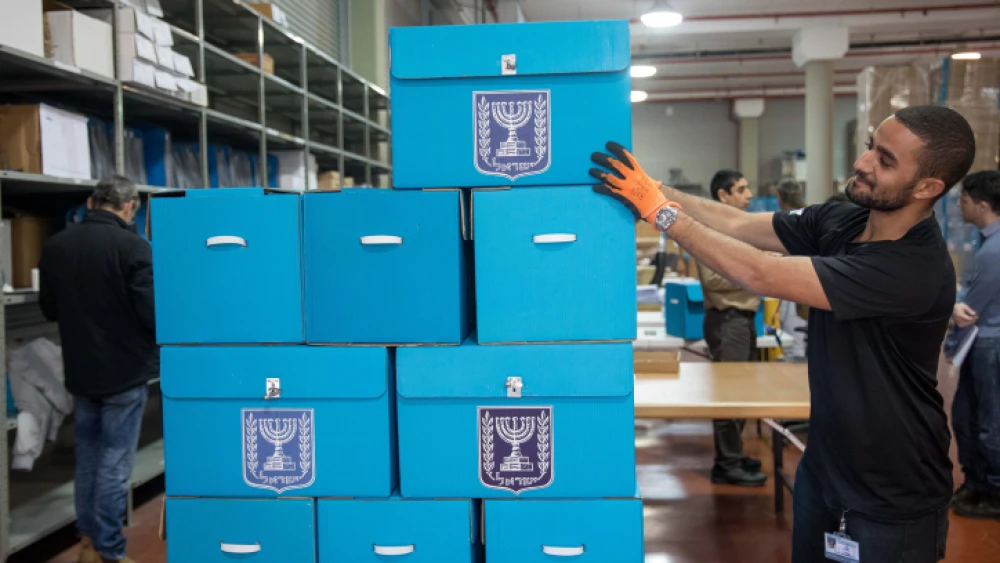
Ballot boxes at a Central Elections Committee warehouse in Shoham, prior to being shipped to polling stations across Israel, March 25, 2019. Photo by Noam Revkin Fenton/Flash90.

Early voting for Israeli diplomats and emissaries around the world in Israel’s second round of elections this year ended on Friday with a low turnout compared to the results in April.

Israelis stationed in embassies and consulates were able to vote on Thursday from 8 a.m. to 9 p.m. in their local time zone.

A total of 3,525 of the 5,086 people eligible for early voting cast ballots at 96 diplomatic missions around the world, resulting in a turnout of 69 percent, a 7 percent drop from the 76 percent in April, according to the Central Elections Committee.

The response could be due to a number of factors, including voter fatigue and upcoming travel for the High Holidays.

All votes from across the globe are sealed in envelopes that are then sent to Jerusalem and held in a safe until they are counted on election day along with the rest of the national ballots.

According to Israeli law, private citizens living abroad cannot vote unless they come to Israel.

An exception is made for diplomats and emissaries working abroad for the Jewish Agency, KKL-JNF, Keren Hayesod and the World Zionist Organization. Their spouses and children, between the ages of 18 and 20, can also cast ballots abroad.

The move would reverse a decision by the Central American nation two decades ago to move its Israeli embassy to Tel Aviv.
Israel’s top diplomat said that it is “outrageous” to draw a moral equivalence between Hamas leaders and Israeli citizens.
The U.S. administration expects “conversation to continue” on Chinese revenue and dual-use exports benefiting Tehran, a senior U.S. official said before meetings in China.
“It’s a glaring double standard,” the New Jersey Democratic congressman, who is Jewish, wrote in the “New York Times.”
“The targeting of U.S. service members and partners will not go unanswered,” the U.S. State Department said.
One of six detectives to be awarded by the ADL told JNS of New York City’s recent changes to hate crime reports that “you can’t have, ‘Ok, this is a robbery and this is a ‘reported’ robbery.”
