


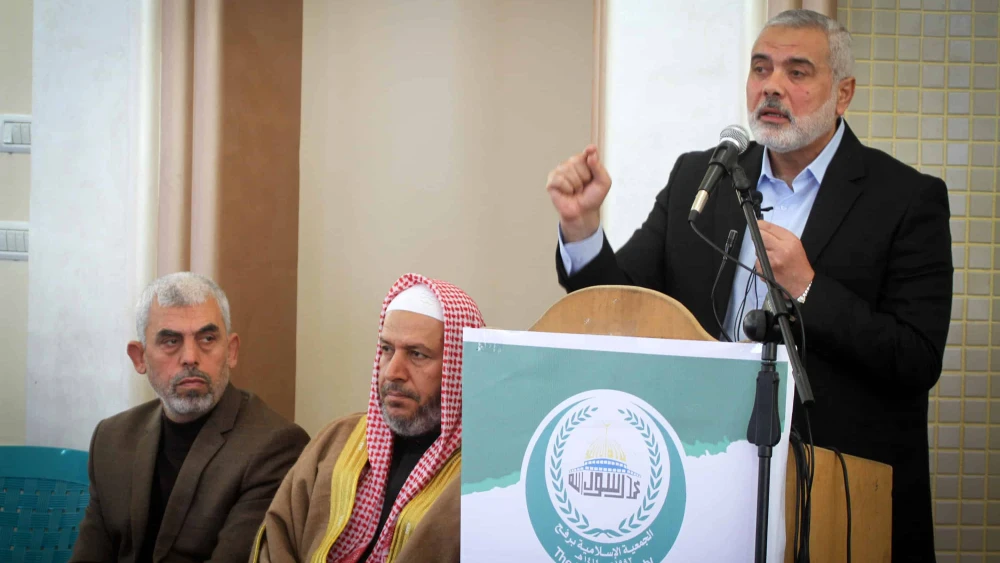
Hamas is leaning toward choosing a relatively unknown successor to political bureau chief Ismail Haniyeh, who was assassinated last week in Tehran, Channel 12 reported on Monday.
According to the report, a majority of the terror group’s leadership supports Muhammad Ismail Darwish, also known as Abu Omar Hassan, to replace Haniyeh, at least as a temporary substitute. He is described as a shadowy figure in the organization who has never made any public statements.
Darwish “over the years has become the strongest man in the organization’s economic empire,” said the report. “By virtue of this position, [he] was involved in directing money transfers from Iran to Hamas and in investments around the world.”
He is seen as a compromise candidate between the more hawkish camp of Hamas leader in Gaza Yahya Sinwar and Haniyeh’s camp, which includes Khaled Mashaal, who has shaky relations with Hezbollah and Iran.
According to a Saudi report, Sinwar rejected Mashaal, preferring a figure with stronger ties to Tehran. This message was conveyed to the Hamas leadership at a meeting in Qatar on Saturday.
Darwish is the current head of Hamas’s Shura Council, having replaced Osama al-Mazini, who was assassinated shortly after the Oct. 7 massacre.
Hamas’s politburo and Shura Council will decide on the successor to Haniyeh.


