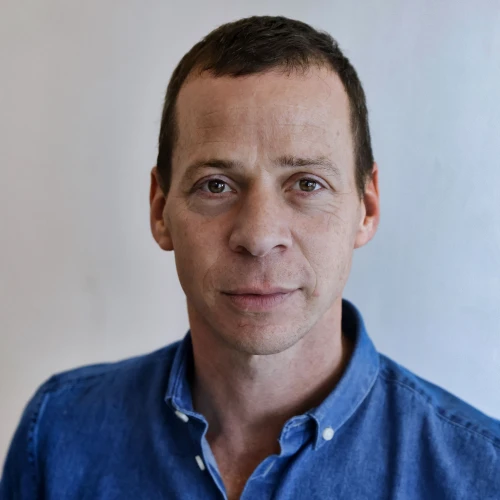
The Israel Defense Forces on Tuesday afternoon carried out a second precision strike in Beirut’s Dahiyeh district in as many days, killing Ibrahim Qubaisi, who heads Hezbollah’s missile and rocket array.
The strike came less than 24 hours after the attempted assassination of Hezbollah’s No. 3 terrorist commander, Ali Karaki, in the same area.
Qubaisi joined Hezbollah in the 1980s and held a series of key positions in the terror organization, according to the IDF. As part of his role, he “was responsible for the planning and execution of many terrorist actions against the IDF forces and Israeli citizens,” the army said.
לצפייה בכל התיעודים מתוך הצהרתו של דובר צה״ל, תא״ל דניאל הגרי👇https://t.co/pmQPLHor0q pic.twitter.com/87in2YHIaW
— צבא ההגנה לישראל (@idfonline) September 24, 2024
“Qubaisi commanded Hezbollah’s various missile units, including the precision missile units. Over the years and during the [current] war, he was responsible for launches towards the Israeli home front. Qubaisi was a central source of knowledge in the field of missiles and was close to the senior military leadership of Hezbollah,” the IDF continued.
The top terrorist also planned the October 2000 kidnapping of IDF Staff Sgts. Benny Avraham, Adi Avitan and Omar Souad from the Mount Dov border area. The soldiers were killed by their captors either during or shortly after their abduction, and their remains were only returned to Israel four years later as part of a terrorist release deal with Hezbollah.
According to the Israeli military, Qubaisi was surrounded by “other key commanders in Hezbollah’s missile and rocket array” when the attack was launched. At least five other people were killed and several more were injured in the airstrike, according to initial Lebanese reports.
ברייקינג: צה"ל תקף באופן ממוקד ברובע הדחייה בביירות pic.twitter.com/jke51sMFfx
— איתי בלומנטל 🇮🇱 Itay Blumental (@ItayBlumental) September 24, 2024
Following the strike in Beirut, Hezbollah launched a massive rocket barrage at Israel’s north, triggering air-raid sirens, including in the Upper Galilee city of Safed. No injuries were reported in the attacks.
Israel’s Channel 12 said that more than 100 projectiles were launched at the Jewish state within one hour, with the Golan Regional Council telling residents to stay near bomb shelters and avoid public gatherings.
???? ???????????????????????? ???????????????????? ???????????????????????? | Israeli media describing the sky over Safed as “total madness” right now pic.twitter.com/smTV6IxJhc— Jewish News Syndicate (@JNS_org) September 24, 2024
Tuesday’s aerial attack marked the fifth time that the Israeli army struck the Lebanese capital since Hezbollah joined the war against the Jewish state in support of Palestinian Hamas in the wake of the Oct. 7 massacre.
On Monday night, Israeli Air Force jets targeted Karaki, Hezbollah’s highest-ranking remaining commander following Friday’s targeted killing of Ibrahim Aqil. Karaki commands Hezbollah’s southern front, which is responsible for the terror army’s cross-border attacks on Israel.
In an official statement issued three hours after the strike, Hezbollah claimed that the top terrorist was still alive and “moved to a safe place.”
Unnamed Israeli officials told Israel Hayom on Tuesday that Karaki survived the strike, saying that the use of smaller bombs with the goal of minimizing civilian casualties contributed to the operation’s failure.
On Friday, the IDF took credit for a targeted airstrike in the Dahiyeh neighborhood that killed more than a dozen senior Hezbollah terrorist officials, including Aqil, who was also wanted by the United States over his involvement in the 1983 bombing of the U.S. embassy in Beirut.
On July 30, Israeli Air Force fighter jets carried out a targeted killing in south Beirut of Hezbollah’s No. 2 “military” commander, Fuad Shukr.
Hezbollah has attacked Israel nearly daily since Oct. 8, 2023, firing thousands of rockets, missiles and drones. The attacks have killed more than 40 people and caused widespread damage. Tens of thousands of Israeli civilians remain internally displaced due to the violence.
Throughout the day on Tuesday, the Israeli Air Force struck over 1,600 Hezbollah terror targets in Southern Lebanon and the Bekaa Valley as part of “Operation Northern Arrows,” according to the Israeli military.
Jerusalem has escalated attacks on Hezbollah since adding the return of evacuated Israeli civilians to the north as an official war goal on Sept. 17.