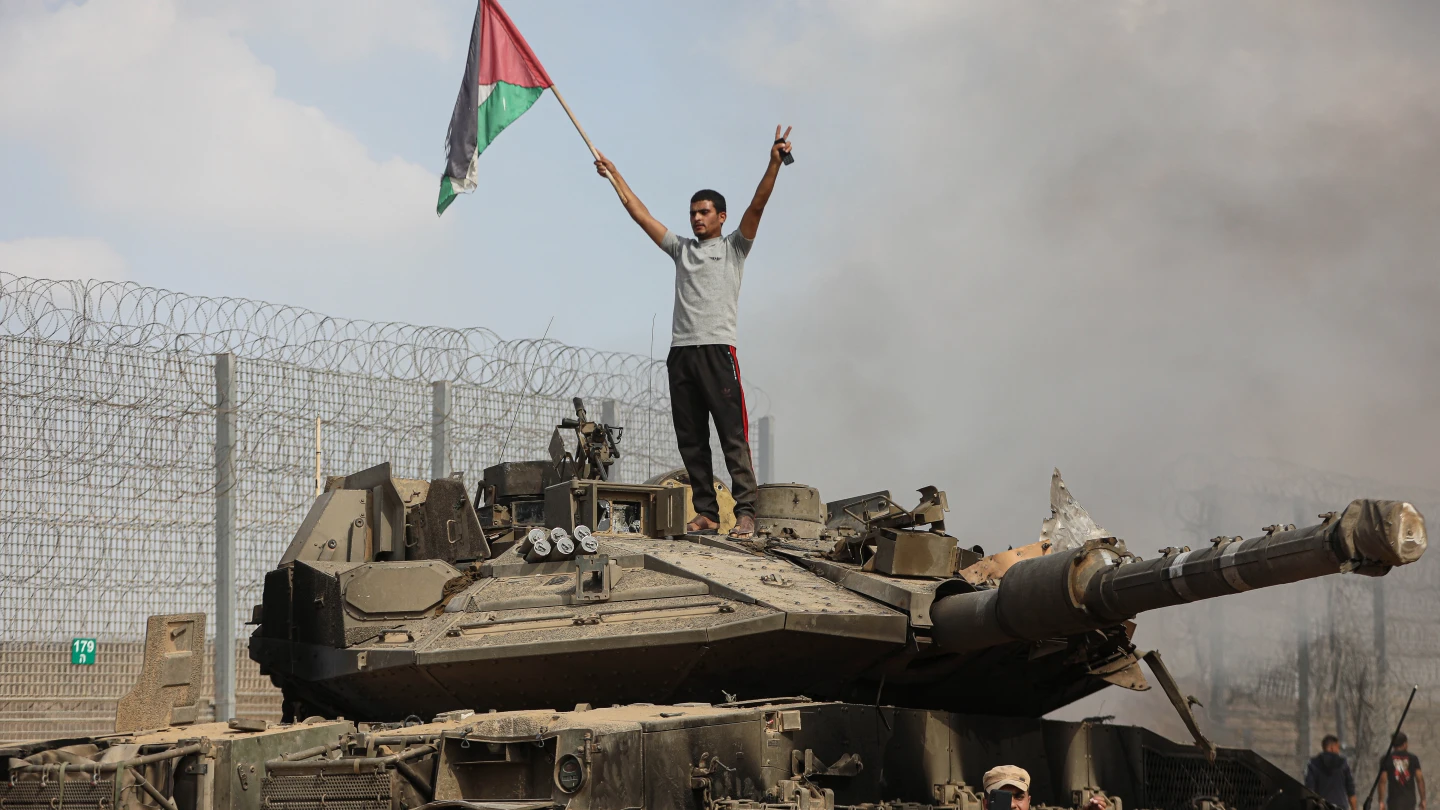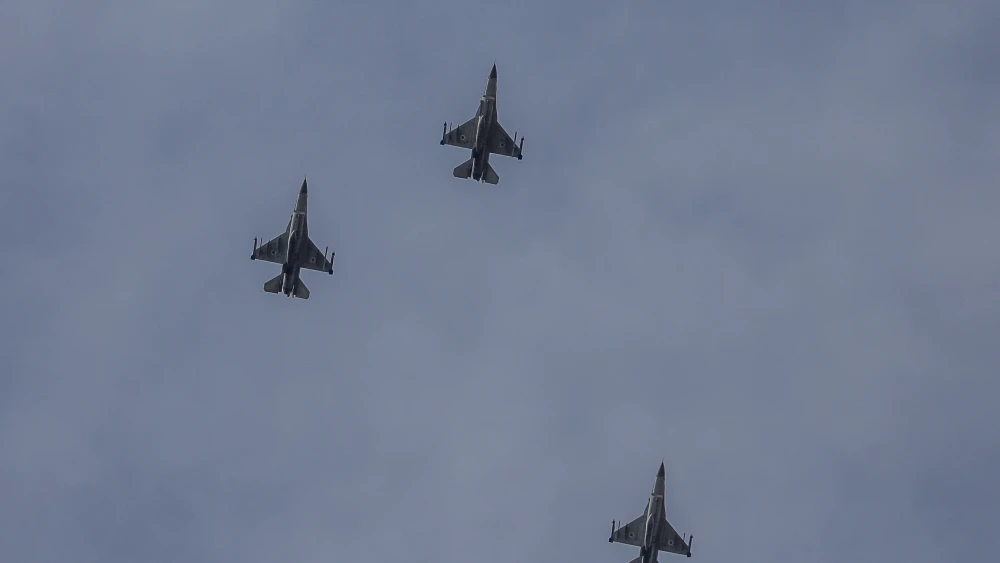
Four Israeli civilians have been killed after terror groups Hamas and Islamic Jihad launched more than 700 rockets and mortars from Gaza into Israel. By doing so, Hamas and Islamic Jihad commit a double war crime by firing at civilians while hiding behind civilians. A delegation of U.S. ambassadors currently visiting Israel published a joint statement in which they said, “Enough is enough!” The statement also read, “Can one imagine rockets falling on Washington, Berlin, Paris, Brussels, Bern or Lisbon today without an appropriately strong reaction?”
Efraim Inbar, president of the Jerusalem Institute for Strategy and Security, mirrored their statement, telling JNS, “Enough is enough.”
He said that while Israel “may not be able to ‘solve’ the intractable protracted conflict,” it needs to “restore deterrence eroded over time versus Hamas, signaling to all bad guys in the Middle East that we mean business.”
Inbar also said that if targeted killings are not “convincing enough, Israel should escalate its response and “even consider conquering parts of or all of Gaza to eliminate significant parts of the Hamas war machine,” which he admitted would likely be rebuilt over time anyway.
Palestinian society needs ‘profound structural reform’
Efraim Karsh, director of the Begin-Sadat Center for Strategic Studies, told JNS that “the current conflagration in Gaza, like its numerous precursors over the past decade, is a direct corollary of the Oslo peace process that established an unreconstructed terror entity in the West Bank and the Gaza Strip.”
Karsh pointed to “the creation of free and democratic societies in Germany and Japan after World War II” necessitating a “comprehensive sociopolitical and educational transformation” as an example of the kind of “profound structural reform” that the “corrupt and oppressive PLO and Hamas regimes” need to undergo.
He said the PLO and Hamas must be swept from power, eradicating the “endemic violence from Palestinian political and social life.” Instead, Palestinians must be taught “the virtues of coexistence with Israel [that] can lead to a lasting peace.”
Karsh lamented that Oslo destroyed such a scenario, “which seemed to be in the offing in 1993 when the PLO hovered on the verge of extinction and West Bank and Gaza leadership appeared eager to strike a historic deal within the framework of the Washington peace negotiations.”
He suggested that Israel “seek to establish a long spell of quiet (say five to 10 years) along the Gaza front by inflicting massive damage and intolerable pain on Hamas while seeking to detach it from the long-suffering Palestinian population, on the one hand, and refrain from any concessions that will transform the far more strategically important West Bank into a similarly formidable terror entity, on the other.”
Inbar agreed that Israel should inflict massive damage against Hamas.
“Unfortunately,” Inbar said, “the IDF concept of using accurate intelligence for pinpoint airstrikes has proven deficient. A land incursion may be needed to convince Israel’s enemies that we are ready to pay a price in casualties in order to secure the well-being of our citizens.”
Otherwise, he warned, “in the absence of a resolution, we will continue to be blackmailed by Hamas.”