

After three years of failure, it’s time to try something else. That’s the lesson that Jews and those who purport to speak for them and/or the pro-Israel community should be thinking about on the third anniversary of the Oct. 7 massacre.
For three years, the Jewish world has been stunned by the reaction to the Hamas-led Palestinian Arab terror attacks on Israeli communities on Oct. 7, 2023. But it’s time to stop. More to the point, it’s also necessary to cease appealing for sympathy or understanding.
The expectation on the part of most Jews and Israelis, as well as those who are their friends in the days that followed, was that world opinion would swing behind the Jewish state in the aftermath of that horrific orgy of mass murder, torture, rape, kidnapping and wanton destruction. And there was, in fact, initial sympathy for Israel, even in the media that is so quick to denounce it.
The turn against Israel
Within days, however, that changed. Once it was clear that Israelis were not going to simply accept their victimization and would act to end the threat of more such atrocities, what passes for enlightened liberal opinion, along with some elements on the far right, voiced outrage. That outrage was not aimed at the crimes of the Palestinians. Nor was it a response to the evidence that their leaders and most of the population have meant what they said when they rejected an independent state alongside Israel and would settle for nothing less than the destruction of the Jewish state.
Instead, the spectacle of Jews defending themselves and moving to eliminate a threat that no sovereign nation would tolerate on its border was too much for a world that has largely regarded Jewish power of any kind as intolerable. Even before the Israel Defense Forces began their offensive into Gaza to attempt to eliminate Hamas’s ability to make good on their promises to repeat Oct. 7-style massacres, anti-Israel protests began. More importantly, world leaders called for caution and restraint that they would never demand of their own countries under similar circumstances.
The United States was an initial exception to that rule. Yet within weeks, the administration of President Joe Biden, which had supported Israel’s goal of eliminating Hamas, shifted to a more equivocal stance. What ensued was a year-long dance in which the United States sought to pressure the government of Israeli Prime Minister Benjamin Netanyahu to stop seeking victory. Washington even demanded that Jerusalem accept an outcome in which the continued hold on power on the part of the Islamist terrorists who had ruled Gaza as an independent Palestinian state in all but name since 2007 was to be tolerated.
Biden’s shift was clearly a reaction to liberal and left-wing opinion in his own Democratic Party. After Oct. 7, Democrats, who had already been turning against Israel over the course of the previous decade under the previous administration of President Barack Obama, overwhelmingly took the side of the Palestinians against the Israelis.
The same was true around the globe as Western European nations—influenced by both the influx of Muslim immigrants from the Middle East and North Africa, and by Marxist and left-wing parties that reviled Zionism—expressed their horror at the idea of Israel pursuing a war to defeat Hamas.
Disingenuous ‘criticism’
Israel’s foes claim that the revulsion was the product of an unusually harsh and “disproportionate” offensive in Gaza in which its military indiscriminately killed large numbers of civilians, including women and children. The Jewish state was accused of “genocide” and causing mass starvation. Indeed, so ubiquitous were these accusations in mainstream media outlets and popular culture that few liberals or left-wingers dared to question them or consider them debatable.
This critique was—and remains—entirely disingenuous. Israel’s military used more restraint in the difficult conditions of urban warfare and, as impartial military experts testified, killed a far lower percentage of civilians than in any other such confrontation in modern-day history.
Hamas hid behind Palestinian civilians and did everything to expose them to death. They stored weapons in schools and hospitals. They stole food meant for residents that the Israelis moved from one part of the Strip to another to keep them out of the way of airstrikes and other military efforts to bring back men, women and children dragged by Hamas on Oct. 7 into the coastal enclave. With the international aid it had received prior to Oct. 7, Hamas had built a tunnel network under Gaza that might be termed the world’s largest bomb shelter, the size of the New York City subway system. But no civilians (other than the hostages, many of whom were hid there) were allowed into them. They were only for terrorist fighters, their commanders and their supplies.
There was no “genocide” or Gaza famine. There isn’t any such thing going on today. Nonetheless, much of the world believes it.
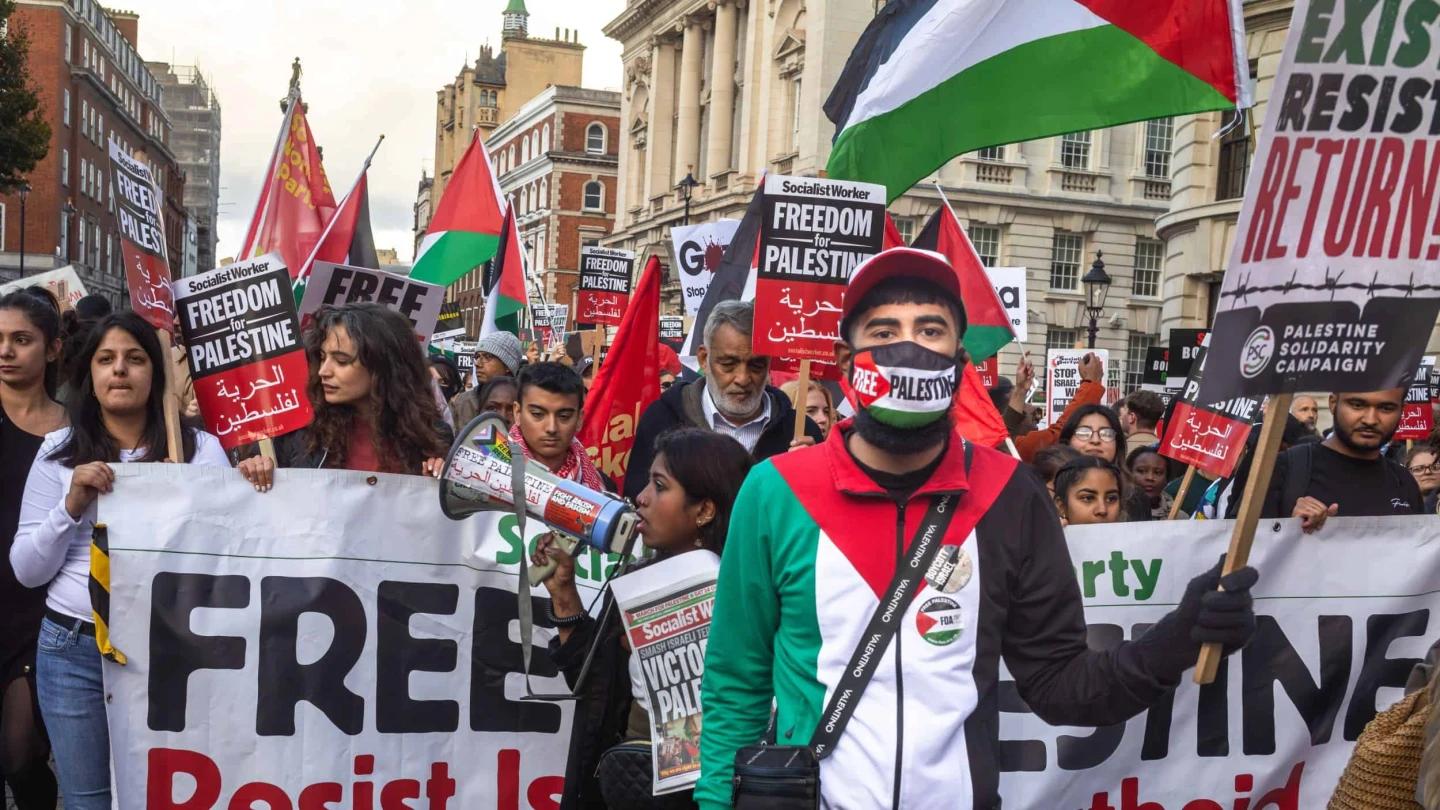
The atrocities of Oct. 7 were denied, even though Hamas and other Palestinian terrorists had documented them with GoPro cameras and social-media uploads (one infamously called his parents to brag about how many Jews he killed that day). The victims, including raped women and men, were ignored or not believed. Posters of the kidnapped, even of a 9-month-old baby, were torn down on the streets of American and European cities. Mass rallies were held to bolster support for Hamas on the streets of those cities and on college campuses.
The main reason for the lack of sympathy for Israel wasn’t because Netanyahu or members of his cabinet were unlikable or too truculent, or because his government failed to mount an effective public diplomacy campaign (though it should have done better). Nor was it because pro-Israel supporters in the United States were equally ineffective in making the case for the Jewish state or against intransigent Palestinian Arabs and their terrorist leaders.
The deck was stacked against Israel long before Oct. 7. Like the American education system, the corporate media had largely been captured by left-wing ideologues who believed in political activism, not journalism. And it, too, adopted the skewed ideas of critical race theory, intersectionality and settler-colonialism that exacerbated racial tensions among the general population, as well as falsely labeled Israelis and Jews as “white” oppressors and their Palestinian opponents as “people of color.” That meant the former were always in the wrong, no matter what they did, and the latter in the right, no matter how awful their crimes.
They’re not listening
While Israel and its supporters might have done better in their efforts to inform the world about Oct. 7 and the century of Palestinian rejectionism that preceded it, the notion that the global audience or even the bulk of the base of the Democratic Party was open to being educated about any of this was unfounded. The red-green alliance of Marxists and Islamists that are skewing European politics and ideas about Israel and the Jews has also secured a beachhead in America, as the success of antisemitic figures like New York City Mayor Zohran Mamdani and Michigan Democratic U.S. Senate nominee Dr. Abdul El-Sayed demonstrates.
A world that had decided that the Jews and their state were singular villains, and thus guilty of horrible crimes, was certainly influenced by social-media algorithms and biased media. But their receptiveness to the blood libels about genocide and famine in Gaza or to the lie that Israel is an “apartheid” state wasn’t due to the lack of a proactive information task force in the Israeli prime minister’s office or the failure of much of the organized Jewish world. Having been marinated in the toxic doctrines that taught them the Israelis were the bad guys, liberal opinion was already lost to the Jewish state even before the bodies were buried after Oct. 7.
The only sectors of global or American society that remain impervious, or at least less vulnerable, to the onslaught of Hamas propaganda masquerading as progressivism are among those on the right who have already rejected these doctrines. That’s provided that they are not also being seduced by the wave of Jew-hatred on the far right that employs traditional antisemitic tropes.
Once we acknowledge all of this, the question remains: What do we do about it?
The first thing is for the Jews to stop appealing for sympathy that isn’t coming.
It should have been apparent from the outset that centering pro-Israel advocacy on the victimization of Jews on Oct. 7 or on the appalling treatment of the hostages taken that day was a mistake. It only excited antisemites. And, rather than elicit empathy, it seems to have convinced many others to believe that the Palestinians had a good reason to murder the Jews.
A futile quest
In this sense, it was much like Israel’s misguided and failed efforts to trade “land for peace” throughout the previous three decades. That did more to convince world opinion that the Jews were possessors of stolen property, rather than high-minded people who were willing to compromise their rights and even their security to achieve an end to the conflict. But now, the pleas for understanding seem only to have reinforced the growing chorus of those who believe Zionism—the anti-colonial and national liberation movement of the Jews—equals racism.
Unlike the recent past, the real debate about the Middle East isn’t about a two-state solution the Palestinians never wanted. It now centers on whether all of the Jewish state, including the kibbutzim and other communities near the Gaza Strip whose liberal-minded inhabitants were slaughtered along with everyone else on Oct. 7, is stolen land. That goes hand in hand with the idea that its occupants are foreign colonizers in their homeland, where they are the indigenous people who are only getting what they deserve.
Rather than members of the Jewish community wracking their brains trying to solve the puzzle about how to convince those who aren’t listening to hear sound historical arguments, they need to stop centering so much of their efforts on this futile quest.
It’s true that losses in the information world have real consequences, and that the attempts to isolate Israel diplomatically and economically pose a grave danger to it. But if the Jews should have learned anything in the last century when the world stood by as the Holocaust went on for years, it’s that the most important task facing them is to strengthen their state and its ability to defend Jewish life.
As horrible as the catastrophe of Oct. 7 was, in the three years that have followed, Israel’s defeats of Hamas and Hezbollah—plus the fall of a longtime brutal dictator in Syria—and their Iranian paymasters and sponsors have done more to make Jewish lives safer than all of the clever arguments put forward by its most able public information advocates.
That doesn’t give the Israeli government—or Diaspora leaders and groups—a pass for doing so poorly at explaining the situation. And it certainly doesn’t excuse a tech-savvy Jewish state for not being as nimble as it should have been in employing new media and Internet technologies to make their arguments against those spreading blood libels and antisemitism.
Still, delusions should be discarded about the chances that appeals aimed at inspiring sympathy for Jewish victims will move the needle on international or even American public opinion for those who have bought the pro-Hamas narrative hook, line and sinker. As Dara Horn has written, the world may “love dead Jews,” but what that really means for us today is that their abhorrence of Jews with power is undiminished.
A just cause
What Israel and its defenders must exude is strength, confidence in their justice of their cause, and a willingness to be undaunted by the lies and smears spread about them. Rather than seeking to debate or persuade those crying “genocide” primarily to give the world a pass for permitting the actual genocide of European Jewry during the Holocaust, we must dismiss them as hate-mongers unworthy of intellectual refutations.
As much as Jews everywhere must continue to mourn the victims of Oct. 7, as well as the heroic soldiers of the Israel Defense Forces who fell or were wounded in the ongoing effort to defeat terrorists, they should quit waiting for others to join them.
The real lesson of Oct. 7 is no different from that of the thousands of years of Jewish history that preceded it. Weakness and faith in the kindness of those ready to believe that Jews are the cause of whatever it is they fear most or the greatest societal problems they face is a formula for disaster.
Just as in the past, those who think that destroying the Jewish state will be the first step toward the liberation of the world’s oppressed peoples are not persuadable. But they can be defeated.
A proud declaration of Jewish rights and faith is far more likely to inspire friendship and alliances. That’s a lesson that should resonate for Israelis. But it must also be one adopted by Diaspora Jews perplexed by a wave of bigotry and vitriol they never anticipated and struggle to cope with. Unless and until they realize that they must defend themselves first—and worry about what everyone else thinks later—will they find a way to live in a world where Jew-hatred has again become fashionable.
Jonathan S. Tobin is editor-in-chief of JNS. Follow him: @jonathans_tobin.