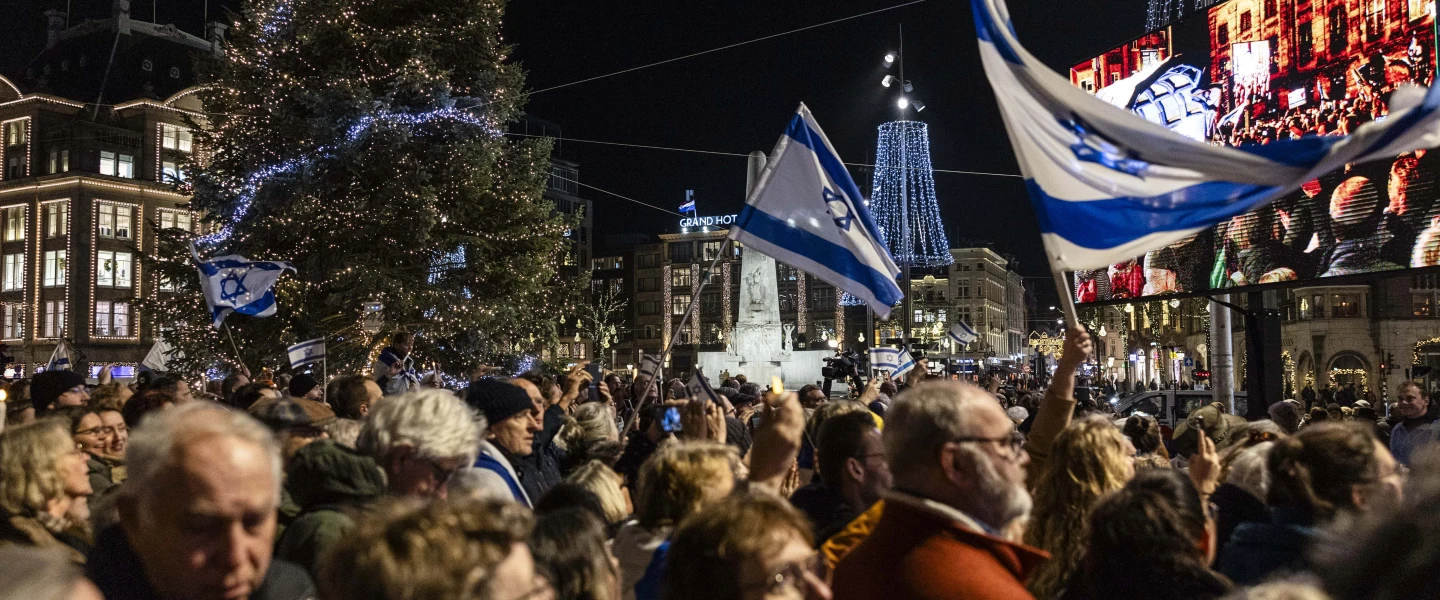
Oct. 7 can’t be a day when Jewish students need to ask permission to be able to memorialize those lost on the bloodiest day for Jews since the Holocaust, according to the Israeli-American Council.
“We are not asking universities to suppress speech. We are asking them to govern their campuses,” Sagit Sade Attia, national senior director of academic initiatives at the council, told JNS. “They already have codes of conduct, civil rights obligations and the ability to enforce reasonable time, place and manner rules.”
“Oct. 7 cannot become an annual occasion when Jewish and Israeli students have to negotiate for the ability to mourn,” she said.
The council sent letters to more than 100 American universities, including the entire Ivy League, urging administrators to prepare for the third anniversary of Oct. 7 and ensure Jewish and Israeli students can commemorate the day safely and without disruption.
“For the Jewish and Israeli community, Oct. 7 is, first and foremost, a day of mourning, remembrance and trauma,” Sade Attia told JNS.

The letters were dispatched as anti-Israel student groups on multiple campuses promoted rallies and demonstrations for Oct. 7.
After the Hamas-led attacks on Oct. 7, 2023, the council helped students organize memorial installations on campus, including displays inspired by the Nova festival and its victims.
It also brought hostage families and survivors to campuses, including Ivy League universities, according to Sade Attia.
The council has helped hundreds of students, faculty, staff and families navigate Jew-hatred, discrimination, academic challenges and the emotional effects of campus tensions since Oct. 7, according to Sade Attia. But the council started noticing a troubling disparity in the ways that schools responded to Jewish student-run commemorations and anti-Israel demonstrations.
“By the second anniversary, students were calling us while standing beside posters of hostages and victims, because they were being questioned about words such as ‘kidnapped’ or ‘murdered,’” she told JNS.
“At the same time, demonstrations celebrating or legitimizing terrorism, glorifying violence or targeting Zionists and Israelis were often treated primarily as questions of free expression,” she said. “That disparity is why we acted before Oct. 7 this year.”
The council called on universities to ensure that memorials can take place safely and with dignity, plan ahead for nearby demonstrations and consistently enforce campus policies on harassment and disruption.
It also asked them to ensure academic programming about Oct. 7 and the Israel-Hamas war includes multiple perspectives and to engage directly with Jewish and Israeli students ahead of the anniversary.
The decisions that colleges and universities make about Oct. 7 can have consequences that extend beyond the anniversary, according to Sade Attia.
“When rules are enforced consistently, boundaries are established,” she told JNS. “When intimidation and disruption are tolerated, their effects do not disappear when a protest ends.”
“Students continue living, studying and working together long after the signs and megaphones are gone,” she said.
As the third anniversary approached, Attia told JNS that Jewish and Israeli students are experiencing exhaustion after three years of navigating campus tensions surrounding Israel.
“What we hear most is exhaustion,” she said. “Three years after Oct. 7, Jewish and Israeli students are still being asked to explain why their grief is legitimate, why they need space to commemorate and sometimes even why they should feel safe expressing who they are.”
Many Israeli students have relatives of friends who were killed, wounded, displaced or called up to reserve duty.
“Yet as the anniversary approaches, some are preparing not only to mourn but for the possibility that their mourning will be protested, politicized or disrupted,” Sade Attia told JNS. “Students can carry the consequences for months through isolation, damaged relationships, academic disruption and the feeling that they need to hide part of their identity.”
She is seeing students organize memorials, bring survivors to campus to testify, build community and choose to remain visible.
“What I hear is grief, exhaustion, vigilance but also remarkable resilience,” she told JNS. “These students are not asking for special treatment.”
“They are asking for something very basic: the ability to mourn their dead, express their identity and participate fully in campus life with the same dignity and protection afforded to everyone else,” she said.