
These days, much as nearly half a century ago, the contours of a regime collapse in Iran remain difficult to discern.
Forty-eight years ago, around this time, then-CIA Director Stansfield Turner met with senior official Parviz Sabeti—a respected Iranian patriot trusted by the late Shah—of the SAVAK intelligence agency. The bitter irony is that no one at Langley believed that by Jan. 26, 1979, Iran would be plunging into an abyss of collapse and destruction; that a civilization with 7,700 years of history would be seized and occupied by a mafia of Shiite mullahs; or that Islamic terrorism, in one corner of the world, would suddenly acquire the power and wealth of a state.
The danger today is that Washington may once again misread the signs; only this time, a regime approaching collapse may try to save itself by starting another war.
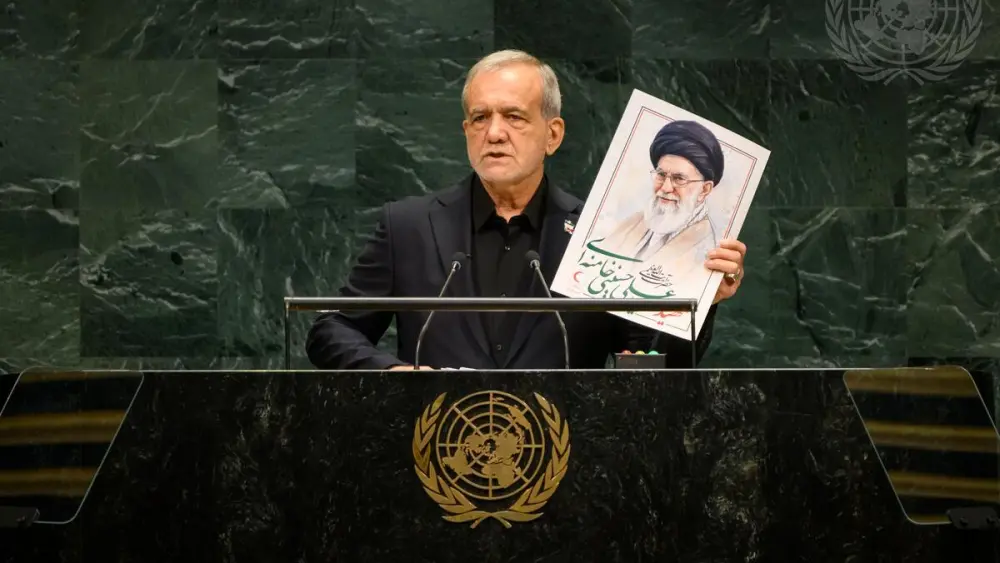
Today, Iran’s political landscape is once again clouded by uncertainty. Following the humiliating death of Tehran’s dictator, Ali Khamenei, the ruling establishment has been destabilized and the country is increasingly governed by what amounts to a military junta. The regime has also lost control of the economy.
Tehran openly warns through its own media that the country is moving toward war. Its military and security officials repeatedly issue warnings and apocalyptic threats against U.S. President Donald Trump, while signaling an interest in strategic surprise and a preemptive strike. Even national newspapers shamelessly discuss the possible use of chemical, biological and nuclear weapons.
When Trump publicly stated that the Islamic Republic and its affiliated terrorist network were involved in recent provocations—specifically a suspected terror plot that forced the withdrawal of U.S. bombers from Britain’s RAF Fairford base and a thwarted terror attack on a Dubai-to-Israel flight—a broader pattern began to emerge: The regime is planning and executing a coordinated, multidimensional attack against the United States, hoping that escalating tensions, fueling conflict and manufacturing crises might offer an escape route while raising the political and strategic costs for Trump.
Yet Trump’s range of options has expanded dramatically. With the support of America’s military and intelligence community and in close coordination with Israel, he has recognized that the Iranian regime is desperately begging for a deal to escape its predicament. At the same time, Tehran continues to bully its adversaries because anti-Americanism and anti-Israelism are fundamental pillars of its Khomeinist ideology. The American and Israeli military and intelligence communities have also concluded that the regime has nothing left in its arsenal beyond the terrorism card and the nuclear-bomb claim.
As elections in the United States and Israel approach, Tehran increasingly sees itself backed into a corner and is contemplating a preemptive strike. If it chooses that path, it would be a grave miscalculation and an act of extraordinary recklessness. But conventional rationality should not be expected from a regime of this nature.
Are the CIA and Mossad genuinely assessing the possibility of regime collapse in Iran—or are they once again failing to take it seriously?
The pressure is not merely external. Inside Iran, Tehran is gradually losing its remaining instruments of control. From the perspective of Iranian society, the regime is drowning and has reached a dead end. It is haunted by the prospect of a nationwide uprising and is trying to subdue an angry and impoverished population through escalating executions, arrests and violence.
But the regime is running out of breath. Iran faces intensifying economic isolation, encirclement and maximum pressure, while conditions inside the country have descended into growing chaos and disorder. What remains intact is largely the machinery of repression and propaganda, along with those tied to the ruling establishment who depend on preserving the status quo and the regime’s affiliated lobbying networks abroad.
Against this backdrop of mounting internal and external pressure, nobody knows what Trump’s final move will be before he pulls the trigger. The regime’s Islamic Revolutionary Guards Corps (IRGC) is threatening to widen the conflict to countries allied with the United States across the region. Trump has already spent considerable time pursuing diplomacy without results because this is a regime with nothing to offer in international relations. From a historical perspective, whatever course Washington ultimately chooses will carry profound consequences for global security and America’s national security.
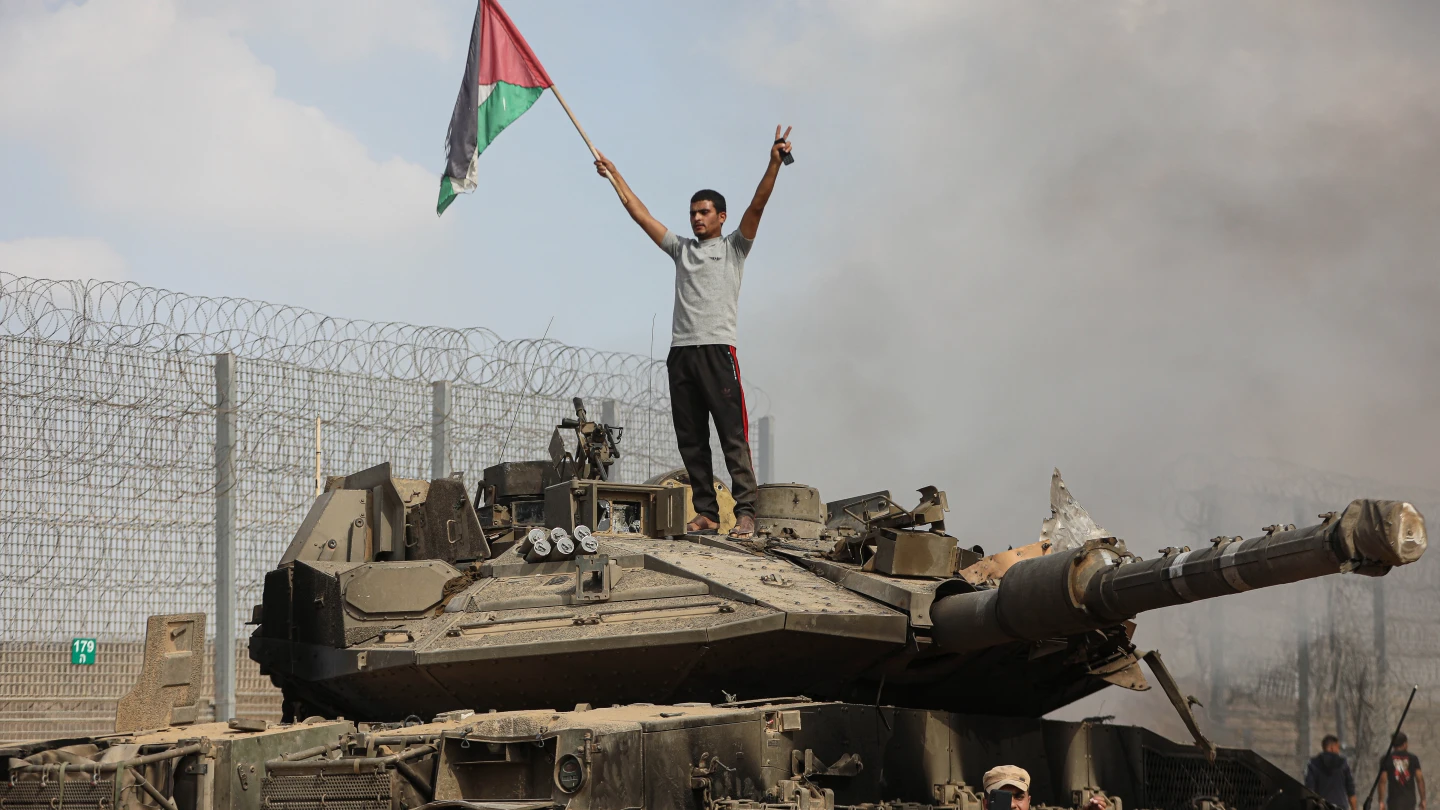
Three years after Oct. 7, the Iranian regime finds itself in strategic limbo and at its weakest possible point. Yet Tehran refuses to retreat. Israel appears determined to confront the axis of evil and dismantle the regime’s three-layered ring of fire around Israel—terrorism, missiles and drones, along with possible nuclear weapons. But U.S.-Israeli cooperation in the 12-day and 40-day wars changed the strategic equation. Today, Hezbollah is collapsing; Hamas has lost its value as a strategic asset and been effectively neutralized; and the Houthis are entering their final, increasingly desperate stage of decline. These successive setbacks have disrupted the IRGC Quds Force’s plans and deepened the regime’s sense of fear.
That strategic paralysis has only increased the Islamic Republic’s appetite for escalation. Tehran does not want to concede anything to Trump because, in the regime’s calculus, handing him a winning card would amount to acknowledging the success of his strategy.
Yet the scenarios for another military confrontation remain unclear. Will the next conflict be broad or limited? Will the regime’s remaining leaders be eliminated? Will another bombing campaign further weaken the regime and ultimately force its surrender?
Or will a third war coincide with a nationwide uprising by the Iranian people, ultimately bringing down the regime, an outcome desired by the Iranian people and Israel, and quietly wished for behind closed doors in the Persian Gulf states?
Will the Iranian people finally come to power this time, or will the regime remain in control? Although American and Israeli military and security doctrines share significant common ground, Israel is preparing for its next operation and may ultimately plan and execute it without direct American participation. Mossad has concluded that the Islamic Republic intends to provoke further tensions as a way out of its current desperation.
Nearly half a century after Langley failed to anticipate Iran’s descent into catastrophe, the question has returned: Are the CIA and Mossad now genuinely assessing the possibility of regime collapse in Iran—or are they once again failing to take it seriously?