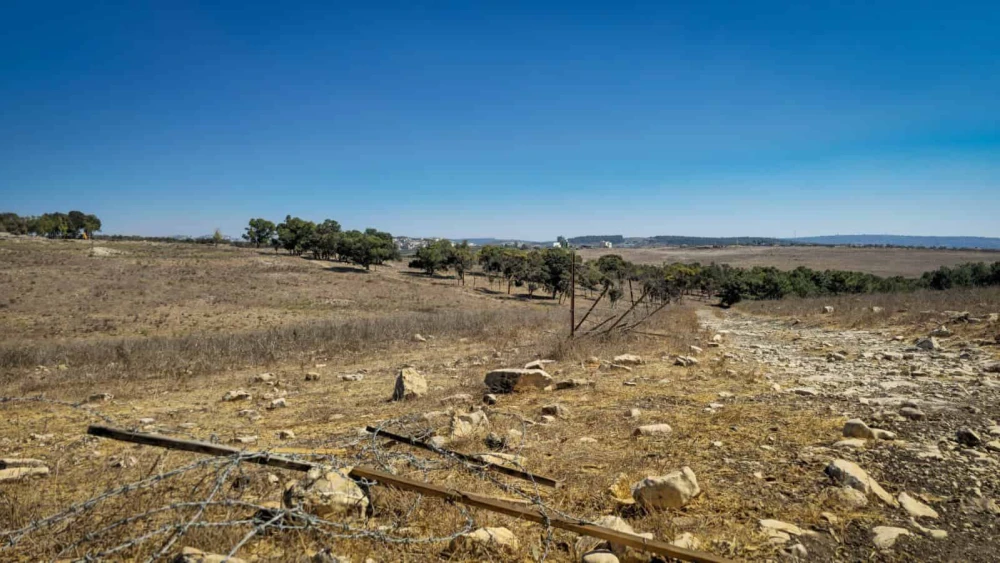
The Israel Border Police is investigating a suspected case of what Jezreel Valley farmers call “agricultural terrorism” involving the destruction of dozens of miles of fencing around pasture lands, a spokesperson confirmed on Wednesday.
“The investigation is ongoing and security forces are intensifying their activity on the ground,” Border Police spokesperson Tomer Akrish told JNS about the removal of fencing over the weekend in the Megiddo Regional Council near Afula, about 30 miles east of Haifa.
The fences were destroyed on Friday night as police and other security forces were focused on guarding the Mageda music festival, which this year celebrated the 80th anniversary of several communities in the Jezreel Valley, a major agricultural region in pre-state Israel.
“As thousands of visitors from across the country arrived at the Megiddo Cultural Center to participate in the annual music festival, a major terrorist action was carried out in the dead of night, cutting dozens of kilometers of cattle fences in grazing areas adjacent to the Wadi Ara region,” the regional council wrote in a statement this week.
Kibbutz Gilad lost about 12 miles of fencing, and Kibbutz Ein HaShofet, which is named for the first Jewish U.S. Supreme Court Justice, Louis Brandeis, lost another six miles, the council said. The damage is estimated at a million shekels ($300,000).
According to the council, the destruction of the fences is suspected to be in retaliation for recent enforcement activity by the Israel Nature and Parks Authority against Arab cattle owners, who allegedly had let their flocks graze in restricted areas.
“The current event appears to be planned action against the enforcement,” the council wrote.
Aliav Nahari, director of security at the Megiddo Regional Council, said: “This is serious harassment that follows similar cases in recent months. They’re trying to make us abandon this area, but we will continue to graze, cultivate these areas and exercise Zionist values.”
On Wednesday, dozens of volunteers from the HaShomer HaHadash security force—a civilian task force established in recent years to bolster surveillance deterring agricultural terrorism and theft—arrived in the Jezreel Valley to help the affected kibbutzim repair the fencing.
“We aim to remove all the debris left by the perpetrators by Rosh Hashanah,” the Jewish New Year, which begins on the evening of Sept. 22, Betzalel Genosar, a spokesperson for HaShomer HaHadash, said in a statement. The volunteers will also help erect new fencing when it is transported to the area, he said.
Agricultural theft and vandalism, which Arab criminals predominantly commit against Jewish and Arab farmers, cause damage of hundreds of millions of dollars annually, according to a 2017 report by the Knesset Internal Affairs and Environment Committee.