Israel will begin enforcing updated regulatory measures on international non-governmental organizations starting Jan. 1, 2026, suspending the licenses of groups “that have failed to meet required security and transparency standards,” the Ministry of Diaspora Affairs and Combating Antisemitism announced on Tuesday.
The move follows security findings that employees of several international NGOs operating primarily with the Palestinian population were involved in terrorist activity, according to an interministerial review process led by the Diaspora Affairs ministry.
“Security reviews revealed that employees of certain organizations were involved in terrorist activity. In particular, investigations determined that individuals affiliated with Doctors Without Borders (MSF) were linked to terrorist organizations, including the Palestinian Islamic Jihad and Hamas (one identified as a Hamas sniper),” the ministry said in a press release.
“Despite repeated requests, the organization failed to provide full disclosure regarding the identities and roles of these individuals,” it added.
According to the government, fewer than 15 percent of international NGOs reviewed were found to violate the regulatory framework, primarily due to refusal to provide complete and verifiable information about employees—requirements intended to prevent terrorist infiltration into humanitarian structures.
The affected organizations were given 10 months to regularize their licenses, including a three-and-a-half-month extension from September through Dec. 31, 2025, but failed to comply. Organizations notified of license revocation must cease operations by March 1, 2026.
Israeli officials emphasized that the measures will not disrupt humanitarian aid to Gaza. Assistance continues to be delivered through approved and vetted channels, including United Nations agencies, bilateral partners and compliant humanitarian organizations. The NGOs affected represent a small fraction of overall humanitarian activity, the government said.
The updated framework requires full transparency regarding personnel, funding sources and operational structures. Engagement in activities such as delegitimization of Israel, legal action against Israel Defense Forces soldiers, Holocaust denial or denial of the Oct. 7, 2023, Hamas atrocities also constitutes grounds for license revocation.
The process is being coordinated with the Ministry of Defense, Ministry of Foreign Affairs, the National Security Council, the Coordinator of Government Activities in the Territories and the Israel Security Agency.
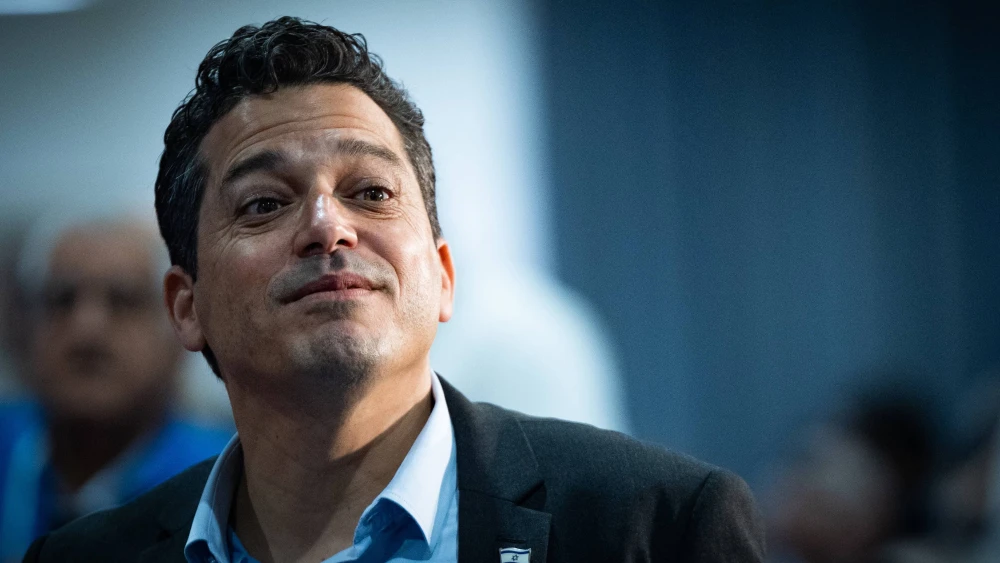
“I am proud that the government has entrusted my ministry with leading this effort to prevent the exploitation of humanitarian frameworks for terrorist purposes,” said Diaspora Affairs Minister Amichai Chikli. “Humanitarian assistance is welcome—the exploitation of humanitarian frameworks for terrorism is not.”