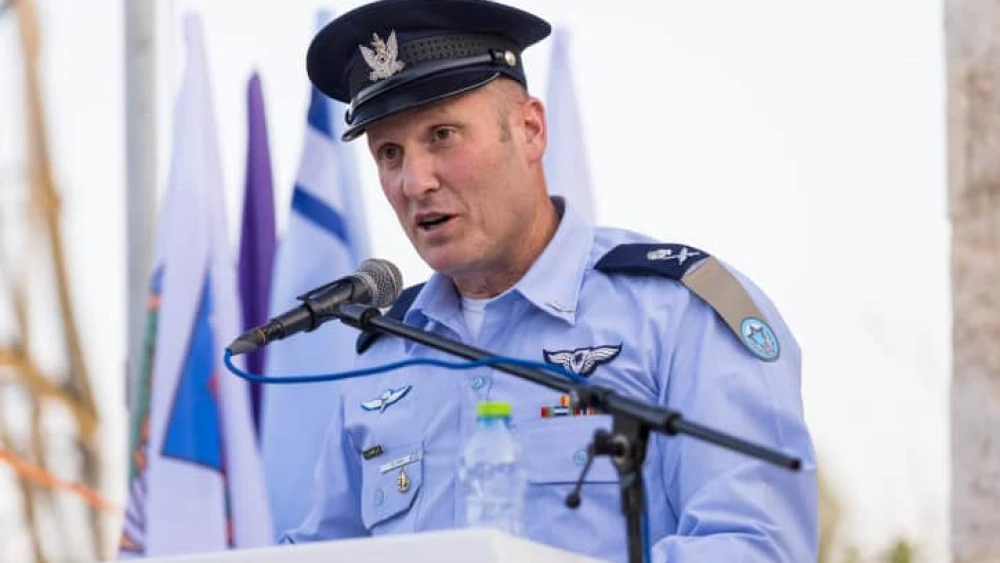
Israeli Air Force Chief Maj. Gen. Tomer Bar issued an ultimatum to pilots protesting judicial reform by refusing to serve: Return to service on Oct. 17, in two weeks, or risk being removed from the IAF.
The Oct. 17 date was chosen due to an expected, U.S. Air Force-led large international exercise in Israel at the end of October, Israel’s Channel 13 reported on Tuesday.
Most of the pilots refusing to serve did so last July, and their qualifications are reportedly significantly impaired as a result. The Israel Defense Forces is asking pilots about their qualification statuses and who intends to continue to volunteer.
“The commander of the Air Force instructed that conversations be carried out with reservists with the aim of mapping the competence picture of the force and the return of the reservists,” an IDF spokesman confirmed.
Reports of IDF reservists refusing to serve have troubled the Israeli government and the IDF.
In August, Prime Minister Benjamin Netanyahu summoned Lt. Gen. Herzi Halevi, the IDF chief of staff, for an “urgent” meeting about the military’s operational readiness.
A month earlier, Netanyahu, speaking at a weekly Cabinet meeting, said “it is impossible for there to be a group within the army that threatens the elected government [and says] if you don’t do as we wish, we will turn off the switch on security.”
“No democratic country can accept such a dictate,” he said on July 17. Netanyahu added that the government only obeys the army in military regimes.
Netanyahu said that soldiers who refuse to serve endanger Israel’s citizens, erode deterrence and undermine army discipline.
On March 9, Halevi told dozens of reserve commanders and other officers that “Certain cracks can form that will be irreparable in the future. Refusal is a ‘red line.’ It should not be in the military protocol. It is unacceptable to discuss refusal. It is unacceptable to act on refusal.”
The prior day, high-ranking officers, including former IDF chiefs of staff from both sides of the political aisle, released an open letter opposing the protestors’ decision not to serve.
“We cannot allow politics to tear apart the IDF,” the letter stated in part. “We fought for our country for many decades and commanded regular and reserve units. Our service was never conditioned on political platforms.”
Those refusing to serve claim they are justified in the measure—breaking a long-held unspoken rule that politics and the military don’t mix—because the government’s judicial reform plan will turn Israel into a dictatorship.
Since March, hundreds of reservists have announced their refusal to serve. Many of those refusing to serve come from the Air Force.
The refusals began with a group of 37 Air Force reserve fighter pilots, who announced on March 5 that they would skip a day of combat training in protest of judicial reform.
“This almost entirely revolves around the Air Force,” Brig. Gen. (res.) Amir Avivi, founder and CEO of the Israel Defense and Security Forum, told JNS in August.
“While the vast majority of the pilots are doing their job flying every day and endangering their lives, there is clearly a problem,” he added.