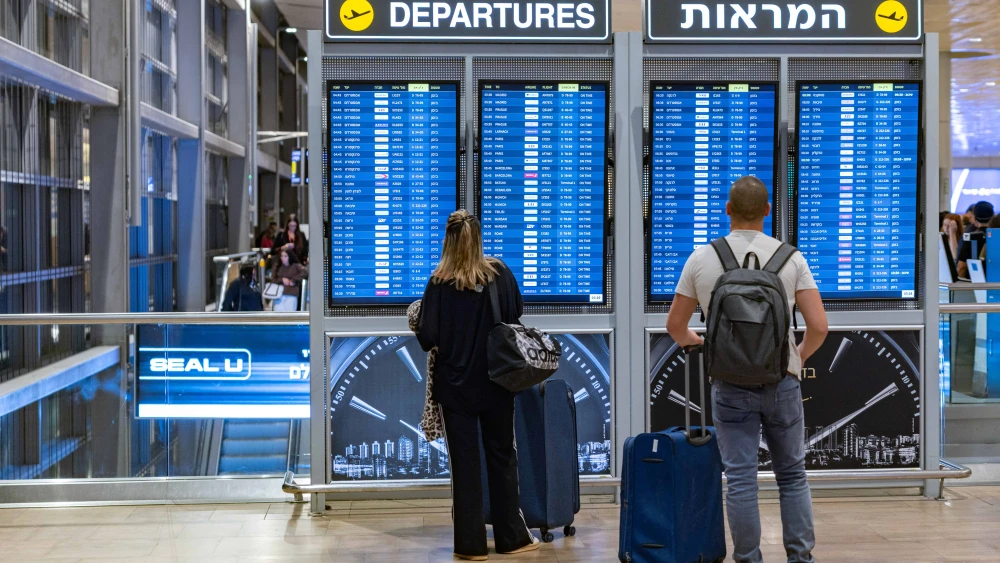
Israeli airlines, led by flag carrier El Al, announced on Sunday that they are relaxing rules regarding flight cancellations and booking changes over the next two weeks due to concerns of renewed conflict with Iran.
The move was seen as an attempt to alleviate anxiety among travelers amid the heightened uncertainty due to the threat of fresh hostilities with Iran.
Israel’s national carrier said it will allow customers who book a flight in the next two weeks to cancel for any reason up to 48 hours before departure without charge, and receive a transferable credit voucher.
The offer, which applies to travel through March 17, excludes LITE fares—the carrier’s cheapest economy fares—and award tickets.
Israeli airline Arkia similarly announced that those who book flights between Jan. 26 and Feb. 9 will be able to cancel for any reason, without a fee, up to 48 hours before departure and receive a credit voucher.
Israel’s second-largest carrier, Israir, was charging $35 to allow for cancellations up to three days before flights.
The move comes as some European carriers cancel and reduce flights to Israel.
Israel’s Channel 12 News reported on Sunday that the head of the country’s Civil Aviation Authority, Shmuel Zakai, has warned foreign airlines that the region may be entering a “more sensitive period” by the end of the week.
He later clarified that he was referring to last weekend, though the letter itself made specific reference to this weekend.
Israel’s Ben-Gurion Airport remained under normal operation on Monday.