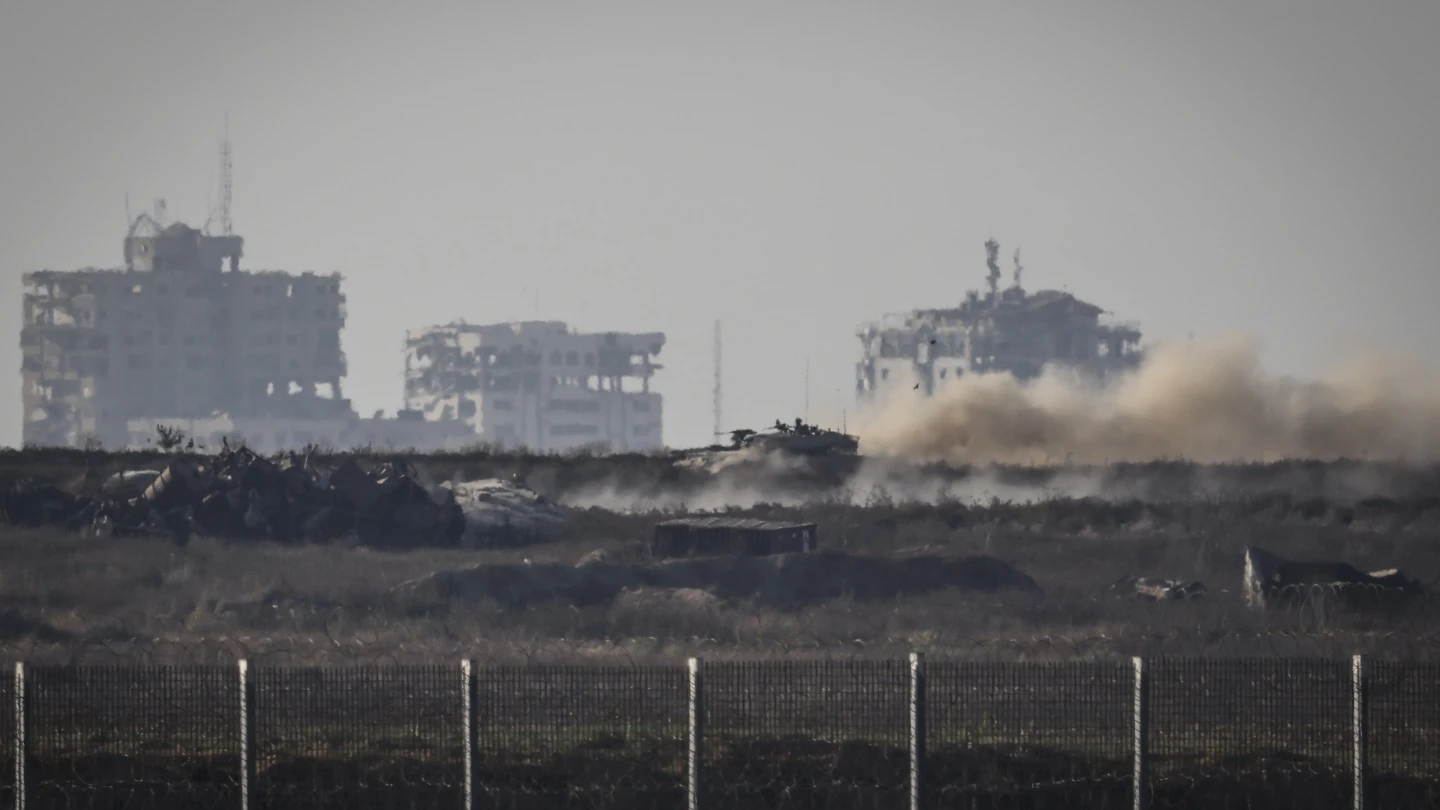

The Israeli defense establishment is operating an accelerated emergency timeline to field effective countermeasures against a new and lethal aerial threat in Southern Lebanon.
Initial solutions to shooting down First-Person View (FPV) fiberoptic drones could appear in a matter of weeks to months.
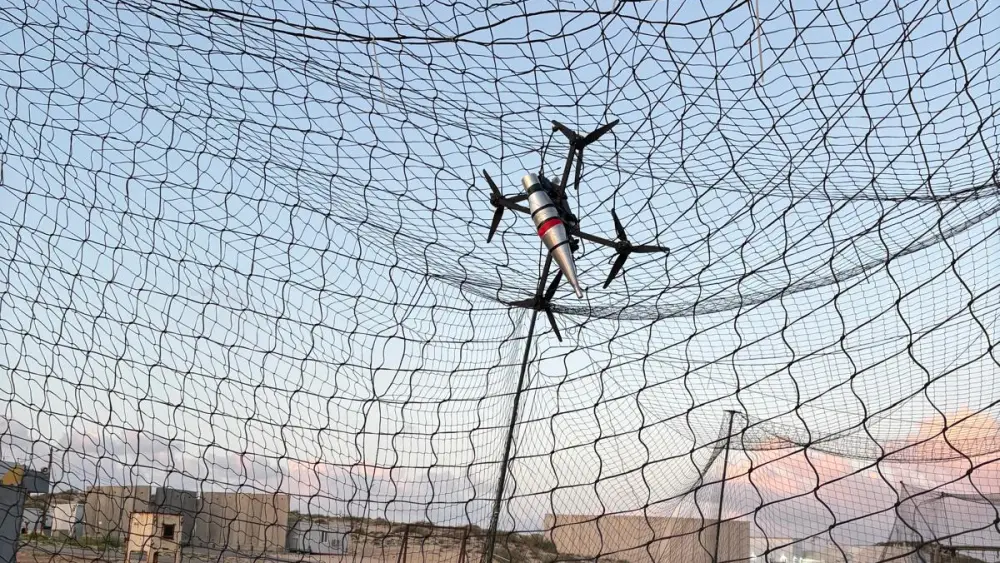
On Thursday, an IDF official said that the IDF is developing and expanding the response to the drone threat. The IDF, led by the Ground Forces’ Technological Brigade, is supplying troops in Lebanon with wire mesh nets designed to counter explosive drones, the official stated.
“Thus far, approximately 158,000 square meters of netting have been supplied to the IDF. In parallel, an additional procurement of approximately 188,000 square meters is underway and will arrive at a later stage. The total amount of netting procured so far is equivalent to the area of approximately 20 soccer fields,” said the official.
The operational gap between Hezbollah and the IDF in the small drone arena is the most significant vulnerability to open up in the current war against the Iran-backed Lebanese terror organization.
Since March 2026, and particularly following the ceasefire implementation on April 18, fiber-optic-guided First-Person View drones have become Hezbollah’s most prominent weapon against IDF troops. Over a two-and-a-half-week span, Hezbollah launched approximately 80 explosive drones at Israeli troops, with a number striking their targets, resulting in fatalities and injuries.
Hezbollah’s systematic transition to fiber-optic drones is a conscious imitation of innovations from the 2025 Russia-Ukraine war. The physical fiber-optic cable connects the operator to the drone over dozens of kilometers. This fully neutralizes the option of electronic warfare and spectral jamming that Israel’s multi-layered air defenses rely upon.
The drones emit no electromagnetic signals, prevent the location of the launch source, and possess minimal radar and infrared signatures due to their small electric motors and low flight altitudes.
To confront this challenge within the required timeline, IDF Ground Forces commander Maj. Gen. Nadav Lotan established seven dedicated task forces in late April, according to a recent report by Walla News.
The teams are focusing on rapid updates of combat doctrine, detection, warning, and interception, digital and electromagnetic spectrum issues, passive defense, such as physical armor, nets, and liaising closely with defense industries to bypass traditional, slower procurement cycles.
A range of solutions is at hand, including computer-vision fire control sights that can be mounted on assault rifles, the deployment of 5.56mm fragmenting ammunition, of which thousands of crates were reportedly ordered by Israel from the United States, and the defensive nets. IDF soldiers in Southern Lebanon are now routinely spreading nets over their vehicles to prevent final-stage impacts.
Hezbollah’s FPV drones cost an estimated $300 to $400 each.
Meanwhile, Israel’s Security Cabinet decided to establish a dedicated IDF factory to produce thousands of FPV “suicide drones” every month.
The facility will be staffed entirely by Haredi soldiers, according to a report by Channel 13 News. The strategic move aims to dramatically expand the military’s FPV drone arsenal. The IDF has also been offered interceptor drones that can take on attacking FPV drones.
Other options include working with large Israeli defense companies and startups to attach lasers or machine guns to optical or acoustic sensors.