


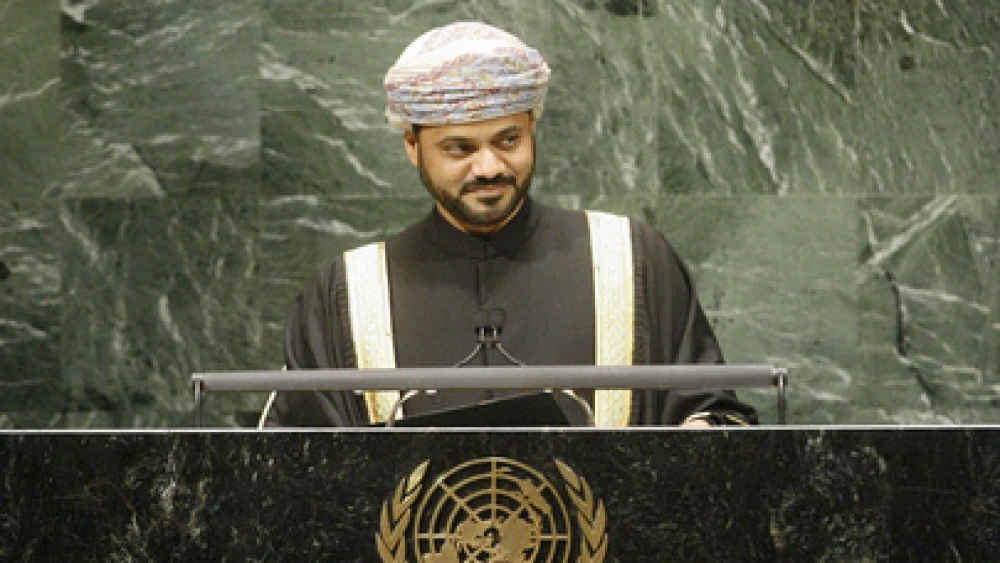
Oman will not follow the United Arab Emirates and Bahrain in normalizing the ties with Israel at this time, the Gulf sultanate’s foreign minister said on Saturday.
“Oman believes in striving for a just, comprehensive and lasting peace on the basis of the two-state solution to the Israeli-Palestinian conflict,” Badr bin Hamad al-Busaidi told the London-based Arabic-language daily Asharq Al-Awsat in an interview.
“This is the only option recognized by the Arab Peace Initiative and the international community,” he noted. Muscat, he added, “affirms the legitimate rights of the Palestinian people and just as we respect the sovereign decisions of states, we expect others to respect our sovereign decisions.” Oman has been part of the covert rapprochement between Israel and the Gulf kingdoms in recent years, a trend that included an official meeting in 2018 between Israel’s then-prime minister Benjamin Netanyahu and Sultan Qaboos bin Said, who ruled over Oman for 49 years until his death in 2020.
The meeting in Oman arguably represented the most important public acknowledgment of ties with Israel by a Gulf state until the Abraham Accords.
This article first appeared in Israel Hayom.



