


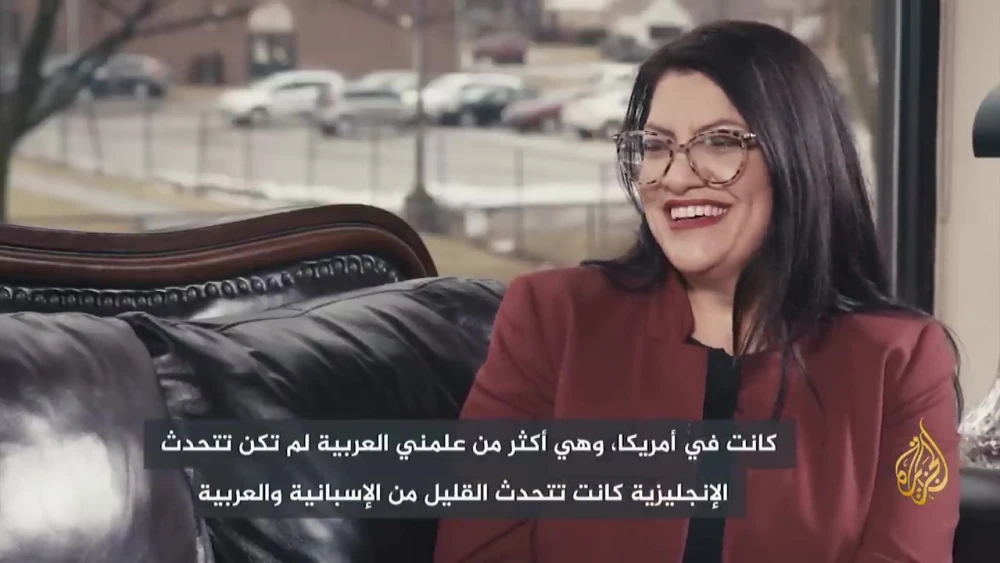
U.S. Rep. Rashida Tlaib (D-Mich.) stated in an interview with the Al Jazeera network on Sept. 16 that she does not see how a two-state solution to the Israeli-Palestinian conflict can work. She further claimed that Israel has an “apartheid system” and that U.S. policies towards it must change.
According to a translation by the Middle East Media Research Institute, Tlaib said she disagrees with the left-wing lobby J Street because it “wants a two-state solution, and I always say that it is up to the Israelis and the Palestinians to decide what their fate and determination is, and they are more moving towards a one-state [solution].”
“They agree that I have a unique lens and perspective on what is happening in Palestine,” she added of J Street. “We have a good working relationship, but they know that I don’t believe there is a pathway—I mean, somebody can show me how—but I don’t believe there is a pathway for a two-state [solution] with the apartheid system that is happening in Israel right now.”
Tlaib continued, “We need to change our policies when it comes to the State of Israel. We desperately need to look at it [through] a different lens. Because it is obvious that you cannot claim that you are a democracy and then say: ‘You, an American citizen’—the country that gives you the most aid—‘you can’t come into our country because you support these issues.’”


