


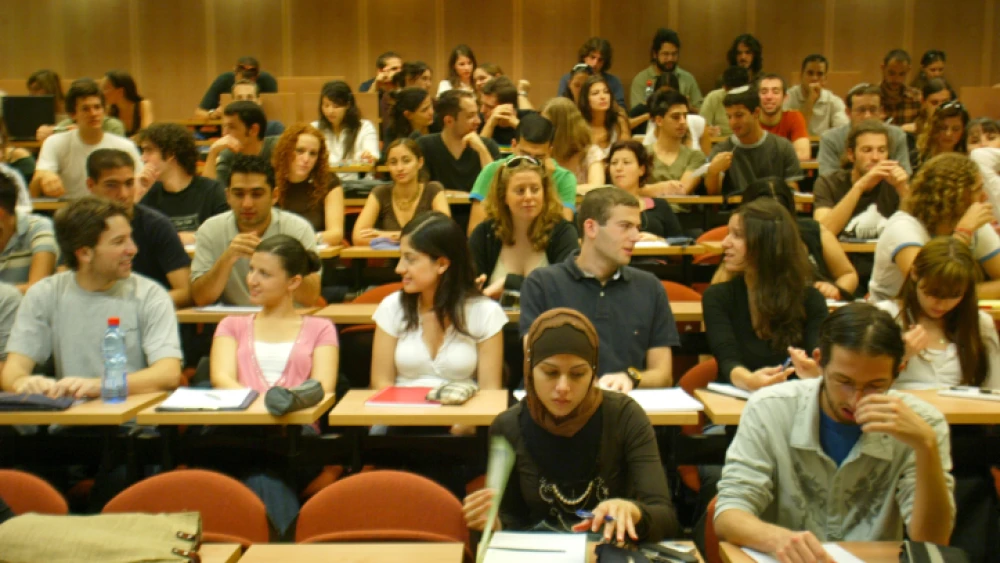
Several Hebrew University professors have come out against a new training program for Israel Defense Forces’ soldiers in the university’s Department of Islamic and Middle Eastern Studies.
Explaining the opposition, Dr. Liat Kozma, director of Hebrew University’s Nehemia Levtzion Center for Islamic Studies, wrote on Facebook that having 150 soldiers from the IDF’s Intelligence Corps in the department “harms the teaching and research.”
“I’m thinking about our Palestinian students, but not only,” wrote Kozma in a post that she later deleted. “To study the history of the Middle East in a mixed classroom with soldiers and civilians significantly harms what can or cannot be said.”
“We wouldn’t be having this conversation if it was only a handful [of soldiers],” continued Kozma. “I would not like it, I admit, but I wouldn’t feel that they are suffocating my teaching and research.”
Senior lecturer in the Department of Islamic and Middle Eastern Studies, Dr. Abigail Jacobson, added that the soldiers have a harmful effect on the “feeling of security” of Palestinian students.
“What bothers us, among other things,” wrote Jacobson, “is the expected [and very hard, in my opinion] impact of this move on the dynamic between Israeli and Palestinian students in the class.”
In response to the controversy, Hebrew University Rector, Professor Barak Medina, defended the program on KAN Reshet Bet radio and said that “there is no question” that soldiers have a place in the university.
“We are not from the United Nations,” said Medina. “We have a social responsibility. We are a public institution funded by public funds. We do not view the participation of soldiers or civil servants in academic programs as someone’s personal interest. We have a public interest.”
Medina added that the opposition to the program comes from a “very small minority” of professors, and that the program will provide Arab students the ability to see IDF soldiers in a positive light.
Matan Peleg, CEO of the Zionist organization Im Tirtzu, said that “it is inconceivable how every few months there is another story about Hebrew University professors who are bothered by IDF soldiers. This antagonism against our soldiers needs to stop.”



