British Jews on Thursday called on their government to reverse recently announced sanctions on Israelis in Judea and Samaria, citing Wednesday’s passing of a parliamentary motion criticizing that policy.
The National Jewish Assembly of the U.K. “calls upon the Foreign Secretary to address the questions raised in Parliament,” the assembly said in a statement.
The issues raised were in a motion of regret passed by a majority of 94 members of the House of Lords, the British parliament’s upper house. It passed narrowly, with 90 peers voting against the motion.
The motion “notes the absence of safeguards to protect lawful trade with Israel within its pre-1967 lines; and calls on His Majesty’s Government to confirm that such trade will not be affected by these Regulations, publish clear designation criteria and an evidence-based framework to ensure consistent global application, and provide an impact assessment and annual report to Parliament on the operation of the regime.”
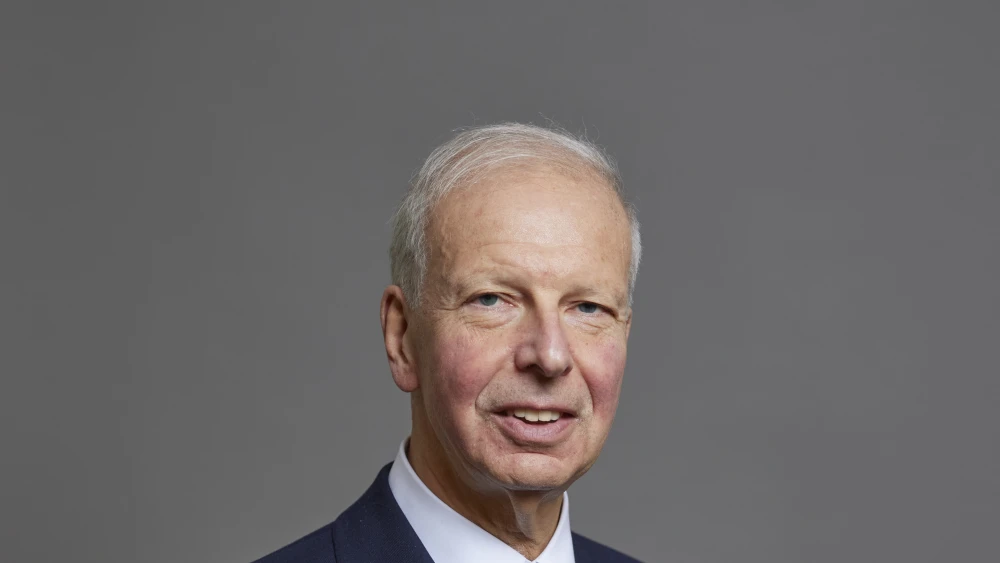
It was submitted by Howard Darryl Leigh, a Conservative Party member of the House of Lords.
In the debate ahead of the vote Wednesday, several peers raised various criticisms of the Sept. 8 decision to apply sanctions against Israel.
Leigh challenged the breadth and ambiguity of the regulations, while Lord Eric Pickles and Lord Stuart Polak questioned their implications for legitimate commercial, charitable and property-related activities. Baroness Ros Altmann warned of the dangers of singling out Israel for exceptional punishment at a time when British Jews are already facing deeply troubling levels of antisemitism.
The sanctions, announced by Foreign Secretary Ed Miliband, “rewards those who are opposed to a two-state solution,” Altmann said. “It will not promote or help in any way the people who want the two-state solution, the Palestinians who lose their jobs, who are working alongside Israelis. And I just beg the government to understand the danger of singling out Israel for special punishment when so many of us who are Jewish citizens of this country are trying to warn of the dangers that this entails.”
Shortly before the sanctions were announced, Polak told JNS that under Prime Minister Andy Burnham, the U.K. “may become a foe” to Israel, and in any case was “no longer a friend of Israel.”
The sanctions followed a series of confrontations between Israel and the U.K. that began under the Conservative government and accelerated after Labour came to power in 2024.
Officials of British former Prime Minister Keir Starmer’s administration repeatedly clashed publicly with Jerusalem and used increasingly forceful language about Israel, including a July 29, 2025, call for it to “stop the slaughter” in Gaza. The phrase echoed rhetoric used by anti-Israel protesters who had gathered by the thousands in London to demonstrate against the Jewish state.
In September 2025, Britain recognized a Palestinian state, alongside Australia and Canada. France also recognized one that year. The decision followed Britain’s suspension of roughly 30 arms-export licenses covering equipment deemed potentially usable in Israel’s military operations against Hamas in Gaza.
In June 2025, Britain sanctioned Israeli Finance Minister Bezalel Smotrich and National Security Minister Itamar Ben-Gvir, imposing travel bans and asset freezes over what it described as repeated incitement of violence against Palestinians.
In response to the sanctions that Miliband announced in September, Israeli Foreign Minister Gideon Sa’ar announced that the British consulate in eastern Jerusalem would be closed, among other retaliatory moves. Last month, Sa’ar said the consulate building would remain, but would be renamed and downsized, in a bid to stop the deterioration in relations with the U.K.
In announcing the sanctions, Miliband said they would be introduced within nine months.
“To those who finance or facilitate illegal settlements, let me say this, you will face the full force of U.K. sanctions,” he said, adding, “We will ban the advertising in the U.K. of illegal settlements. The sanctions regime will target illegal settlements and settlement expansion, not Israel.”